

What Should You Consider Before Building a Shed? More than you might think. A shed can solve storage problems, protect tools, and make your yard feel more organized. But before the first board is cut or the first kit is unpacked, it helps to think through location, size, rules, materials, and long-term use. A little planning can prevent expensive changes later.
What Should You Consider Before Building a Shed? Start With Its Purpose
The best shed design begins with a simple question: what will the shed actually do?
A shed for a lawn mower and garden tools is different from a shed used as a workshop, hobby room, bike garage, or pool storage space. If the purpose is clear, decisions about size, doors, flooring, windows, and ventilation become much easier.
Think about what you need to store now, but also what you may add later. Outdoor equipment tends to grow over time. A shed that feels roomy on paper can feel crowded once shelves, hooks, bins, and bulky tools are inside.
Common shed uses include:
- Storing lawn mowers, trimmers, leaf blowers, and garden tools
- Keeping bikes, sports gear, and outdoor toys out of the garage
- Organizing seasonal items like patio cushions and holiday decor
- Creating a small workspace for repairs, crafts, or potting plants
- Protecting pool supplies, hoses, and cleaning equipment
If the shed will be used often, comfort matters. You may want natural light, easy door access, better flooring, and enough headroom to move around without ducking.
Check Local Rules, Permits, and Property Limits
Before building, check local building rules. In many parts of the US, sheds under a certain size may not need a building permit, while larger sheds often do. Rules can vary by city, county, neighborhood, and homeowners association.
Permit rules may cover the shed’s size, height, foundation, placement, electrical work, and distance from property lines. Some areas also have limits on how much of a lot can be covered by structures.
If you live in a neighborhood with an HOA, review the rules before choosing a shed style. HOAs may control colors, roof types, materials, placement, or visibility from the street.
Property lines are another key issue. It is risky to guess where your yard ends. Building too close to a fence or over a boundary can create problems with neighbors or local inspectors. If the property line is unclear, a survey may be needed.
Also check easements. Utility, drainage, and access easements can limit where you build, even if the land is part of your property.
Choose the Right Location in the Yard
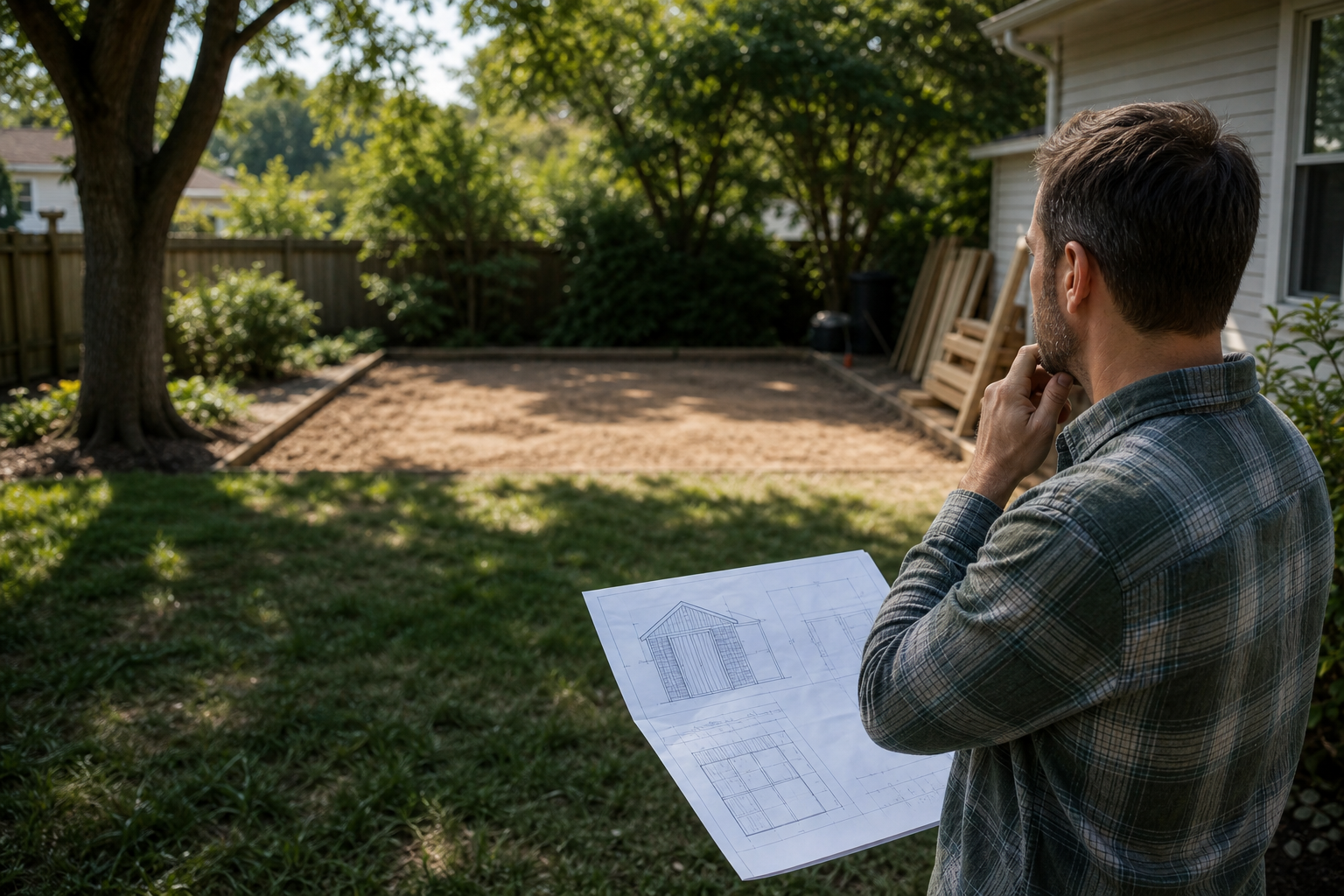
Shed placement affects daily use, drainage, appearance, and durability. The most convenient spot is not always the best spot.
A shed should be easy to reach, especially if you plan to move heavy items in and out. For example, a mower shed works best near the lawn, not tucked behind garden beds or narrow gates. A workshop shed may need more privacy and better light.
Drainage is just as important. Avoid low spots where water collects after rain. Standing water can damage flooring, encourage mold, and make the area muddy. A slightly raised, level location is usually better.
Sun and shade also matter. Full sun can make a shed hot in summer, especially metal or dark-colored sheds. Heavy shade may keep the area damp. Nearby trees can drop leaves, branches, sap, or seeds onto the roof.
Think About Access and Door Swing
Measure the path to the shed location. Gates, walkways, slopes, and tight corners can make delivery or construction harder.
Also think about door swing. Double doors need space to open fully. If you plan to roll in a mower, wheelbarrow, or snow blower, the doorway should be wide enough and placed where entry feels natural.
Keep the Shed Away From Problem Areas
Try to avoid placing a shed:
- Under large dead or weak tree limbs
- Directly against fences or walls with no airflow
- In low, wet areas that stay muddy
- Over sprinkler lines, septic components, or buried utilities
- Where it blocks windows, views, or outdoor living spaces
Good placement can make a simple shed feel like a useful part of the yard instead of an obstacle.
Decide on Size, Layout, and Storage Needs
Shed size is one of the biggest decisions. Too small, and it becomes cluttered quickly. Too large, and it may cost more, require permits, or take over the yard.
Start by listing the items you plan to store. Include their real sizes, not rough guesses. A riding mower, kayak, ladder, or snow blower takes much more room than small hand tools.
It helps to sketch a basic floor plan. Mark where large items will sit and where doors will open. Leave walking space down the middle if you need regular access.
Vertical storage can make a shed more useful. Wall hooks, shelves, pegboards, and overhead racks free up floor space. However, they also need sturdy walls and enough interior height.
Plan for Future Storage
A shed should not be packed full on day one. Leaving extra space makes it easier to stay organized.
Future storage might include:
- New lawn equipment
- More gardening supplies
- Camping gear
- Children’s bikes or outdoor toys
- Seasonal furniture covers or cushions
If your budget and yard allow, building slightly larger than your current needs can be practical.
Compare Shed Materials
Sheds are commonly built from wood, metal, resin, or vinyl. Each material has strengths and trade-offs.
Wood sheds have a classic look and are easy to customize. You can add shelves, hooks, windows, paint, or trim. They can also blend well with many homes. However, wood needs maintenance. It may require painting, sealing, or repairs over time.
Metal sheds are often budget-friendly and can work well for basic storage. They are not usually as easy to customize, and thin metal can dent. Metal can also get hot inside and may be noisy in rain or wind.
Resin and vinyl sheds are popular because they resist rot and usually need less maintenance. Many come as kits. They can be good for garden tools, pool supplies, and general storage. The style and size options may be more limited than custom wood sheds.
Think about your climate, budget, appearance preferences, and how much maintenance you are willing to handle.
Plan the Foundation and Floor
A shed needs a stable base. Without one, it can shift, settle, or collect moisture underneath. The right foundation depends on shed size, soil, budget, and local rules.
Common shed foundation options include gravel pads, concrete slabs, concrete blocks, and treated wood frames. Gravel can help with drainage and is often used for storage sheds. Concrete is strong and durable, especially for heavier sheds or workshop use.
The floor also matters. If you store heavy equipment, the floor must support the weight. If the shed will be used as a work area, a solid and level floor is important for comfort and safety.
Moisture protection is key. Good airflow under or around the shed can help reduce dampness. Gutters, roof overhangs, and proper grading can also move water away from the structure.
Consider Weather, Ventilation, and Security
A shed sits outside year-round, so it must handle local weather. In snowy areas, roof strength and slope matter. In windy areas, anchoring may be important. In hot climates, ventilation can keep the interior from becoming uncomfortable.
Ventilation is often overlooked. Without airflow, heat and moisture can build up. This can affect tools, wood, paint, fertilizers, and other stored items. Vents, windows, or gable openings can help.
Security is another practical issue. A shed may hold valuable tools, bikes, or equipment. Strong doors, good hinges, and a quality latch can help protect what is inside. Windows are useful for light, but they may also make items visible. Placement and coverings can reduce that concern.
Lighting is worth thinking about too. If the shed will be used in the early morning, evening, or winter months, natural light may not be enough. Any electrical work should follow local code and safety requirements.
Set a Realistic Budget
The shed itself is only part of the total cost. Site preparation, foundation, delivery, tools, paint, ramps, shelves, permits, and electrical work can all add to the budget.
A simple kit may look affordable at first, but the finished project can cost more once the base and accessories are included. A custom-built shed may cost more upfront but offer better layout, stronger materials, or a better match for the home.
When comparing options, look at the full picture:
- Shed materials or kit price
- Foundation or site preparation
- Permit or inspection fees, if required
- Delivery or equipment rental
- Paint, stain, roofing, trim, or hardware
- Shelving, hooks, ramps, and organizers
- Maintenance costs over time
A clear budget helps you decide where to spend and where to simplify.
Think About Appearance and Long-Term Value
A shed does not have to match your home perfectly, but it should look like it belongs in the yard. Roof style, siding color, trim, door design, and size all affect the overall look.
A shed that is too large for the yard may feel overwhelming. A shed that is hidden but hard to reach may not be useful. Balance appearance with function.
Long-term value is not only about resale. It is also about how well the shed serves your daily life. A durable, well-placed shed can make outdoor work easier, reduce garage clutter, and protect items from weather.
Maintenance should also fit your lifestyle. If you do not want to repaint or repair siding, a lower-maintenance material may be better. If you enjoy customizing and updating outdoor spaces, wood may be a better fit.
Frequently Asked Questions
Do I need a permit to build a shed?
It depends on your local rules, shed size, foundation, and intended use. Many areas allow small sheds without permits, but requirements vary widely.
What is the best size for a backyard shed?
The best size depends on what you store, your yard space, and local limits. Measure large items first, then allow extra room for walking and future storage.
Is a wood, metal, or resin shed better?
No single material is best for everyone. Wood is customizable, metal can be economical, and resin often needs less maintenance in everyday use.
Where should I place a shed in my yard?
Choose a level, well-drained spot with easy access and enough clearance around doors. Avoid low areas, unclear property lines, and places with poor airflow.
Can a shed be used as a workshop?
Yes, but it needs more planning than a basic storage shed. Consider insulation, ventilation, lighting, power, flooring strength, and comfortable space to move safely.