
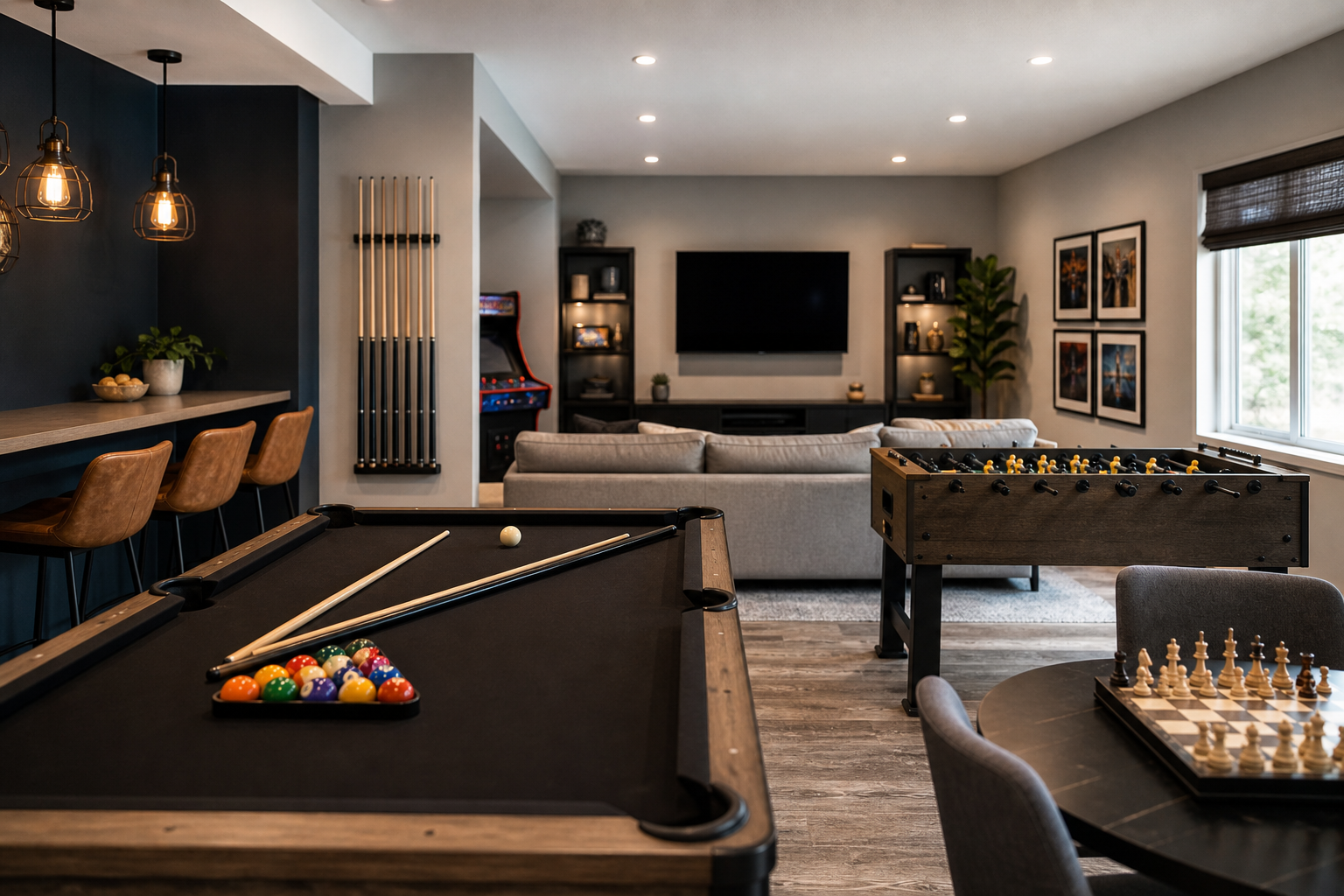

How Do You Set Up a Fun and Functional Game Room? Start with a clear plan, then build the space around comfort, storage, lighting, sound, and the games you actually love. A great game room does not have to be huge or expensive. It just needs to feel easy to use, fun to spend time in, and simple to keep organized.
Whether you want a family game room, a video game zone, a pool table setup, or a cozy board game corner, the right layout makes all the difference.
How Do You Set Up a Fun and Functional Game Room? Start With the Purpose
Before buying furniture or decor, decide how the room will be used most often. This choice will guide everything else, from seating to storage.
A game room for kids may need soft surfaces, easy-clean storage, and open floor space. A room for teens may need gaming chairs, a TV, charging stations, and strong Wi-Fi. An adult game room might include a bar cart, card table, pool table, darts, or a lounge area.
You can also mix uses, but try not to overload the room. Too many activities can make the space feel crowded. Pick one main purpose and one or two extra features.
For example, your main purpose might be video gaming. Your extra features could be a small snack area and a shelf for board games. Or your main purpose might be family game night, with a TV on the side for sports or movies.
Think about these questions:
- Who will use the game room most?
- What games will be played there?
- How many people should the room seat?
- Does the room need to be kid-friendly?
- Will noise be a problem for nearby rooms?
- Do you need space for food and drinks?
- Should the room feel relaxed, bold, modern, or playful?
Once you know the purpose, the rest of the setup becomes easier.
Choose the Best Room and Layout
The best game room is not always the largest room. It is the room that works best for your games, your home, and your daily life.
Basements are popular because they often offer more space and help contain noise. Spare bedrooms work well for video games, tabletop games, or a small arcade feel. A loft can become a bright game room if it has enough seating and storage. Even a garage can work if it is clean, insulated, and comfortable.
Measure the room before you shop. This simple step can prevent many problems. A pool table, foosball table, large sectional, or arcade cabinet may look fine online but feel too big in real life.
Leave enough room to move around. People should be able to walk behind chairs, open cabinet doors, and play without bumping into walls. If you are adding a pool table or ping-pong table, remember that players need space around all sides.
A simple layout often works best. Place the main activity in the center or along the longest wall. Put seating where people can see the action. Keep storage close to the games it supports. If the room has a TV, avoid placing it where sunlight will cause glare.
Also think about traffic flow. If people must walk through the gaming area to reach a bathroom, storage closet, or backyard door, keep that path clear.
Pick Comfortable and Practical Furniture
Game rooms are made for long hangouts, so comfort matters. But comfort should not come at the cost of function. The best furniture supports how people play, watch, talk, and relax.
For video gaming, look for seating with back support. A sofa, recliners, or gaming chairs can all work. For board games and card games, choose a sturdy table with enough space for cards, pieces, snacks, and drinks. For multi-use rooms, consider flexible furniture like nesting tables, storage ottomans, or stackable chairs.
Do not forget side tables. They are useful for controllers, drinks, phones, dice, score pads, and snacks. A room can look nice but still feel annoying if no one has a place to set things down.
Durable materials are a smart choice. Game rooms often get heavy use, especially if kids or pets are involved. Performance fabric, leather-look materials, washable covers, and easy-clean tabletops can make life easier.
Good furniture choices may include:
- A sectional or sofa for group seating
- A round or rectangular table for board games
- Chairs that can move around the room
- Storage ottomans for blankets, controllers, or toys
- Side tables with shelves or drawers
- A media console with cable openings
- Bar stools for a counter or high-top table
Keep scale in mind. Oversized furniture can make a small room feel tight. Tiny furniture can make a large room feel empty. Aim for balance.
Plan Storage So the Room Stays Neat
A game room should be fun, not stressful. Smart storage keeps the space from turning into a mess of cables, cards, toys, discs, and loose game pieces.
Start by sorting what you have. Group items by type: board games, video games, controllers, puzzles, sports gear, art supplies, snacks, and cleaning items. Then choose storage that fits those groups.
Closed storage helps hide clutter. Cabinets, bins, drawers, and baskets are great for items you do not want on display. Open shelves work well for board games, collectibles, books, and decor. Clear bins can help kids find what they need without dumping everything out.
Labeling can be helpful, especially in a family game room. Labels do not need to look boring. You can use simple tags, chalk labels, or printed stickers.
For video game spaces, cable control is a must. Use cord clips, cable sleeves, or a media cabinet with holes in the back. Keep charging cords in one spot so controllers and headsets are easy to find.
A few helpful storage ideas include:
- Use shallow bins for small toys, cards, and dice.
- Store board games vertically if boxes are strong enough.
- Keep extra batteries, chargers, and remotes in one drawer.
- Use wall hooks for headphones or VR gear.
- Add a small trash can near the snack area.
- Store blankets in a basket for movie or game nights.
The goal is not to make the room look perfect all the time. The goal is to make cleanup quick.
Get Lighting, Sound, and Tech Right
Lighting can change the whole feel of a game room. One ceiling light is usually not enough. Layered lighting makes the room more useful and more comfortable.
Use overhead lighting for general brightness. Add table lamps or floor lamps near seating. Use dimmable lights if possible, especially in a room with a TV. LED strip lights can add fun behind a screen, under shelves, or around a gaming desk.
Avoid harsh glare. If the room has windows, use curtains, shades, or blinds to control sunlight. This is important for TV screens, monitors, and card tables.
Sound is another key part of the experience. Soft items help reduce echo. Rugs, curtains, upholstered furniture, and wall art can make the room feel warmer and less noisy. If the game room shares a wall with a bedroom or office, place speakers away from that wall when you can.
For tech, plan outlets before placing furniture. A game room may need power for a TV, console, speakers, lamps, chargers, arcade machines, or a mini fridge. Avoid running cords across walkways. They look messy and can be unsafe.
Wi-Fi strength also matters for online gaming and streaming. If the signal is weak, consider moving the router, using a mesh system, or adding a wired connection if your home allows it.
Add Games That Match Your Space
The games you choose should fit the room, not fight against it. A small room can still be a great game room if you choose the right activities.
For compact spaces, board games, card games, a gaming console, darts with proper wall protection, or a small puzzle table may work well. For medium rooms, you may have space for a foosball table, air hockey table, or larger media setup. For larger rooms, pool tables, ping-pong tables, arcade cabinets, or multiple zones may be possible.
Think about maintenance too. Some games need space, care, or accessories. A pool table needs level flooring and enough cue space. A ping-pong table needs room on both ends. A VR setup needs clear floor space. Board games need storage that protects boxes and pieces.
It is better to have fewer games that people use often than many games that crowd the room. Rotate items if needed. Kids may enjoy a toy shelf that changes every few weeks. Adults may prefer a cabinet of favorite games instead of a wall full of unused options.
Make the Room Feel Fun Without Making It Cluttered
Decor gives the game room personality. It can be bold, cozy, retro, sporty, modern, or family-friendly. The trick is to choose a theme or color story so the space feels planned.
You do not need a strong theme, but it can help. A classic arcade room might use bright colors, neon-style lights, and vintage posters. A family game room may use warm colors, soft seating, and framed art. A sports room could include team colors, shelves for memorabilia, and a durable rug.
Wall decor is useful because it adds style without taking floor space. Consider framed posters, floating shelves, a scoreboard, a chalkboard wall, or acoustic panels that also look nice.
Rugs can define zones and add comfort. In a basement, a rug can make the room feel warmer. Choose a rug that is easy to clean and large enough to fit the main seating area.
Try to leave some empty space. A game room should feel lively, but it should not feel packed. Empty wall space, clear floors, and open tabletops help people relax.
Keep Safety and Easy Cleaning in Mind
A fun room should also be safe and easy to care for. This is especially important in homes with children, pets, or lots of guests.
Secure tall shelves or cabinets to the wall when needed. Keep heavy items on lower shelves. Use cord covers or cable management to prevent trips. If you have darts, weights, or other sharp or heavy game items, store them safely.
Choose finishes that can handle real life. Washable paint, stain-resistant rugs, and wipeable tables are useful in rooms where snacks and drinks are common. Coasters, trays, and lidded cups can also help.
Good airflow matters too. Basements and garages can feel stuffy. A fan, dehumidifier, or air purifier may help, depending on the room. Keep the space comfortable so people want to stay.
A small cleaning station can be useful. You might keep microfiber cloths, screen cleaner, disinfecting wipes, and a handheld vacuum nearby. When supplies are close, quick cleanup is more likely to happen.
Frequently Asked Questions
What is the first thing to do when setting up a game room?
The first step is deciding how the room will be used most often. A video game room needs different seating, lighting, and tech than a board game room or pool room. Once you know the main purpose, you can choose the right layout, furniture, storage, and games.
How much space do I need for a game room?
You can create a game room in almost any size space if you choose games that fit. A small room may work well for video games, cards, or board games. Larger games like pool, ping-pong, and air hockey need extra space around them so players can move comfortably.
What should every game room include?
Most game rooms need comfortable seating, good lighting, useful storage, and enough open space to move around. If the room has electronics, it also needs outlets, cable control, and a strong internet connection. The best features depend on who uses the room and what they enjoy playing.
How can I make a game room look good on a budget?
Start by using furniture and games you already own, then improve the room with paint, lighting, rugs, and better storage. Wall art, LED lights, baskets, and secondhand furniture can make a big difference. A clean layout often matters more than expensive decor.
How do I keep a game room organized?
Give every item a clear home and make cleanup easy. Use shelves for board games, bins for small pieces, drawers for controllers, and cord organizers for electronics. Keep the most-used items within reach. When storage is simple, people are more likely to put things away.