

Which Window Treatments Suit Each Room Best? The answer depends on how each room is used. A bedroom needs comfort and privacy. A kitchen needs easy cleaning. A living room often needs light control without feeling closed off. The right window treatment can make a room feel calmer, brighter, warmer, or more polished.
This guide explains common choices for each room in a home, using simple language and practical tips. It covers curtains, drapes, blinds, shades, shutters, and layered looks, so it is easier to match style with daily life.
Which Window Treatments Suit Each Room Best? Start With the Room’s Job
Before choosing fabric, color, or hardware, think about what the room needs to do. A beautiful treatment can still feel wrong if it blocks too much light in a kitchen or gives too little privacy in a bathroom.
Most rooms need a balance of four things:
- Privacy: Bedrooms, bathrooms, and street-facing rooms need more coverage.
- Light control: Media rooms and bedrooms often need darker options.
- Easy care: Kitchens, bathrooms, and kids’ rooms need materials that clean easily.
- Style: Living rooms, dining rooms, and entry areas often need a finished look.
Window direction also matters. A sunny room may need heat and glare control. A shaded room may need lighter fabrics to keep it from feeling dark. If the window faces a neighbor, a street, or a shared yard, privacy should move higher on the list.
Layering is also useful. For example, a room can have woven shades for texture and curtain panels for softness. This gives more control and makes the window look complete.
Living Rooms: Flexible Light and a Finished Look
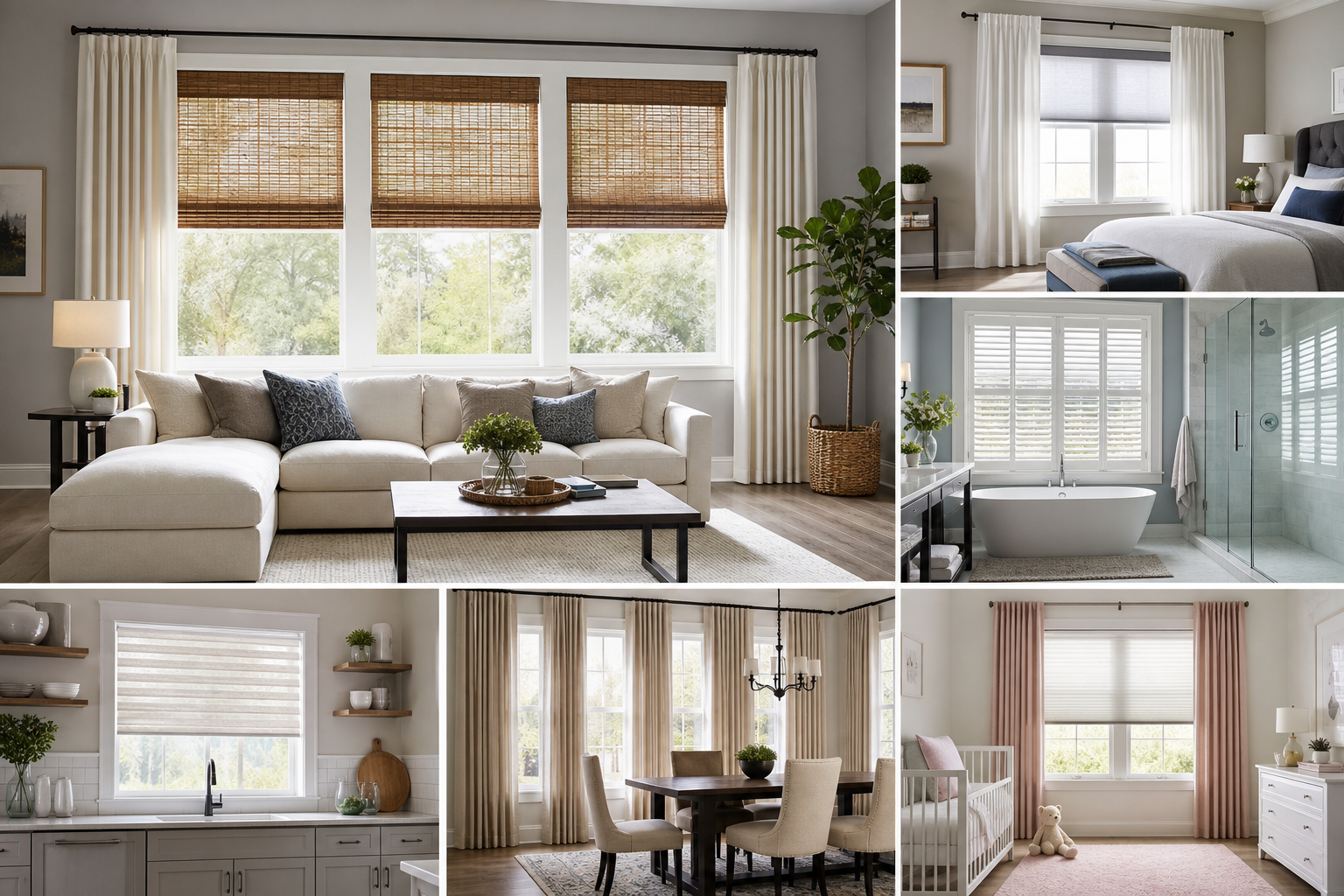
The living room is often where people gather, relax, watch TV, and welcome guests. It needs to feel comfortable during the day and private at night. For many homes, the best living room window treatments are flexible and decorative.
Curtains are a classic choice because they soften the room. Light-filtering panels let sunshine in while reducing glare. Heavier drapes can add privacy and help the room feel cozy in the evening.
Shades also work well in living rooms. Roman shades bring a neat, tailored look. Woven wood shades add warmth and texture. Roller shades are simple and clean, especially in modern spaces.
Blinds are practical when you want to tilt light up or down. Wood or faux wood blinds can suit both traditional and casual rooms. If the living room has large windows, vertical blinds or panel track shades may be easier to use.
Best Living Room Options
Good choices for living rooms include:
- Light-filtering curtains: Soft, relaxed, and easy to pair with other treatments.
- Roman shades: Clean and polished, with a fabric look.
- Woven wood shades: Natural texture that works well with many styles.
- Wood or faux wood blinds: Adjustable light and privacy.
- Layered curtains over shades: A fuller look with better control.
For a balanced living room, avoid window treatments that are too thin if the room faces the street. Sheer panels are pretty, but they may not give enough privacy at night when indoor lights are on.
Bedrooms: Privacy, Darkness, and Comfort
A bedroom should support rest. That usually means stronger privacy and better light control than in other rooms. The best bedroom window treatments are often room-darkening shades, blackout curtains, lined drapes, or a layered mix.
Blackout curtains are helpful for people who need a darker sleep space. They also make the room feel more private. Lined drapes can create a softer, more finished bedroom without looking too heavy.
Cellular shades are another strong bedroom choice. They fit close to the window and can reduce light gaps when measured well. Room-darkening roller shades are simple and work well in smaller bedrooms or modern rooms.
Layering is especially useful in bedrooms. A shade can cover the glass, while curtains add softness and cover the sides. This can help reduce light that enters around the edges.
Best Bedroom Options
Consider these bedroom-friendly treatments:
- Blackout curtains: Best for strong darkness and a cozy look.
- Room-darkening shades: Clean style with better light control.
- Cellular shades: Neat, practical, and good for privacy.
- Lined drapes: Soft, classic, and more private than unlined panels.
- Layered shades and curtains: Flexible for both day and night.
For kids’ bedrooms, easy care matters too. Simple roller shades, cordless blinds, or washable curtains can make daily use easier. Always consider safe designs, especially in rooms used by young children.
Kitchens: Easy Cleaning and Light Control
Kitchens are busy rooms. There may be cooking steam, food splatter, and frequent cleaning. Because of that, kitchen window treatments should be simple, durable, and easy to wipe down.
Faux wood blinds are a practical choice for many kitchens. They give privacy and light control, and they are usually easier to clean than soft fabric. Roller shades can also work well, especially if the material is smooth and not too delicate.
Cafe curtains are another friendly kitchen option. They cover the lower part of the window while keeping the top open for daylight. This is useful if the kitchen faces a sidewalk or nearby home.
Roman shades can look beautiful in kitchens, but fabric needs more care. They may be better away from sinks, stoves, or heavy cooking areas. If the window is right over a sink, choose something that can handle moisture better.
Good kitchen choices include:
- Faux wood blinds: Easy to adjust and easier to clean than fabric.
- Roller shades: Simple, neat, and useful for small windows.
- Cafe curtains: Charming and good for lower-window privacy.
- Woven shades: Warm and textured, best away from heavy moisture.
- Shutters: Durable and clean-looking, especially for classic kitchens.
Avoid long, flowing curtains near cooking areas. They can get in the way and collect odors more easily.
Bathrooms: Moisture Resistance and Strong Privacy
Bathrooms need privacy first. They also need materials that can handle moisture. Soft fabrics can work in some bathrooms, but they may not be the best choice near showers or tubs.
Faux wood blinds are a common bathroom choice because they offer privacy and adjustable light. Vinyl roller shades are also simple and moisture-friendly. Shutters made for damp spaces can look neat and provide strong coverage.
If the bathroom window is small, a simple shade may be enough. If it is larger or faces a neighbor, choose a treatment that fully covers the glass. Top-down bottom-up shades can be helpful because they let light in from the top while keeping the lower part covered.
For bathrooms, privacy should be checked at night as well as during the day. A treatment that looks private in sunlight may show shadows after dark.
Best bathroom options include faux wood blinds, vinyl roller shades, moisture-friendly shutters, and top-down bottom-up shades. Sheer curtains alone are usually not enough for privacy.
Dining Rooms: Style, Warmth, and Soft Light
Dining rooms often need a more polished look. This is where fabric can shine. Drapes, Roman shades, and woven shades can all make a dining room feel warm and complete.
If the dining room is used mostly in the evening, privacy may matter more than daylight. Lined curtains or Roman shades can create a cozy feel. If the room gets bright afternoon sun, light-filtering shades can reduce glare while keeping the room pleasant.
For a formal dining room, floor-length drapes can add height and drama. For a casual dining area, woven shades or simple curtains may feel more relaxed. The right choice depends on the furniture, wall color, and how often the room is used.
A dining room is also a good place for layered treatments. Shades can handle privacy, while curtain panels add color or pattern. This keeps the room practical without losing style.
Home Offices: Glare Control Without Gloom
A home office needs clear light without screen glare. Too much sun can make a computer hard to see. Too little light can make the room feel dull and tiring.
Solar shades are useful in offices because they reduce glare while keeping a clean look. Light-filtering roller shades are also good for simple control. Blinds can work well because the slats can tilt light away from the screen.
If the office is used for video calls, think about the background and lighting. A neat shade or simple curtain can make the room look less busy. Avoid shiny materials that reflect too much light.
For offices that double as guest rooms, layered treatments may be best. Use a light-filtering shade for daytime work and a blackout curtain for sleeping.
Kids’ Rooms and Nurseries: Simple, Safe, and Durable
Kids’ rooms need window treatments that can handle daily life. They should be easy to use, easy to clean, and suited to sleep. Room-darkening shades or blackout curtains are often helpful for naps and early bedtimes.
Cordless options are often preferred in spaces used by children. Simple roller shades, cellular shades, or curtains with safe hardware can work well. Busy patterns can hide small marks, while washable fabrics can make cleaning easier.
Avoid delicate materials in rooms where windows may be touched often. A treatment that looks perfect in a formal room may not last as well in a play space.
Color can still be fun. Window treatments can add a soft pattern, a calming neutral, or a bold accent. The key is to keep the design practical.
Laundry Rooms, Mudrooms, and Small Spaces
Utility rooms need function more than drama. These rooms may have moisture, dust, or outdoor traffic. Simple blinds, roller shades, or shutters are usually a smart fit.
In a laundry room, choose treatments that are easy to wipe or dust. If the room has a window near a sink or machines, avoid heavy fabric. In a mudroom, durability matters because the space may collect dirt and humidity from outside.
Small windows can look good with inside-mount shades. This keeps the treatment tidy and prevents extra fabric from crowding the room. If privacy is not a big issue, a light-filtering shade may be enough.
For small spaces, simple is often best. Clean lines make the room feel less crowded.
Matching Window Treatments to Your Style
Function should come first, but style still matters. Window treatments affect the mood of a room. Soft fabric feels relaxed and warm. Wood tones feel natural. Crisp shades feel modern. Shutters feel classic and structured.
Color also changes the room. Treatments that match the wall color blend in and feel calm. A darker color can frame the window. A pattern can add interest, especially in a simple room.
Here are easy style pairings:
- Modern rooms: Roller shades, solar shades, panel tracks, or simple drapes.
- Traditional rooms: Drapes, Roman shades, shutters, or wood blinds.
- Farmhouse rooms: Woven shades, cafe curtains, shutters, or linen-look panels.
- Coastal rooms: White shutters, light curtains, woven textures, or pale shades.
- Casual family rooms: Faux wood blinds, washable curtains, or layered shades.
Hardware matters too. Curtain rods, rings, and finials should match the room’s style without taking over. Simple hardware often works best when the fabric or shade already has texture.
Common Mistakes to Avoid
Choosing window treatments can feel simple, but small mistakes can change the final look.
One common mistake is picking the same treatment for every room. This can work in some homes, but each room has different needs. A bathroom window and a living room window should not always be treated the same way.
Another mistake is ignoring privacy at night. Many light fabrics become more see-through when lights are on indoors. Bedrooms, bathrooms, and front-facing rooms need special attention.
Poor measurements can also cause problems. Curtains that are too short may look unfinished. Shades that are too narrow can let in light and reduce privacy. Even a small gap can matter in a bedroom.
A final mistake is choosing beauty over care. A delicate fabric may not be right for a kitchen, bathroom, or child’s room. The best treatment should look good and work well every day.
Frequently Asked Questions
What is the best window treatment for a bedroom?
The best bedroom window treatment usually gives privacy and strong light control. Blackout curtains, room-darkening shades, cellular shades, and lined drapes are all good options. Many bedrooms work best with layers because they provide softness, coverage, and flexible control throughout the day.
Are blinds or curtains better for a living room?
Both can work well in a living room, depending on the space. Blinds offer easy light adjustment, while curtains add softness and style. Many homeowners use both together, with blinds or shades for control and curtains for warmth, color, and a more finished look.
What window treatments work best in a bathroom?
Bathrooms usually need moisture-friendly materials and strong privacy. Faux wood blinds, vinyl roller shades, shutters, and top-down bottom-up shades are practical choices. Sheer curtains alone are usually not private enough, especially at night when bathroom lights are on.
Should kitchen windows have curtains?
Kitchen windows can have curtains, but short or simple styles are usually best. Cafe curtains work well because they give lower privacy while letting daylight in. Long fabric panels are less practical near sinks, stoves, or busy prep areas because they can collect moisture, odors, or splatter.
Can different rooms have different window treatments?
Yes, different rooms can have different window treatments, and they often should. Each room has its own needs for privacy, light, cleaning, and style. To keep the home feeling connected, repeat a color, material, or general style instead of using the exact same treatment everywhere.