

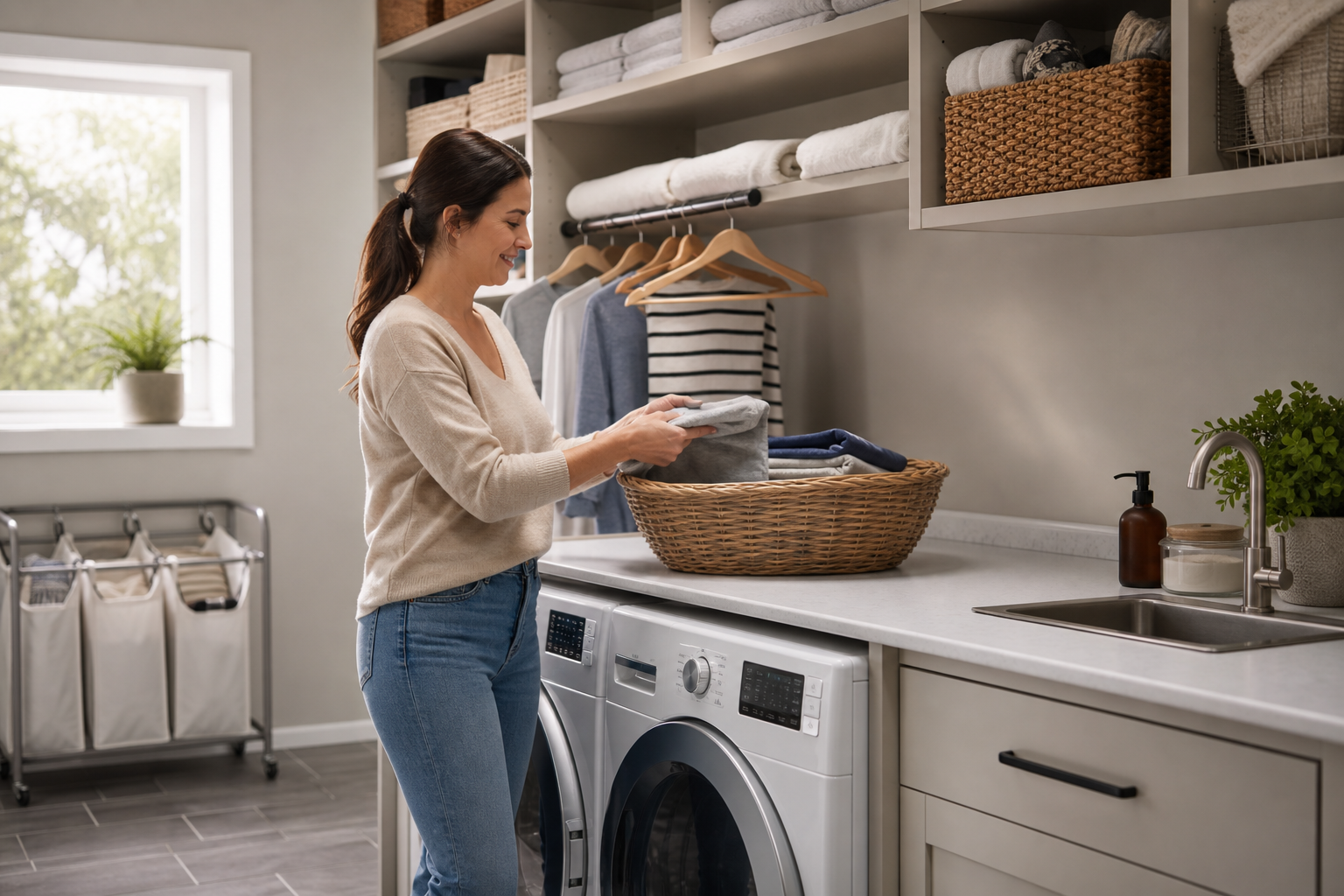

A laundry room does not need to be large or fancy to work well. The real question is simple: What Makes a Laundry Room Easier to Use? For most homes, the answer is a mix of smart layout, safe storage, good lighting, and habits that reduce bending, reaching, and guessing. When each item has a place and each step feels clear, laundry becomes faster, calmer, and easier to share with everyone in the household.
Why Layout Matters Most
The easiest laundry rooms support the way you actually wash clothes. That means the washer, dryer, sink, hamper, shelves, and folding space should follow the normal path of laundry: sort, wash, dry, fold, and put away. If you need to cross the room three times to finish one load, the room will feel tiring even if it looks neat.
A clear floor area in front of machines is also important. Doors should open without hitting baskets or cabinet fronts. If the washer and dryer sit side by side, a counter above them can create one smooth folding surface. If they are stacked, nearby shelving or a slim cart can hold detergent and stain tools without forcing you to stretch over your head.
Keep the Work Triangle Simple
Think of a small work triangle between the hamper, washer, and folding spot. These three points do not have to be perfect, but they should be close enough that wet clothes are not carried far. A good triangle helps prevent drips, dropped socks, and piles that never make it to a drawer.
Make Room for Sorting
Sorting becomes easier when the room has a real spot for it. Three narrow hampers can separate lights, darks, and towels. A divided basket can do the same job in a tight space. The goal is not perfection. It is to stop dirty laundry from spreading across the floor because there is no place for the next load.
What Makes a Laundry Room Easier to Use? Daily Features That Help
The best features are the ones you touch every week. They do not need to be expensive. A flat counter, a reachable shelf, and a place to hang shirts can make more difference than a stylish finish. Look for choices that save motion and make the next step obvious. When the room tells you what to do next, chores move faster.
A helpful laundry room usually includes:
- A folding surface near the dryer so clean clothes do not land on the floor.
- Open or labeled storage for detergent, stain remover, dryer sheets, and cleaning cloths.
- A hanging rod or wall hooks for air-dry items, uniforms, and shirts.
- A trash bin for lint, pocket papers, tags, and empty product caps.
- A small lost-and-found dish for coins, buttons, hair ties, and single socks.
Small details matter because laundry has many tiny tasks. You check pockets, treat spots, match socks, read care labels, and move damp fabric before it wrinkles. If the room supports those actions, you spend less time fixing problems later.
Storage That Is Safe, Clear, and Close
Good storage is not just about hiding clutter. It is about making supplies easy to find and safe to use. Items used often should be at shoulder or waist height when possible. Heavy bottles should not be on high shelves. Products that children or pets should not reach belong in secure cabinets or high, closed storage.
Clear containers can help, but only when labels are obvious. Do not pour cleaning products into food containers or mystery jars. Keep original safety information when you can. The easier choice is often a shallow bin that groups related items, such as stain care, machine care, or sewing basics.
Use Vertical Space Without Making It Hard to Reach
Walls are useful in a laundry room, especially in apartments, mudrooms, and hallway closets. Pegboards, hooks, and slim shelves can hold brushes, bags, and small tools. Still, vertical storage should not turn every load into a stretching exercise. Put seasonal or rarely used items higher, and keep weekly supplies within easy reach.
Plan for Awkward Items
Laundry rooms collect bulky objects: baskets, drying racks, ironing boards, pet towels, and extra paper goods. These items need parking places. A wall-mounted rack can hold an ironing board. A tall gap beside machines may fit a folding drying rack. A basket shelf can stop empty hampers from blocking the doorway.
Lighting, Ventilation, and Comfort
A laundry room should be bright enough to spot stains, read labels, and see whether socks are black or navy. Overhead lighting helps, but a task light above the folding area can make sorting easier. If the room has no window, choose lighting that feels clean and even rather than dim and shadowy.
Ventilation matters because laundry rooms deal with heat, moisture, and product smells. Follow the appliance manual for dryer vent care and keep the area around vents clear. A room that stays damp can feel unpleasant and may make stored items smell stale. Comfort also includes temperature, a non-slip floor, and a mat where you stand longest.
Surfaces and Fixtures That Reduce Strain
Laundry often involves bending, lifting, twisting, and carrying. A room is easier to use when it reduces those movements. Front-loading machines may work well with pedestals for some people, while top-loading machines may feel simpler for others. The right choice depends on height, reach, budget, and the space available.
A utility sink can be helpful for soaking clothes, rinsing muddy shoes, filling a mop bucket, or washing hands after stain treatment. It is not required in every home, but when space allows, it can keep messes out of the kitchen and bathroom. A pull-down faucet or deep basin adds even more flexibility.
Choose Easy-Care Materials
Floors and counters should handle water, detergent, and baskets sliding across them. Smooth, washable surfaces are easier than rough ones that trap lint. Avoid materials that need delicate care if your laundry room is busy. The best surface is the one you can wipe quickly and use without worry.
Organization Habits That Keep the Room Working
Even a well-designed laundry room can become frustrating if habits break down. Keep the room simple enough that everyone understands it. Labels can help kids, teens, guests, and tired adults put things back. A shared system works best when it is easy to follow on a busy weekday.
Try these practical habits:
- Empty the lint screen as part of each dryer load, following your appliance instructions.
- Return detergent and stain products to the same place after every use.
- Keep one basket for clean items that need repair, donation, or special care.
- Set a regular time to clear single socks, empty hangers, and old packaging.
- Wipe spills right away so the floor and machine tops do not become sticky.
These habits sound small, but they protect the system. A laundry room becomes easier when it stays ready for the next load, not just the load in front of you.
Making Small Laundry Areas Easier
Many US homes do not have a separate laundry room. The washer and dryer may sit in a closet, hallway, bathroom, basement, or garage. Small spaces can still work well if every inch has a job. In tight areas, the main goal is to prevent piles from spreading into nearby rooms.
Use narrow rolling carts, over-the-door hooks, collapsible baskets, and wall-mounted drying racks. Choose supplies that fit the space instead of buying oversized containers that block shelves. If doors swing into the work zone, consider whether curtains, bifold doors, or a different basket location would make movement easier.
In a basement or garage, focus on safe paths and good light. Keep baskets off damp floors and leave clear space around appliances. A simple shelf, a rug rated for the area, and a bright fixture can make a rough utility space feel more controlled.
Frequently Asked Questions
What is the most useful laundry room feature?
A folding surface near the dryer is often the most useful feature because it keeps clean clothes contained and reduces extra steps.
How can I make a small laundry closet easier?
Use vertical storage, a slim cart, collapsible baskets, and clear labels so supplies stay close without blocking doors or appliances.
Where should detergent be stored in a laundry room?
Store detergent close to the washer, at a comfortable height, and away from children or pets according to product directions.
Does a laundry room need a sink?
No, but a sink can help with soaking, rinsing, stain treatment, and messy household tasks if space allows.
How do I keep laundry from piling up?
Give dirty clothes a sorting spot, keep clean baskets moving, and return supplies after each load so the room resets quickly.
Final Thoughts
An easier laundry room is not defined by size. It is defined by clear steps, safe storage, reachable supplies, bright light, and surfaces that support real everyday work without extra stress.