

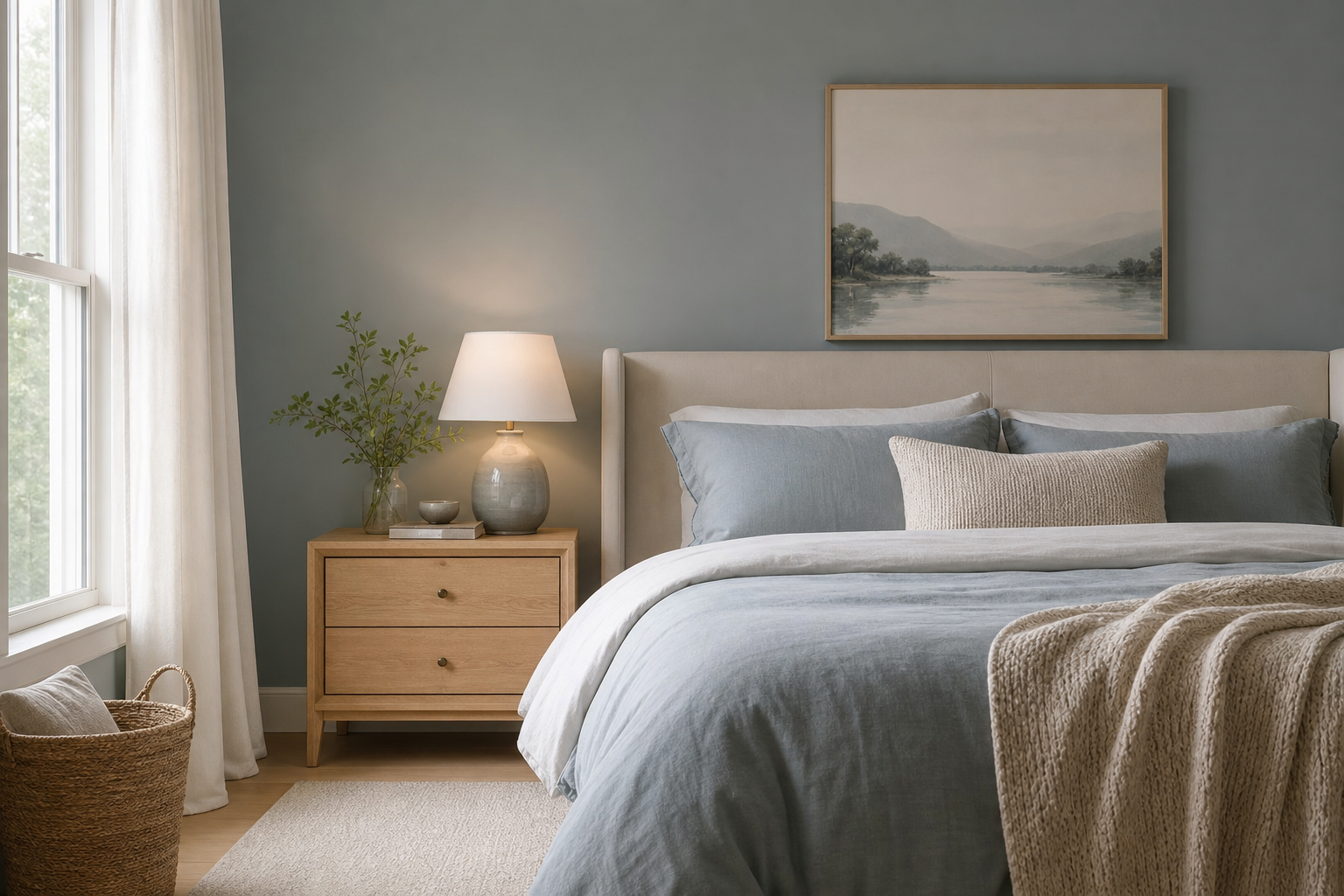

Your bedroom should feel like a place where your mind can slow down. So, Which Bedroom Colors Help You Truly Relax? The best choices are usually soft, muted, and easy on the eyes. Think gentle blues, calm greens, warm neutrals, and soft earth tones. These colors do not shout for attention. Instead, they help create a quiet setting that supports rest, comfort, and better bedtime habits.
Which Bedroom Colors Help You Truly Relax? The Short Answer
The most relaxing bedroom colors are often the ones found in nature. A pale blue can feel like open sky. A soft green can remind you of plants, grass, or a shaded garden. A warm beige or creamy white can make a room feel simple and cozy.
Color does not work the same way for everyone. Your memories, taste, lighting, furniture, and even the size of your room can change how a color feels. Still, many people find that low-contrast, muted shades are easier to live with than bright or bold colors.
For a relaxing bedroom, look for colors that feel:
- Soft instead of sharp
- Warm or cool without feeling extreme
- Muted rather than neon or highly saturated
- Comfortable in both daylight and lamplight
- Easy to match with bedding, rugs, and curtains
The goal is not to make your bedroom boring. It is to make it feel settled. A relaxing room can still have style, texture, and personality.
Soft Blues Create a Calm, Airy Mood
Blue is one of the most popular bedroom colors for a reason. Soft blue often feels clean, open, and peaceful. It can make a room feel a little cooler, which many people enjoy in a sleep space.
The key is choosing the right blue. Bright royal blue or electric blue may feel too strong on all four walls. A dusty blue, powder blue, blue-gray, or pale denim shade is usually easier to relax around.
Soft blue works especially well with:
- White or cream bedding
- Natural wood furniture
- Woven baskets or linen curtains
- Brushed nickel, matte black, or warm brass accents
If your bedroom gets a lot of warm afternoon sun, a cool blue can balance that heat. If your room is already dark or north-facing, choose a blue with a hint of gray or green instead of an icy shade. That helps the space feel calm, not cold.
Blue is also a flexible background. You can keep the whole room quiet with pale bedding and simple art. Or you can add depth with navy pillows, a charcoal throw, or a patterned rug.
Gentle Greens Feel Natural and Grounded
Green is another strong choice for a relaxing bedroom. Because green is so common in nature, it can feel steady and familiar. It brings to mind leaves, moss, herbs, and quiet outdoor spaces.
The most restful greens are usually soft and slightly muted. Sage, eucalyptus, olive, moss, and pale gray-green are good examples. These shades offer color without feeling too loud.
Green can work in many bedroom styles. Sage green feels fresh in a modern farmhouse room. Olive green can look rich with dark wood and leather. Pale green can make a small room feel light and easy.
Try pairing green walls with:
- Warm white trim
- Tan, camel, or oatmeal bedding
- Walnut, oak, or rattan furniture
- Terracotta, clay, or muted gold accents
Be careful with very bright lime green or strong emerald if your main goal is relaxation. Those shades can be beautiful, but they often bring more energy than calm. If you love bold green, consider using it in smaller pieces, such as artwork, pillows, or a bedside lamp.
Warm Neutrals Make the Room Feel Cozy
Neutral colors are a safe choice, but they do not have to feel plain. Warm neutrals can make a bedroom feel soft, welcoming, and easy to rest in. Beige, cream, ivory, greige, taupe, mushroom, and warm gray all belong in this group.
Warm neutrals are helpful because they create a quiet background. They also let you change your bedding or decor without repainting the whole room. A cream wall can work with blue sheets in summer, rust pillows in fall, or white bedding all year.
The main trick is avoiding a flat look. A neutral bedroom needs texture. Without texture, it may feel empty or unfinished.
Good texture choices include:
- Cotton, linen, or gauze bedding
- A wool or jute rug
- Wood nightstands
- Ceramic lamps
- Woven shades
- Quilted blankets or knit throws
Warm neutrals are also a smart option for renters or anyone who wants a timeless look. They can make the room feel clean without the sharpness of bright white. If pure white feels too stark, try soft white, warm ivory, or a light beige instead.
Earth Tones Add Comfort and Depth
Earth tones can make a bedroom feel calm in a richer way. These colors include clay, sand, soft brown, muted rust, stone, cocoa, and dusty terracotta. They are warmer than blue or green, so they can be a good fit if you want your bedroom to feel like a cocoon.
The most relaxing earth tones are usually softened versions of natural colors. Instead of bright orange, choose clay. Instead of dark chocolate on every wall, try a lighter cocoa or taupe. Instead of strong red, use muted brick or dusty rose.
Earth tones pair well with natural materials. Think wood, linen, leather, wool, cane, and stone. They also look good with warm lighting, which matters in a bedroom. A clay-colored wall can feel especially cozy at night when lit by a soft bedside lamp.
If you are worried that earth tones will make the room feel too dark, use them in layers. Paint the walls a warm neutral, then bring in earth tones through bedding, art, curtains, or an accent wall. This keeps the room restful while adding depth.
Colors to Use Carefully in a Relaxing Bedroom
Some colors are not “wrong” for a bedroom, but they can be harder to relax with. Strong, high-energy colors may keep the room feeling active, even when you want to wind down.
Use extra care with:
- Bright red, which can feel intense and dramatic
- Neon yellow, which can feel too alert or sharp
- Hot pink, which may feel playful but not always restful
- Bright orange, which can bring strong energy
- Stark white, which may feel cold in some rooms
- Very dark colors, which can feel cozy or heavy depending on the space
This does not mean you must avoid these colors forever. A deep charcoal room can feel peaceful if it has soft bedding, warm lamps, and the right natural light. A red accent pillow can be beautiful in a neutral room. The issue is balance.
If you love a bold color, try using it in small amounts first. Place it where it is not the last thing your eyes see before sleep. For example, a bold color may work better in artwork over a dresser than on the wall behind your pillow.
How Lighting Changes Bedroom Color
Paint colors can look very different from morning to night. A soft gray may look blue in one room and beige in another. A pale green may feel fresh in daylight but dull under a cool bulb. This is why lighting is just as important as the paint chip.
Natural light plays a big role. South-facing rooms often get warmer, brighter light. North-facing rooms can feel cooler and dimmer. East-facing rooms may look bright in the morning and softer later in the day. West-facing rooms can become warm and golden in the afternoon.
Artificial light matters too. Warm white bulbs usually make bedrooms feel more cozy. Very cool bulbs can make the same room feel more like an office or bathroom. For a relaxing bedroom, soft lamps are often better than one harsh overhead light.
Before choosing a wall color, test a sample in the actual room. Look at it in the morning, afternoon, and evening. Place it near your bedding and furniture. A color that looks perfect in the store may feel different beside your wood floor, curtains, or headboard.
Simple Color Palettes for a Relaxing Bedroom
A good bedroom palette usually has a main color, a support color, and a few accents. This keeps the room from feeling random. You do not need a designer plan. You just need a calm mix that feels good together.
Here are a few easy palettes to consider:
- Soft blue, warm white, and natural oak: Fresh, simple, and airy.
- Sage green, cream, and tan: Natural, calm, and easy to decorate.
- Greige, ivory, and charcoal: Quiet, modern, and balanced.
- Clay, oatmeal, and walnut: Warm, cozy, and grounded.
- Pale gray-green, white, and woven beige: Light, soft, and relaxed.
- Taupe, soft white, and dusty blue: Gentle, classic, and restful.
When building your palette, repeat each color more than once. For example, if you use sage green walls, add a green stripe in the bedding or a green detail in the artwork. Repeating colors helps the room feel connected.
Also think about contrast. A little contrast keeps the room interesting. Too much contrast can feel busy. In a relaxing bedroom, soft contrast is often best. Cream bedding on taupe walls, or white trim with pale blue walls, feels clear without being harsh.
The Best Bedroom Color Is Personal
There are helpful color guidelines, but your own comfort matters most. A color that relaxes one person may feel dull to another. Some people sleep best in cool, pale rooms. Others feel safer and calmer in darker, warmer spaces.
Start by asking how you want the room to feel. Do you want airy and fresh? Choose soft blue, pale green, or warm white. Do you want cozy and quiet? Try taupe, clay, or mushroom. Do you want natural and balanced? Sage, olive, beige, and wood tones can work well.
Also consider what is already in your room. If your bed frame is dark wood, a warm neutral may support it better than a cool gray. If your bedding is bright white, a soft blue wall may add calm contrast. If your room is small, a pale shade can help it feel more open, while a deeper shade can make it feel snug.
The best relaxing bedroom color is one you enjoy every day, not just one that looks good in a photo.
Frequently Asked Questions
What is the most relaxing bedroom color?
Soft blue is often seen as one of the most relaxing bedroom colors. It feels airy, gentle, and calm in many spaces. However, sage green, warm beige, and soft gray-green can be just as restful if they fit your taste and lighting.
Are dark bedroom colors relaxing?
Dark bedroom colors can be relaxing when they feel soft and cozy rather than heavy. Deep green, charcoal, navy, or cocoa can create a cocoon-like mood. Good lighting, lighter bedding, and warm textures help keep dark rooms comfortable.
Is white a good color for a relaxing bedroom?
White can be relaxing if it has a soft, warm tone. Bright, stark white may feel too sharp in some bedrooms. Warm white, ivory, or cream often feels calmer, especially with natural fabrics, wood furniture, and gentle lighting.
What bedroom colors should I avoid for better relaxation?
Very bright colors, such as neon yellow, hot pink, and strong red, can feel too energetic for some people. You do not have to avoid them completely. Use bold shades in small accents if you still want personality.
Should bedroom walls be lighter or darker than bedding?
Either can work, but the combination should feel balanced. Light walls with medium or dark bedding can feel clean and grounded. Dark walls with light bedding can feel cozy and calm. The best choice depends on your room size, light, and style.