

How Can You Bring More Natural Light Into Your Home? Start by looking at what blocks light, what reflects it, and where your home could use a brighter path for daylight. Natural light can make rooms feel larger, warmer, and more welcoming. It can also help everyday tasks feel easier, from cooking breakfast to reading on the couch.
The good news is that not every solution requires a major remodel. Some changes are simple, like cleaning windows or choosing lighter curtains. Others, such as adding skylights or larger windows, take more planning. The best approach depends on your layout, budget, privacy needs, and the direction your windows face.
How Can You Bring More Natural Light Into Your Home? Start With What You Already Have
Before thinking about new windows or construction, review the light sources already in your home. Many rooms feel darker than they need to because daylight is blocked, absorbed, or interrupted.
Start with your windows. Dust, pollen, fingerprints, and outdoor grime can make glass look dull. Clean glass inside and out lets more daylight pass through. Also check window screens. Dark, damaged, or dirty screens can reduce brightness and make the view feel hazy.
Next, look at what sits near each window. Tall furniture, heavy plants, stacked storage, or wide lampshades can block light from spreading into the room. Moving these items a few inches away can make a clear difference.
Window treatments matter too. Thick drapes are useful for privacy and insulation, but they can make a room feel closed in during the day. If privacy allows, open curtains fully and pull them beyond the window frame. This exposes the whole glass area instead of covering the edges.
Use Paint, Surfaces, and Decor to Reflect Daylight
Light does not only enter a room. It also bounces around it. The colors and finishes you choose can help daylight travel farther.
Pale colors reflect more light than dark ones. White, cream, soft gray, pale beige, and light pastels can brighten walls without making the room feel cold. If you love deeper colors, use them on smaller accents, furniture, or one feature wall instead of every surface.
Ceilings are especially important. A clean white or warm white ceiling helps reflect light downward. This can make the whole room feel taller and more open.
Flooring also affects brightness. A dark floor can look rich and stylish, but it absorbs light. If replacing floors is not part of the plan, use a light-colored area rug to soften the space and reflect more daylight.
Helpful reflective choices include:
- A large mirror placed across from or beside a window
- Light wood furniture instead of very dark wood
- Glass, acrylic, or metal accents that do not visually block light
- Satin or eggshell wall paint in areas that need gentle reflection
- Pale curtains, shades, and bedding in bedrooms
Mirrors are one of the easiest tools. A mirror across from a window can reflect the view and send daylight deeper into the room. In narrow hallways or small dining areas, mirrors can also reduce the feeling of tightness.
Choose Window Treatments That Let Light In
Window coverings should balance daylight, privacy, heat control, and style. The right choice can brighten a room while still helping you feel comfortable.
Sheer Curtains and Light Filtering Shades
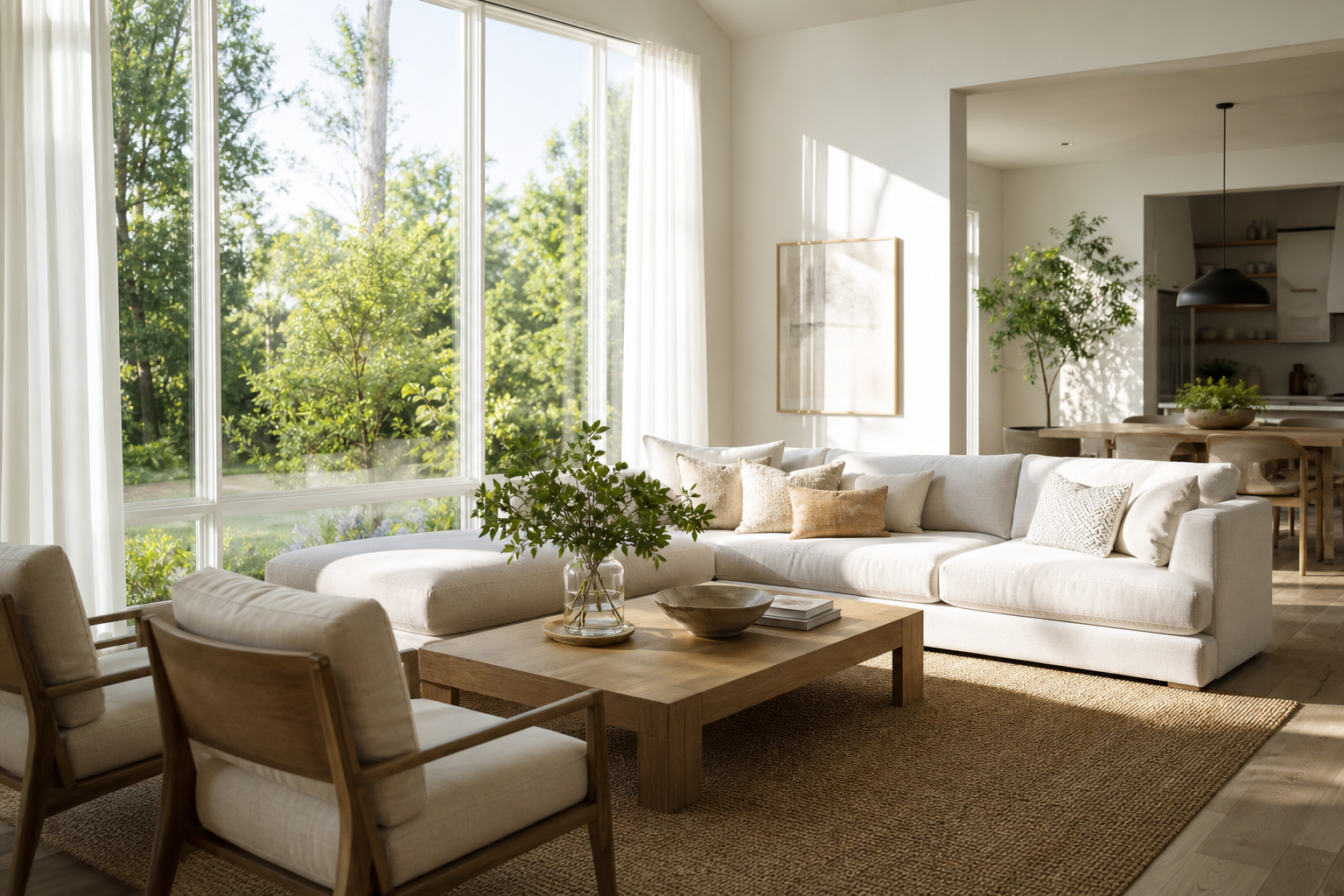
Sheer curtains soften sunlight without blocking it completely. They work well in living rooms, dining rooms, and bedrooms that do not need full daytime privacy. White or ivory sheers usually keep the room feeling bright.
Light filtering shades are another option. They reduce glare but still allow daylight to pass through. These shades can be useful in rooms where direct sun is too strong at certain times of day.
Cellular shades, roller shades, and Roman shades all come in light filtering styles. The best option depends on how much privacy you want and how often the window is used.
Layered Window Coverings
Layering gives you more control. For example, you can pair sheer curtains with heavier side panels. During the day, the sheers let in light. At night, the heavier panels can close for privacy.
This approach is useful in street-facing rooms or bedrooms. It also allows the window to look finished without staying dark all day. Mount curtain rods wider than the window frame so panels can stack outside the glass when open.
Avoid bulky valances or short curtains that cover the top of the window. The upper part of a window often brings in strong light, especially when the sun is higher in the sky.
Rearrange Rooms So Light Can Travel
Furniture layout can either welcome daylight or stop it. A bright room can still feel dim if large pieces sit in the wrong places.
Keep tall bookcases, wardrobes, and cabinets away from windows when possible. Low furniture near windows is usually better because it does not block the incoming light. In a living room, try placing a sofa perpendicular to the window instead of directly in front of it.
Open pathways also help. Daylight moves across floors, walls, and open areas. A crowded room with too many large pieces can cast shadows and make the space feel smaller.
Think about doorways too. If one room gets great natural light and the next room does not, keeping the door open may help. Interior glass doors or French doors can share light between rooms while still marking separate spaces.
In open-plan areas, use furniture with exposed legs. Sofas, chairs, and tables that sit high off the floor let light pass underneath and create a lighter look. Heavy, boxy furniture can make the same room feel darker.
Improve Outdoor Conditions Around Windows
Sometimes the biggest light blockers are outside the home. Trees, shrubs, fences, porch roofs, and awnings can all reduce daylight.
A shaded yard can be beautiful, but overgrown plants close to windows may make rooms feel dim. Trimming branches and shaping shrubs can open the view and let in more light. This does not mean removing every plant. It means creating space between greenery and glass.
Also look at window wells around basement windows. Leaves, dirt, and debris can collect there and block daylight. Keeping wells clear can help lower-level rooms feel less closed in.
Outdoor surfaces matter too. A light-colored patio, walkway, or fence near a window can reflect daylight back into the room. Dark exterior walls, deep porch ceilings, and heavy shutters can have the opposite effect.
If an awning or porch overhang blocks too much light, the solution may depend on the home’s design. Some overhangs protect against heat and rain, so changing them should be considered carefully.
Consider Larger Home Updates for More Daylight
Some homes need more than decor changes. If rooms are small, windows are limited, or the layout is closed off, larger updates may bring in more natural light.
Add or Enlarge Windows
Adding a new window or increasing the size of an existing one can transform a dark room. This is especially true in kitchens, stairwells, and living rooms. Larger windows create a stronger connection to the outdoors and can make the space feel more open.
However, window changes may affect structure, insulation, privacy, and local building rules. Wall framing, electrical wiring, and exterior finishes may also be involved. For that reason, this type of update is usually part of a planned renovation.
Window placement is just as important as size. A window that faces a shaded side yard may not bring in as much light as one facing an open area. The direction of the sun, nearby buildings, and landscaping all matter.
Use Skylights, Solar Tubes, and Glass Doors
Skylights can bring daylight into areas where wall windows are limited. Bathrooms, hallways, kitchens, and finished attics may benefit from overhead light. Skylights can be fixed or operable, depending on the room and ventilation needs.
Solar tubes, also called sun tunnels, are another option. They bring sunlight from the roof through a reflective tube into the room below. They are often used in hallways, closets, bathrooms, or other interior spaces without windows.
Glass doors can also make a big difference. Sliding glass doors, French doors, and doors with glass panels allow light to enter while serving as an entry point. Interior glass doors can help shared light move from one room to another.
These updates should be planned with attention to energy performance, leaks, privacy, and glare. The goal is not only more light, but better light.
Reduce Glare While Keeping Rooms Bright
More natural light is not always better if it creates glare, heat, or faded furnishings. A room should feel bright and comfortable, not harsh.
Glare often happens when direct sunlight hits screens, glossy counters, or shiny floors. Instead of blocking the window completely, soften the light. Light filtering shades, sheer curtains, woven shades, or adjustable blinds can help.
Furniture placement can also reduce glare. Move televisions and computer screens so they do not face a bright window directly. In kitchens, matte finishes may be easier on the eyes than very glossy surfaces.
If a room gets strong afternoon sun, choose materials that handle light well. Some fabrics, wood finishes, and artwork can fade when exposed to direct sunlight for long periods. Window coverings can protect these items while still letting the room feel bright.
Natural light should support the way a room is used. A sunny breakfast nook may feel cheerful, while the same light on a home office screen may be distracting. Each space may need a different balance.
Brighten Dark Rooms Without Major Renovation
Some areas of the home are naturally darker. Hallways, closets, laundry rooms, basements, and interior bathrooms may have few or no windows. Even then, the space can feel lighter with smart choices.
Use pale paint on walls and ceilings. Keep flooring and rugs light. Add mirrors where they can reflect light from nearby rooms. Replace solid interior doors with doors that include frosted glass where privacy is still needed.
In rooms connected to brighter spaces, leave openings as clear as possible. Avoid dark curtains, heavy furniture, and clutter near doorways. A light-colored runner in a hallway can also help the area feel less shadowy.
For basements, clean window wells, use bright trim, and avoid placing storage in front of windows. If privacy is needed, choose light filtering coverings instead of heavy blinds.
Even small choices add up. A dark room may not become sun-filled, but it can feel cleaner, calmer, and more open.
Frequently Asked Questions
What is the easiest way to bring more natural light into a home?
The easiest way is to clean windows, open curtains fully, and move items blocking the glass. These small changes cost little and can quickly make rooms feel brighter.
Do mirrors really help increase natural light?
Yes, mirrors can help reflect daylight into darker areas of a room. They work best when placed across from or near a window, where they can catch and spread light.
What paint colors make a room feel brighter?
White, cream, soft gray, pale beige, and light pastels usually make rooms feel brighter. These colors reflect more daylight than dark shades and help walls look more open.
Are skylights a good choice for every home?
Skylights can be helpful, but they are not right for every roof or room. Placement, roof design, insulation, and water protection all need careful planning before installation.
How can I get more light while keeping privacy?
Use sheer curtains, frosted glass, light filtering shades, or layered window treatments. These options allow daylight to enter while reducing direct views from outside.
Final Thoughts on Natural Light at Home
Bringing more natural light into your home often starts with simple changes. Clean windows, lighter colors, open layouts, and better window treatments can make a noticeable difference. Outdoor trimming and smart furniture placement can also help daylight travel farther.
For homes with limited windows or closed layouts, larger updates such as skylights, glass doors, or new windows may be worth exploring as part of a renovation plan. The best result is a home that feels bright, comfortable, and suited to daily life.