
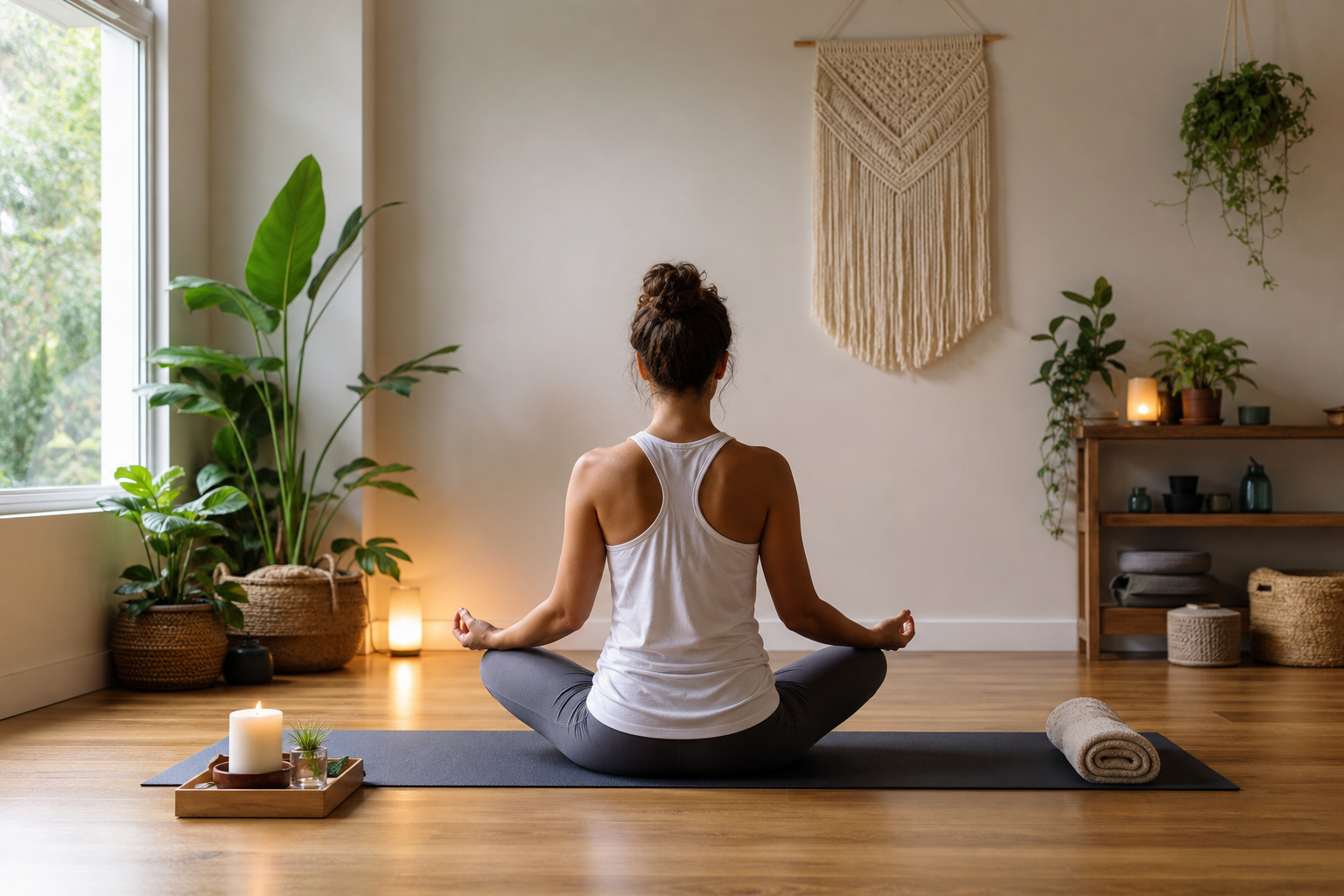

How Do You Build a Peaceful Space for Yoga at Home? The answer is less about having a perfect room and more about creating a steady, comfortable place that helps your mind settle. A home yoga space can be a spare bedroom, a quiet corner, part of a living room, or even a small spot near a window. What matters most is that the space feels clear, safe, and easy to use. With thoughtful choices, any home can support a calmer practice.
Why a Peaceful Yoga Space Matters
Yoga is not only about poses. It also includes breathing, awareness, stillness, and rest. When your space feels cluttered, noisy, or hard to use, it can be harder to focus. A peaceful area gives your body and mind a simple signal: this is where you slow down.
A home yoga space also removes some common barriers. You do not need to drive anywhere, pack a bag, or match a studio schedule. Your mat is already there. Even a short practice can feel more natural when the space is prepared.
The goal is not to copy a yoga studio. Your home has its own limits and personality. A peaceful space should fit your real life. It should work around pets, kids, roommates, furniture, and daily noise. The best setup is one you can return to often without stress.
How Do You Build a Peaceful Space for Yoga at Home?
Building a peaceful yoga space starts with three simple ideas: choose the right spot, reduce distractions, and make the area feel welcoming. You do not need expensive decor or a large room. You need enough space to move, a surface that feels safe, and an atmosphere that supports quiet attention.
Think about how you practice. If you enjoy slow stretching, meditation, or restorative yoga, you may want softer lighting and extra props. If you prefer active flows, you need more open floor space and good airflow. If you practice early in the morning, you may want your mat near natural light. If you practice at night, a dim lamp may feel better.
The most peaceful space is one that fits your habits. A beautiful corner will not help much if it is hard to access or always blocked by laundry. Keep the setup simple enough to maintain.
Choose the Right Location
Your yoga area should give you enough room to move without bumping into furniture. As a general guide, you need space for your mat plus extra room for your arms and legs to reach out. If you can stretch your arms to the sides, step forward and back, and lie down comfortably, the spot may work well.
Look for a place with limited foot traffic. A corner of a bedroom, office, den, or living room can be better than the center of a busy area. If your home is small, a flexible setup can still work. You may roll out your mat beside the bed, in front of the couch, or near a dining table after moving a chair.
Look for Quiet, but Accept Real Life
A quiet room is ideal, but silence is not always possible. Many homes have street sounds, appliances, neighbors, or family noise. Instead of waiting for perfect quiet, choose the calmest available spot.
Soft background sound may help cover distractions. A fan, gentle music, or a sound machine can create a more even sound environment. Some people prefer silence, while others feel more relaxed with soft nature sounds or instrumental music. The key is to use sound in a way that supports focus, not steals attention.
Think About Light and Air
Light affects mood. Natural light can make a space feel fresh and open. A window view may also help you feel grounded. If bright sunlight feels harsh, curtains or blinds can soften it.
For evening practice, avoid lighting that feels too sharp. A warm lamp can create a calm setting without making the room too dark. Candles may look peaceful, but they need care. If you use them, keep them away from curtains, mats, blankets, pets, and children.
Airflow matters too. A stuffy room can make practice uncomfortable. Opening a window, using a fan, or choosing a room with good ventilation can help. The room does not need to be cold, but it should feel breathable.
Clear Clutter and Create Visual Calm
Clutter can make the mind feel busy. You do not have to create a blank room, but the area around your mat should feel open. Remove items that make the space feel crowded or distracting.
Start with what you can see from the mat. If you look up during a pose and see piles of paper, laundry, or cords, your attention may drift. A small basket, storage cube, or shelf can help keep everyday items out of sight.
A peaceful yoga space often includes fewer objects, chosen with care. This does not mean the room must be plain. It means each item should have a purpose or bring a calm feeling.
Helpful items may include:
- A yoga mat that stays flat and feels stable
- One or two blocks for support
- A folded blanket for knees, hips, or relaxation
- A strap, towel, or belt for gentle stretching
- A small basket to store props when not in use
- A plant, photo, or object that feels meaningful
Try to avoid turning the space into a storage area. Once a yoga corner becomes a place for random items, it may stop feeling restful. Keeping it clear helps protect the mood of the space.
Choose Colors, Textures, and Decor With Care
The look of your yoga space can shape how it feels. Soft colors, simple textures, and natural materials often work well. You do not need to repaint the room, but you can adjust small details.
Neutral shades, warm whites, soft blues, gentle greens, and earth tones can feel calm. Bright colors are not wrong, but too many strong colors may feel busy. If you love bold shades, use them in small touches, such as a cushion, blanket, or wall print.
Texture adds comfort. A soft throw, cotton blanket, woven basket, or smooth wooden item can make the space feel more grounded. Be careful with rugs, though. A rug under a yoga mat can slip or bunch up. If you use one, make sure the surface is secure.
Decor should support practice, not compete with it. One simple wall hanging may feel better than a full gallery wall. A plant can bring life to the room, but choose one that is easy to care for and safe for your household.
Set Up the Essentials for Comfort and Safety
A peaceful space should also be practical. If the floor is slippery, the room is cramped, or props are missing, you may feel tense instead of calm. Safety helps the body relax.
Your yoga mat is the main piece of equipment. Choose one that gives enough grip and cushion for your practice style. A thinner mat may feel stable for standing poses. A thicker mat may feel better for sensitive knees. There is no single best choice for everyone.
Keep a few supports nearby. Blocks can bring the floor closer in many poses. A blanket can support the spine or protect joints. A strap can help with stretches without forcing the body.
Before practice, check the area for hazards:
- Move sharp-edged furniture away from the mat
- Keep cords, shoes, and small objects off the floor
- Make sure the mat does not slide on the surface
- Leave space near walls, tables, and doors
- Keep pets’ toys and children’s items out of the practice path
Temperature also matters. If the room is too cold, your muscles may feel tight. If it is too warm, practice may feel draining. Dress in layers or keep a blanket nearby for slower practices and final rest.
Use Scent and Sound in a Gentle Way
Scent can make a yoga space feel special, but it should be subtle. Strong smells may cause headaches, allergies, or irritation for some people. If you use essential oils, incense, or scented candles, use them lightly and with care.
Fresh air is often enough. Opening a window for a few minutes before practice can reset the room. If you prefer scent, consider a small diffuser used for a short time, or a naturally scented item placed away from the mat.
Sound can also support the mood. Some people enjoy quiet music, while others prefer guided audio or silence. The sound should match the type of practice. Slow music may work for stretching and rest. A simple steady rhythm may suit an active flow.
If other people live with you, headphones may help, especially during meditation. Just make sure you can still hear important household sounds if needed.
Make the Space Feel Personal, Not Perfect
A peaceful yoga space should feel like yours. Personal details can make the area more inviting. This might be a framed photo, a favorite blanket, a small lamp, or a journal nearby. The item does not need to look “yogic.” It only needs to support a calmer state.
At the same time, avoid pressure to make the space picture-perfect. Social media often shows large, bright rooms with matching props and empty floors. Real homes are different. A yoga mat beside a bed can be just as meaningful as a private studio room.
The space should serve your practice, not your image of what practice should look like. If you feel calm, safe, and able to focus, the space is doing its job.
Build a Simple Routine Around the Space
A peaceful space becomes more powerful when it is used with a simple rhythm. Small habits help your mind shift into practice mode. You might dim a lamp, silence phone alerts, unfold a blanket, or take three slow breaths before moving.
Keeping the setup easy is important. If it takes too long to prepare, you may avoid practicing. Store your mat and props nearby so you can begin without searching.
A short routine may include:
- Clear the floor around the mat
- Put your phone on silent or away from reach
- Adjust the light to feel comfortable
- Set out any props you plan to use
- Take a few quiet breaths before starting
This kind of routine does not need to be strict. It simply marks a shift from regular home life into practice time.
Share the Space With Family, Pets, or Roommates
Many people do not have a private room for yoga. Shared space can still work with good communication and flexible expectations. Let others know when you are practicing, especially if you need quiet for a short time.
If you have children, you may keep your practice shorter or choose times when the house is calmer. If pets like to join you, keep the area safe and avoid poses where they may get stepped on. Some pets settle down once they understand the routine, while others may need to stay in another room.
A peaceful home yoga space does not require total control. It requires patience. Interruptions may happen. When they do, returning to the breath can become part of the practice.
Frequently Asked Questions
How much space do I need for yoga at home?
You need enough room for your mat and for your arms and legs to move safely. A small bedroom corner or living room area can work if it is clear and stable.
What should I put in a home yoga space?
A mat, blanket, blocks, and a strap are useful basics for many practices. You can also add a lamp, basket, or calming object if it helps the room feel peaceful.
Can I build a peaceful yoga space in a small apartment?
Yes, a small apartment can still support a calm yoga practice. Use a flexible area, store props neatly, and choose a time when the space feels less busy.
Is it better to practice yoga in silence or with music?
Both can work, depending on your needs and mood. Silence may support meditation, while soft music can help cover background noise and create a steady atmosphere.
How do I keep my yoga space peaceful over time?
Keep the area clean, remove clutter often, and store props in one place. A simple setup is easier to maintain and helps the space stay inviting.