
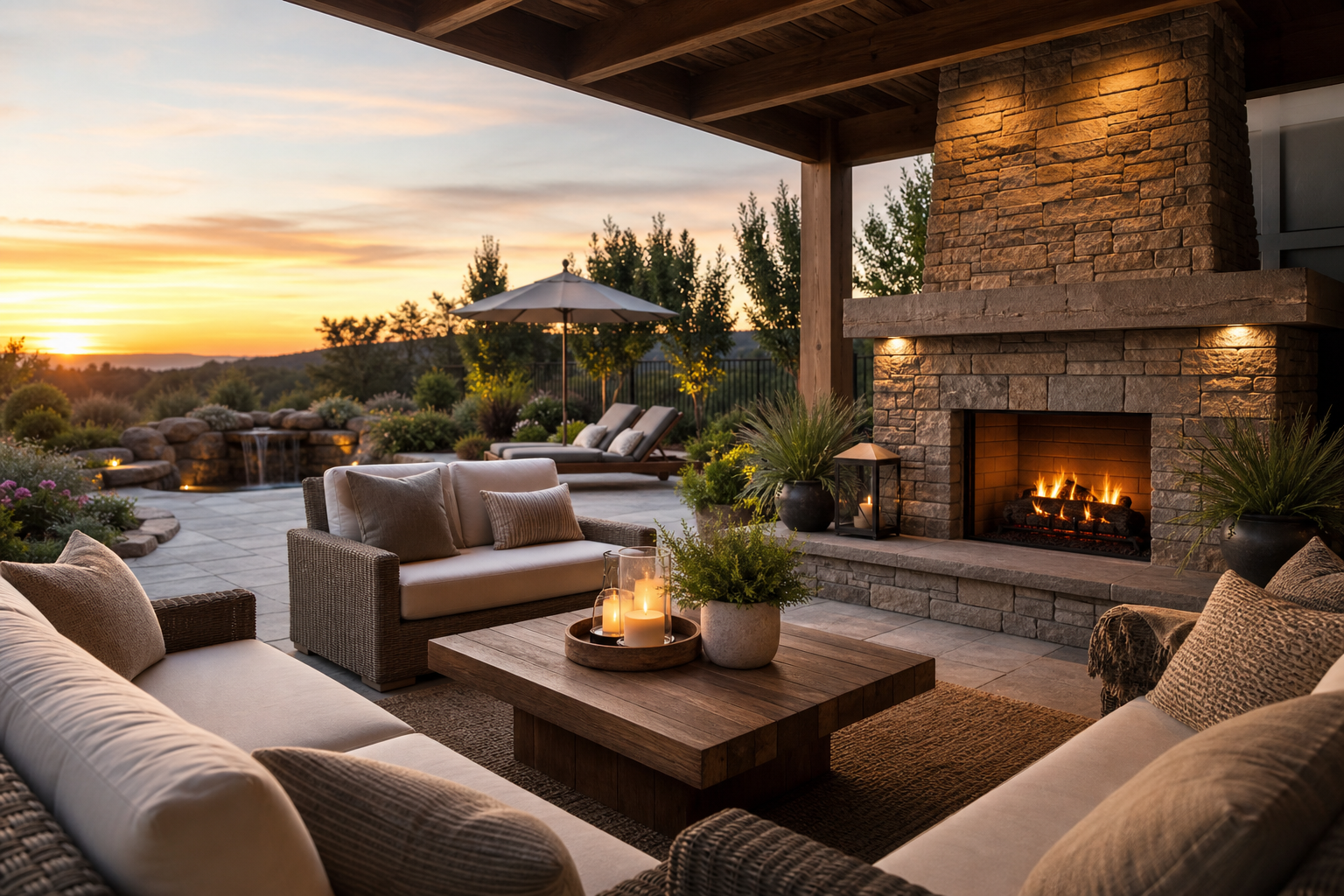

Which Patio Features Create an Outdoor Retreat? The answer is not one single item. A true outdoor retreat comes from comfort, shade, privacy, lighting, useful surfaces, and a layout that fits daily life. A patio can be small, large, simple, or fully built out, but the best spaces feel easy to use. They invite you to sit down, breathe, eat outside, read a book, or talk with friends after sunset.
The right features turn a plain paved area into a place that feels calm, personal, and connected to the home.
Which Patio Features Create an Outdoor Retreat That Feels Comfortable?
Comfort is the heart of any outdoor retreat. A patio may look beautiful, but if the chairs are stiff, the sun is harsh, or there is nowhere to set a drink, people will not stay long. Start with how the space will feel when someone sits there for more than a few minutes.
Outdoor furniture should match the way the patio will be used. A dining set works well for family meals. A deep sofa and lounge chairs fit a relaxed conversation area. A pair of cushioned chairs may be enough for a quiet morning coffee spot.
Look for pieces that suit the weather in your area. In rainy regions, quick-dry cushions and rust-resistant frames can help. In hot, sunny areas, lighter fabrics and shade-friendly layouts may be more pleasant.
A retreat also needs soft details. Outdoor pillows, a rug, and throws can make the patio feel more like a room. These items add color and comfort without making the space feel too formal.
Useful comfort features include:
- Cushioned seating with washable or weather-friendly covers
- Side tables near every main seat
- An outdoor rug that defines the seating area
- Footrests, ottomans, or lounge chairs for relaxed use
- Storage for pillows, throws, and small outdoor items
Comfort does not have to mean crowded. Leave enough space to walk easily around furniture. A patio feels more peaceful when people can move without bumping into chairs, planters, or tables.
Shade, Shelter, and Weather Protection
A patio retreat should feel usable during more than one type of weather. Shade, cover, and wind protection can make a big difference. These features help control sun, glare, heat, light rain, and breezes.
Pergolas, Umbrellas, and Covered Areas
Shade is one of the most important patio features. Direct sun can make even a beautiful space hard to enjoy. A large umbrella is a flexible choice because it can be moved or adjusted. A pergola adds structure and can help define the patio as an outdoor room.
A covered patio offers stronger protection. It may allow the space to be used during light rain or during the brightest part of the day. Some homeowners prefer a solid roof, while others like a slatted structure that lets in filtered light.
The best option depends on the patio’s size, budget, home style, and climate. A small balcony or compact patio may only need a table umbrella. A larger seating area may feel better with a pergola, canopy, or roof extension.
Wind and Rain Considerations
Wind can make a patio feel less restful. It can blow napkins, chill guests, or make a fire feature harder to enjoy. Screens, fencing, shrubs, or outdoor curtains can soften breezes and create a more comfortable setting.
Rain protection matters too. Covered storage, weather-resistant furniture, and proper drainage help keep the patio from feeling messy. If water collects on the surface, the space may become slippery or hard to use. A good patio retreat should feel clean, safe, and ready when the weather clears.
In some areas, insect control is also part of comfort. Fans, screened sections, and tidy landscaping can help reduce nuisance insects without changing the look of the patio too much.
Privacy Features That Make the Patio Feel Like a Retreat
Privacy helps a patio feel calm. Even a well-designed space can feel exposed if it faces a neighbor’s window, a busy street, or a shared yard. The goal is not always to block everything. Sometimes, a small visual buffer is enough.
Fences are a common choice, but they are not the only option. Tall planters, lattice panels, trellises, hedges, and outdoor curtains can all add privacy. Plants are especially useful because they soften hard surfaces and bring life to the patio.
Privacy can also come from smart furniture placement. A sofa with its back to the open area can make the seating zone feel more enclosed. A row of planters can guide the eye and shape the space. A pergola with curtains can create a cabana-like feeling when needed.
Good privacy features often do more than one job. A trellis can support climbing plants. A planter wall can add greenery and divide space. A screen can block a view while also reducing wind.
For a natural retreat feeling, consider:
- Tall grasses in large containers
- Evergreen shrubs along the patio edge
- Climbing vines on a trellis or pergola
- Outdoor curtains on a covered frame
- Decorative privacy panels with open patterns
Privacy should still allow air and light to move through the space. A patio that is fully closed in may feel tight or dark. Balance is key.
Lighting That Extends the Retreat Into the Evening
Lighting changes how a patio feels after sunset. Bright floodlights may be useful for security, but they rarely create a relaxing mood. A retreat needs layered lighting that feels warm, gentle, and practical.
Start with the main activities. Dining areas need enough light to see food and faces. Lounge areas can use softer light. Steps, paths, and edges need visibility for safety.
String lights are popular because they add charm and overhead glow. Lanterns can sit on tables or hang from hooks. Wall lights can brighten doors and covered areas. Small landscape lights can highlight plants, walls, or pathways.
The best patio lighting usually includes more than one source. This creates depth and avoids harsh shadows. Dimmer lighting, warm tones, and shielded fixtures can help the patio feel cozy instead of glaring.
Lighting can also guide the layout. A pendant over an outdoor dining table suggests a meal zone. Small lights near planters make garden corners more noticeable. Step lights mark changes in level without taking over the scene.
A retreat should feel welcoming at night, not overlit. Aim for a soft glow that lets people relax, talk, and enjoy the outdoors.
Fire, Water, and Other Sensory Features
A memorable patio often includes features that appeal to the senses. Sound, warmth, movement, and texture help the space feel special. These elements do not need to be large or expensive. Even one well-chosen feature can change the mood.
A fire pit or outdoor fireplace can create a natural gathering point. It adds warmth on cool evenings and gives people a place to face. Fire features should always be placed with safety in mind, away from flammable materials and in line with local rules.
Water features bring a different feeling. A small fountain can add gentle sound and mask nearby noise. The moving water can make the patio feel cooler and more peaceful. For many people, the sound of water supports a restful mood.
Texture also matters. Stone, wood, woven furniture, ceramic pots, and soft fabric all add interest. A patio with only hard surfaces may feel flat. Mixing materials makes the space feel warmer and more layered.
Scent can play a role as well. Herbs in containers, fragrant flowers, and nearby garden beds can add subtle pleasure. Lavender, rosemary, mint, and basil are common patio-friendly choices, depending on the climate and care needs.
Outdoor Dining and Cooking Features
Food has a way of making outdoor spaces feel used and loved. A patio retreat does not need a full outdoor kitchen, but it should support the way people like to eat outside.
For some homes, a small bistro table is enough. For others, a dining table with seating for family and guests is more useful. A grill station, prep counter, or serving cart can make outdoor meals easier.
The key is convenience. If the dining area is too far from the kitchen, it may not get used often. If there is no shade, meals may be uncomfortable during the day. If lighting is poor, dinner outside may feel awkward after dark.
Good outdoor dining features include:
- A table sized for normal use, not just special events
- Comfortable chairs that are easy to move
- A nearby surface for serving dishes or drinks
- Shade over the dining area
- Lighting that makes evening meals pleasant
Cooking features should fit the space. A built-in grill may suit a large patio, while a portable grill may work better for a smaller one. Storage for tools, covers, and fuel can help keep the area neat.
Greenery and Landscaping That Soften the Space
Plants help a patio feel like part of the outdoors, not just an extension of the house. Greenery softens edges, adds color, and creates a sense of calm. Even a patio with no surrounding yard can feel lush with the right containers.
Large planters can frame a seating area. Hanging baskets can add color at eye level. Raised beds can connect the patio to the garden. Small trees in pots can provide shade and height.
Choose plants based on sunlight, water needs, and local conditions. A sunny patio may support herbs, ornamental grasses, and flowering plants. A shady patio may need ferns, hostas, or shade-loving container plants. The exact choices depend on the region and the care level desired.
Planters also help define zones. A row of containers can separate dining from lounging. Tall plants can screen a view. A pair of matching pots can mark an entrance.
Greenery adds movement as leaves shift in the breeze. It also changes through the seasons, which keeps the patio from feeling static.
Layout and Flow: The Feature People Often Forget
The best patio features will not work well without a clear layout. Flow is about how people move through the space. It includes the path from the house, the distance between furniture, and the way each zone connects.
Think of the patio as an outdoor room. A living area needs a center, such as a coffee table, fire pit, or rug. A dining area needs space for chairs to slide out. A grill area needs room for cooking without blocking traffic.
Avoid placing too many features in one spot. A crowded patio feels stressful, not restful. It is better to have fewer pieces that work well than many pieces that compete.
Scale is also important. Large furniture can overwhelm a small patio. Tiny furniture can look lost on a wide terrace. The size of each feature should match the area around it.
A good layout answers simple questions:
- Where do people enter the patio?
- Where do they sit first?
- Can they walk around the furniture easily?
- Is there a clear place for food, drinks, or books?
- Does each feature support the main purpose of the space?
When the layout feels natural, the patio becomes easier to enjoy every day.
Frequently Asked Questions
What is the most important patio feature for an outdoor retreat?
Comfortable seating is often the most important feature because it makes people want to stay. Shade, privacy, and lighting also matter, but seating shapes the main experience.
Can a small patio still feel like an outdoor retreat?
Yes, a small patio can feel like a retreat with smart furniture, plants, lighting, and privacy. A simple layout often works better than too many large features.
What patio features help with privacy from neighbors?
Privacy screens, tall planters, trellises, outdoor curtains, hedges, and fencing can all help. The best choice depends on the view, space, style, and local rules.
Is a fire pit a good feature for every patio?
A fire pit can be a great gathering feature, but it is not right for every patio. Space, surface material, ventilation, safety clearances, and local regulations should be considered.
How can lighting make a patio feel more relaxing?
Soft, layered lighting creates a warm evening mood without harsh glare. String lights, lanterns, wall lights, and path lights can make the space safer and more inviting.
Bringing the Outdoor Retreat Together
So, which patio features create an outdoor retreat? The most successful spaces combine comfort, shade, privacy, lighting, greenery, and a layout that feels easy to use. Fire, water, dining, and cooking features can add more personality when they fit the space.
A patio retreat does not need every feature at once. It needs the right mix for the home and the people who use it. A quiet reading corner, a family dining area, or a cozy evening lounge can all feel like a retreat when the details support comfort and calm.
The best patios feel natural, not forced. They offer a place to pause, enjoy fresh air, and spend time outside without leaving home.