

What Makes a Kitchen More Practical Every Day? It is not only the size of the room or the price of the appliances. A practical kitchen is easy to move through, simple to clean, and ready for the way people really cook, eat, and live. It supports busy mornings, quick dinners, lunch packing, homework at the counter, and quiet cups of coffee. The best kitchens feel calm because everything has a place and every choice has a purpose.
What Makes a Kitchen More Practical Every Day? The Core Ideas
A practical kitchen starts with how the space works during normal life. A beautiful kitchen can still feel frustrating if the trash can is too far from the sink, if pans are stacked in a deep corner, or if the counter is always covered with clutter. Daily use is the real test.
The most practical kitchens share a few simple traits. They have clear work zones, enough counter space, useful storage, good lighting, and surfaces that are easy to wipe down. They also fit the habits of the people who use them. A family that cooks every night needs different features than a person who mostly reheats meals and makes coffee.
Practical design is not about making a kitchen look plain. It is about making smart choices. A cabinet can be both attractive and easy to reach. A countertop can look stylish and still handle spills. A drawer can hide clutter while keeping tools close at hand.
A useful kitchen also saves small bits of time. That may sound minor, but it matters. When the cutting board is near the knives, when the mugs are close to the coffee maker, and when snacks are easy for kids to reach, the kitchen feels smoother every day.
Layout: The Difference Between Easy and Annoying
The layout is one of the biggest factors in kitchen comfort. If the main parts of the kitchen are too far apart, cooking becomes tiring. If they are too close, more than one person may not be able to work at the same time.
Most kitchens work best when the sink, stove, and refrigerator are easy to reach from one another. This does not mean every kitchen needs the same shape. Galley kitchens, L-shaped kitchens, U-shaped kitchens, and kitchens with islands can all work well. The key is clear movement.
There should be enough space to open the refrigerator, dishwasher, oven, and cabinet doors without blocking the whole room. Walkways should also feel comfortable when someone is carrying groceries, a hot pan, or a full plate.
Create Work Zones That Match Real Tasks
Work zones make the kitchen easier to understand. Instead of putting items wherever they fit, group them by use. This helps the room support your routine.
Common kitchen zones include:
- Prep zone: Cutting boards, knives, mixing bowls, measuring cups, and open counter space.
- Cooking zone: Pots, pans, cooking utensils, spices, oils, and oven mitts near the stove.
- Cleaning zone: Sink, dishwasher, dish soap, towels, trash bags, and cleaning supplies.
- Coffee or drink zone: Mugs, coffee maker, filters, tea, sweeteners, and travel cups.
- Food storage zone: Pantry goods, snacks, wraps, containers, and lunch items.
These zones do not need to be large. Even a small drawer or shelf can become a useful zone when it is planned well.
Keep Daily Items Within Easy Reach
A practical kitchen does not make you bend, stretch, or dig for items used every day. Plates, glasses, coffee mugs, cookware, and basic tools should be easy to grab. Less-used items can go higher, lower, or farther away.
This is especially helpful in homes with children, older adults, or people with limited mobility. Heavy pots are easier to manage in deep drawers than on high shelves. Everyday dishes are safer when they are not stored above shoulder height. A pull-out shelf can make a lower cabinet much easier to use.
Good layout is quiet help. You may not notice it every minute, but you feel it when the kitchen stops getting in your way.
Storage That Reduces Clutter
Storage is not only about having more cabinets. It is about using the space well. A kitchen can have plenty of cabinets and still feel messy if the storage does not match the items inside.
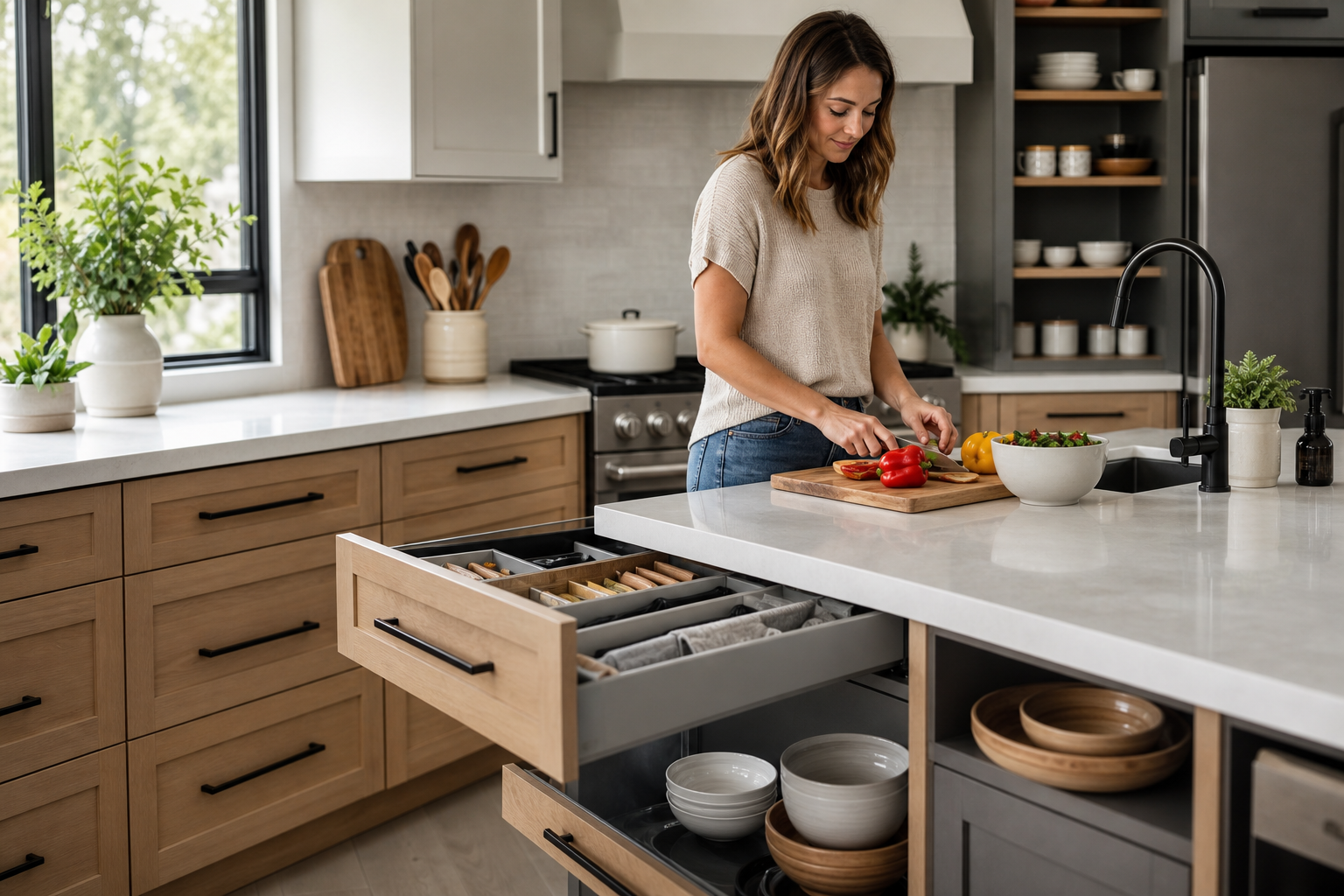
Drawers are often more practical than deep lower cabinets because they bring items forward. You can see what is inside without crawling on the floor. Pull-out shelves, dividers, and lazy Susans can also make hard-to-reach spaces more useful.
Open shelves can be practical in some homes, especially for items used often. But they also collect dust and can look cluttered if too many things are displayed. Closed cabinets hide visual mess and are often easier for busy households.
The pantry also matters. Whether it is a walk-in pantry, a cabinet pantry, or a few shelves, food storage should be easy to scan. When you can see what you have, you waste less and shop with less guesswork.
Simple storage ideas that help every day include:
- Drawer dividers for utensils, measuring spoons, and small tools.
- Clear bins for snacks, baking items, packets, or lunch supplies.
- Pull-out trash and recycling bins near the prep or cleaning area.
- Vertical slots for baking sheets, cutting boards, and trays.
- Labeled shelves for pantry groups like breakfast, pasta, or canned food.
Good storage also prevents the “junk drawer” from spreading across the room. It gives small items a home before they become clutter.
Counter Space and Surfaces That Work Hard
Counter space is one of the most valuable parts of a kitchen. It is where food is prepared, bags are unloaded, mail is dropped, and meals are served. A practical kitchen protects counter space from becoming a storage area.
Small appliances can be helpful, but too many on the counter make cooking harder. Keep out the items used every day, such as a coffee maker or toaster. Store the rest if possible. Even a few clear feet of counter can make dinner prep feel easier.
The location of counter space matters too. Space next to the stove is useful for hot pans. Space near the refrigerator helps when unloading groceries. Space near the sink helps with washing produce and stacking dishes.
Surfaces should also match real life. Some people love the look of natural materials, while others need something low-maintenance. The practical choice depends on how the kitchen is used. A busy home may need surfaces that handle spills, crumbs, school projects, and quick cleanups without stress.
Backsplashes, flooring, and cabinet finishes also affect daily care. Smooth surfaces are usually easier to wipe than rough or detailed ones. Dark floors may hide some marks but show crumbs. Light counters may brighten the room but show stains sooner. There is no perfect choice for everyone, only the right balance for each home.
Lighting, Power, and Comfort
Lighting can make or break a kitchen. A room may have enough overhead light but still feel dim when chopping vegetables or reading a recipe. Practical kitchens use layers of light.
Overhead lights brighten the whole room. Task lights help at counters, sinks, and stoves. Accent lighting can make shelves or dining areas feel warmer. Under-cabinet lighting is especially useful because upper cabinets can cast shadows on work surfaces.
Natural light also helps the kitchen feel pleasant. A bright room often feels cleaner and more open. But even kitchens without much natural light can work well with the right bulbs and fixtures.
Electrical outlets are another everyday detail. Modern kitchens often need power for coffee makers, mixers, air fryers, phones, tablets, and small appliances. Outlets should be placed where people actually use them. It is frustrating to move an appliance across the room just to plug it in.
Comfort also includes seating and sound. If people gather in the kitchen, a small seating area can make the room more useful. Bar stools, a breakfast table, or a built-in bench can all work, depending on space. Soft-close drawers and cabinets can make the room feel calmer, especially in open floor plans.
Easy Cleaning Makes a Kitchen More Practical
A kitchen that is easy to clean is easier to enjoy. This does not mean it has to be spotless all the time. It means spills, crumbs, grease, and dishes can be handled without a major effort.
The sink area is a good place to start. A deep sink can help with large pots and pans. A faucet with a pull-down sprayer can make rinsing easier. A trash can near the sink or prep area keeps scraps from traveling across the floor.
Cabinet hardware can also affect cleaning. Simple pulls are often easier to wipe than detailed knobs. Flat cabinet fronts may collect less dust than doors with many grooves. Flooring should be comfortable underfoot and able to handle water, dirt, and dropped food.
Small habits also support a cleaner kitchen. A tray under cooking oils can catch drips. A washable mat near the sink can protect the floor. A dedicated spot for mail can keep paper piles away from cooking areas.
Practical cleaning features are not exciting in the same way as a new range or a big island. But they shape how the kitchen feels after breakfast, after dinner, and on busy weekends.
A Practical Kitchen Fits Your Lifestyle
No two homes use the kitchen in exactly the same way. That is why practical design should begin with honest questions. Who cooks? How often? Do people eat in the kitchen? Are there pets, kids, or guests? Is the kitchen used for work, crafts, or school projects?
For some homes, the most practical feature is a large island with seating. For others, it is a small table, a better pantry, or a safer layout. A serious home cook may care most about prep space and tool storage. A busy parent may care more about easy lunches, wipeable surfaces, and a place for backpacks.
A practical kitchen also changes over time. A young family may need low drawers for kid-friendly dishes. Later, the same space may need more storage for cooking tools or entertaining pieces. Flexible storage, simple finishes, and clear zones help the room adapt.
Style still matters. People want to like the room they use every day. But style should not fight function. The most satisfying kitchens are the ones that look good and make ordinary tasks feel easier.
Frequently Asked Questions
What is the most important feature of a practical kitchen?
The most important feature is a layout that supports daily movement, cooking, cleaning, and storage.
How can I make a small kitchen more practical?
Use vertical storage, keep counters clear, group items by task, and store rarely used items elsewhere.
Are kitchen islands always practical?
Kitchen islands are practical when they improve prep space, storage, seating, or flow without blocking movement.
What storage upgrades help the most?
Deep drawers, pull-out shelves, drawer dividers, and clear pantry bins often make storage easier to use.
How do I keep my kitchen practical over time?
Review your habits often, remove unused items, adjust storage, and keep daily tools easy to reach.