

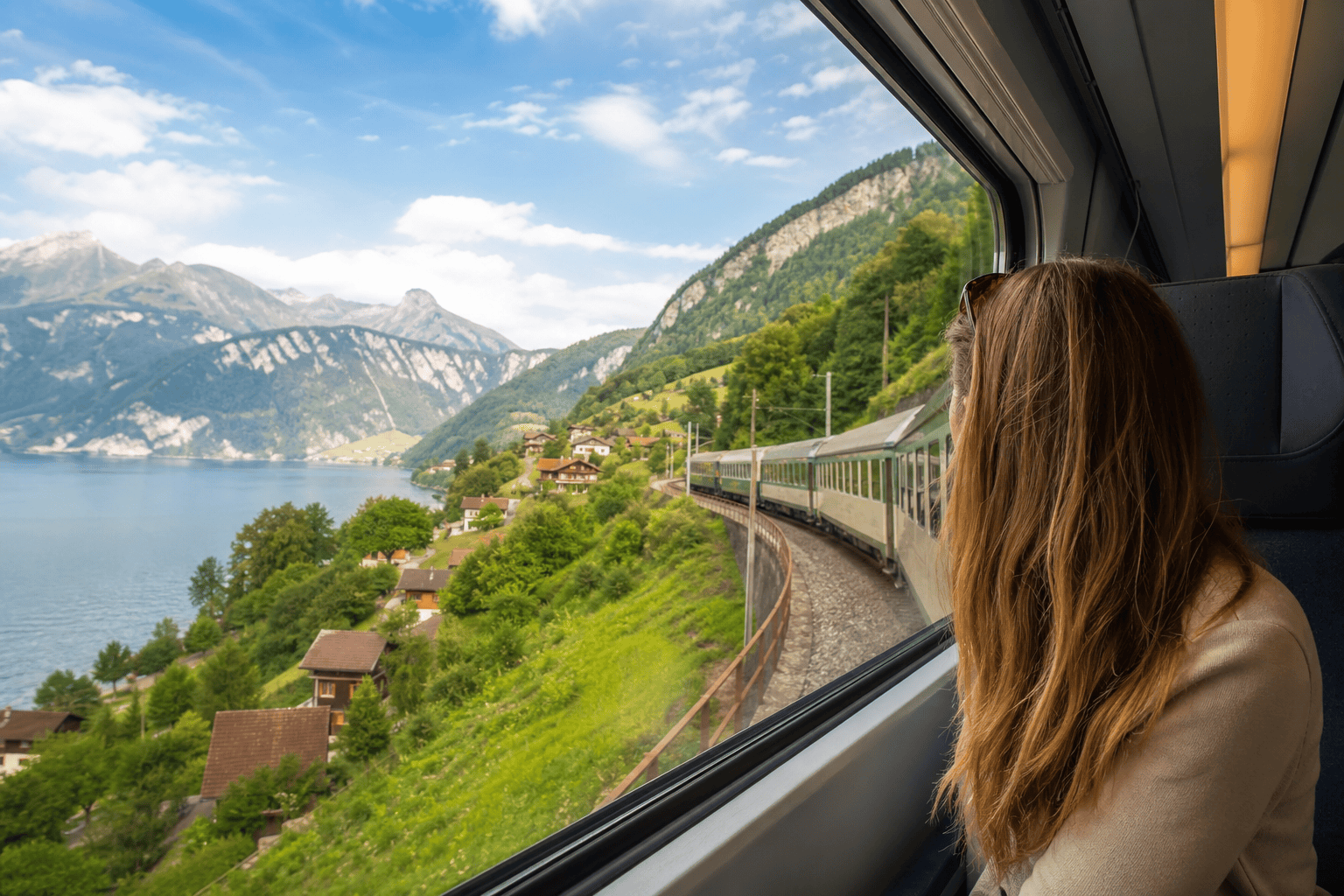

Europe is full of famous cities, small towns, mountain views, and coastlines that feel close together on a map. So, what makes train travel a great way to explore Europe? For many travelers from the United States, it offers comfort, flexibility, and a calmer way to move between places without the stress of airports or long drives.
What Makes Train Travel a Great Way to Explore Europe?
Train travel fits Europe well because many cities and towns are connected by rail. Instead of treating travel time as lost time, the journey becomes part of the experience. You can watch the view change from busy streets to farmland, rivers, forests, or snowy peaks.
For visitors used to flying between large US cities, European train stations can feel refreshingly central. Many major stations are located in or near city centers. This can make it easier to arrive, check in, eat, walk, or visit a museum without a long transfer from an airport.
Trains also support a slower style of travel. You can see more of the land between destinations, not only the places at each end. That can make a trip feel more complete and less rushed.
Comfort and Convenience for Everyday Travelers
Train travel in Europe is popular because it is usually simple to understand once you know the basics. You buy a ticket, find the platform, board the train, and settle in. There are no security lines like at airports, and you do not need to arrive hours early for most routes.
Many trains have wide seats, tables, restrooms, luggage racks, and space to stand or walk. On some routes, food and drinks are available on board or at the station before departure. Even when the ride is short, the experience can feel easier than packing into a small car or waiting at a crowded gate.
City Center to City Center Travel
One of the biggest benefits is location. Train stations are often part of the city itself. In places like Paris, Amsterdam, Vienna, and Rome, major stations connect with local transit, taxis, hotels, shops, and restaurants.
This matters when time is limited. If a flight is only one hour, it may still require a long trip to the airport, early check-in, security, boarding, landing, and transport back into the city. A train can be more direct for many short and medium routes.
Less Stress Than Driving
Driving in Europe can be enjoyable in rural areas, but it can also bring stress. Different road signs, tolls, parking rules, narrow streets, and city traffic can surprise visitors. Manual transmission cars may also be common in some rental markets, which may not suit every US traveler.
Train travel removes many of those problems. You do not need to study road rules in each country, find parking, or worry about city driving. You can sit back, read, talk, snack, or simply look outside.
Room to Relax Along the Way
A train gives you personal freedom during the trip. You can get up, stretch your legs, visit the restroom, or move bags without waiting for a seatbelt sign to turn off. Families can sit together, couples can share a table, and solo travelers can use the ride as quiet time.
Long journeys can also be a good moment to enjoy saved reading, including articles like Can You Create a Cozy Reading Corner in Your Home, while the landscape passes outside the window. The rhythm of a train often makes reading, journaling, and planning feel natural.
Scenic Routes Make the Journey Memorable
Europe has many landscapes in a small area compared with the United States. By train, it is possible to pass through different cultures, languages, and views in a single day. This is one reason train travel feels special instead of only practical.
A route may begin near a modern city station, pass green fields, follow a river, cross old bridges, and end near a historic town square. On mountain routes, the view may include tunnels, cliffs, lakes, and villages. Along the coast, passengers may see beaches, harbors, or sea views.
The best part is that these views do not require extra effort. They appear naturally during the trip. There is no need to pull over, check directions, or focus on driving.
Easy Cross-Border Travel
Europe’s rail network helps travelers move between countries with fewer steps than many expect. On many international routes, passengers board in one country and arrive in another without changing airports or renting a new car.
This can make multi-country trips feel smoother. For example, a traveler might pair city stays with smaller stops in between. Trains can help create a trip that includes art, food, history, nature, and local life without too much wasted time.
Border rules still matter, and travelers should check entry requirements based on their passport and route. However, the physical act of crossing borders by train can feel simple and calm compared with multiple flights.
Flexible Options for Different Travel Styles
Train travel does not fit only one kind of traveler. It can work for solo visitors, couples, families, older travelers, students, and groups of friends. The key is choosing routes, tickets, and timing that match the trip.
Some travelers prefer high-speed trains that connect major cities quickly. Others enjoy slower regional trains that stop in smaller towns. Night trains may suit people who want to cover long distances while sleeping, where available. Each option has its own comfort level, cost, and pace.
Good for Short Breaks
For a short vacation, trains can save time between close cities. A traveler can spend a few days in one place, take a morning train, and arrive somewhere new by lunch or afternoon. This makes it easier to enjoy two or three destinations without feeling like the whole trip is spent in transit.
Short rail trips also reduce packing stress. You can keep your bags with you and avoid checking luggage. This is helpful for travelers who want to move lightly and keep their schedule simple.
Good for Slow Travel
Train travel also supports a slower, deeper trip. Instead of racing through a long list of sights, visitors can stay longer in each place and use trains for gentle moves between regions. This style can make local markets, neighborhood walks, and quiet mornings feel more important.
Slow travel often helps travelers notice small details: the way people commute, the food sold at station bakeries, the sound of another language, or the change in architecture from one area to the next.
Good for Families
Families may enjoy trains because they offer more freedom than flights or car rides. Children can look out the window, play quiet games, eat snacks, or walk with an adult when safe. Parents do not need to focus on driving or navigating unfamiliar streets.
Train stations can be busy, so families should plan extra time for platforms, restrooms, and snacks. Still, once everyone is seated, the ride can feel easier than many other forms of transport.
Practical Tips for Train Travel in Europe
A little planning can make train travel smoother. While European rail systems are well developed in many areas, rules and ticket types can differ by country and train company. Travelers should read ticket details carefully and keep travel documents easy to reach.
Here are practical tips that help many first-time rail travelers:
- Pack light: Smaller bags are easier to lift onto luggage racks and carry through stations.
- Check the station name: Large cities may have more than one major train station.
- Arrive with time to spare: Platforms can change, and some stations are large.
- Validate tickets when required: Some paper or regional tickets may need validation before boarding.
- Keep essentials nearby: Store passports, wallets, medicine, chargers, and snacks in a small bag.
- Respect quiet areas: Some train cars ask passengers to keep noise low.
It is also wise to download tickets or save screenshots before travel, in case mobile service is weak. Printed copies can be useful for travelers who prefer a backup.
Costs, Passes, and Ticket Choices
Train prices in Europe vary. Some routes are cheaper when booked early, especially high-speed or long-distance trains. Regional trains may have more stable prices, but this depends on the country and route.
Rail passes can be useful for some trips, but they are not always the cheapest choice. A pass may fit travelers who plan many train days across several countries and want flexibility. Point-to-point tickets may be better for a simple trip with only a few routes.
Seat reservations are another detail to check. Some trains include a reserved seat, some require a reservation, and others allow open seating. Knowing this ahead of time can prevent confusion on board.
A More Relaxed Way to Experience Culture
Train travel places visitors close to daily life. Stations are full of commuters, students, families, and workers. This can give travelers a more natural view of a country than airports often do.
Food is part of the experience too. Station cafés, local bakeries, and small shops can introduce travelers to simple regional flavors. Even buying a sandwich before a train ride can become a small memory from the trip.
The pace also encourages attention. You may notice rooftops, church towers, farms, rivers, apartment balconies, and street art. These details help create a richer sense of place.
Environmental Benefits to Consider
Many travelers are thinking more about the environmental impact of their trips. Trains are often seen as a lower-impact transport choice than flying or driving alone, especially on shorter routes. The exact impact depends on the train, energy source, distance, and number of passengers.
For travelers who want to reduce some of the footprint of a European trip, choosing trains for part of the journey can be a meaningful option. It also pairs well with walking, cycling, and public transit in cities.
Frequently Asked Questions
Is train travel in Europe easy for first-time visitors from the United States?
Yes, it can be easy with basic preparation. Most major stations have signs, ticket machines, and service desks. Many routes in tourist areas offer information in English. Travelers should still check platform details, ticket rules, luggage needs, and station names before travel.
Do I need to book European train tickets in advance?
It depends on the route and train type. High-speed and long-distance trains may be cheaper or easier to reserve in advance. Regional trains may allow more flexibility. Booking early can help during busy travel periods, but some short routes can be handled closer to departure.
Are trains better than flying between European cities?
For many short and medium routes, trains can be more convenient because stations are often central. They may reduce airport transfers, security waits, and boarding stress. For very long distances, flying may still be faster, so the best choice depends on the route and schedule.
Can I bring luggage on trains in Europe?
Yes, passengers usually bring luggage on board and store it in racks, shelves, or designated areas. Space can be limited on busy trains, so lighter bags are easier to manage. Travelers should keep valuables close and avoid blocking aisles, doors, or seats.
Is train travel in Europe comfortable for longer journeys?
Many long-distance trains are comfortable, with restrooms, larger seats, tables, and space to move around. Comfort depends on the train type, ticket class, and route. Bringing water, snacks, headphones, and a charger can make a longer ride feel much easier.