

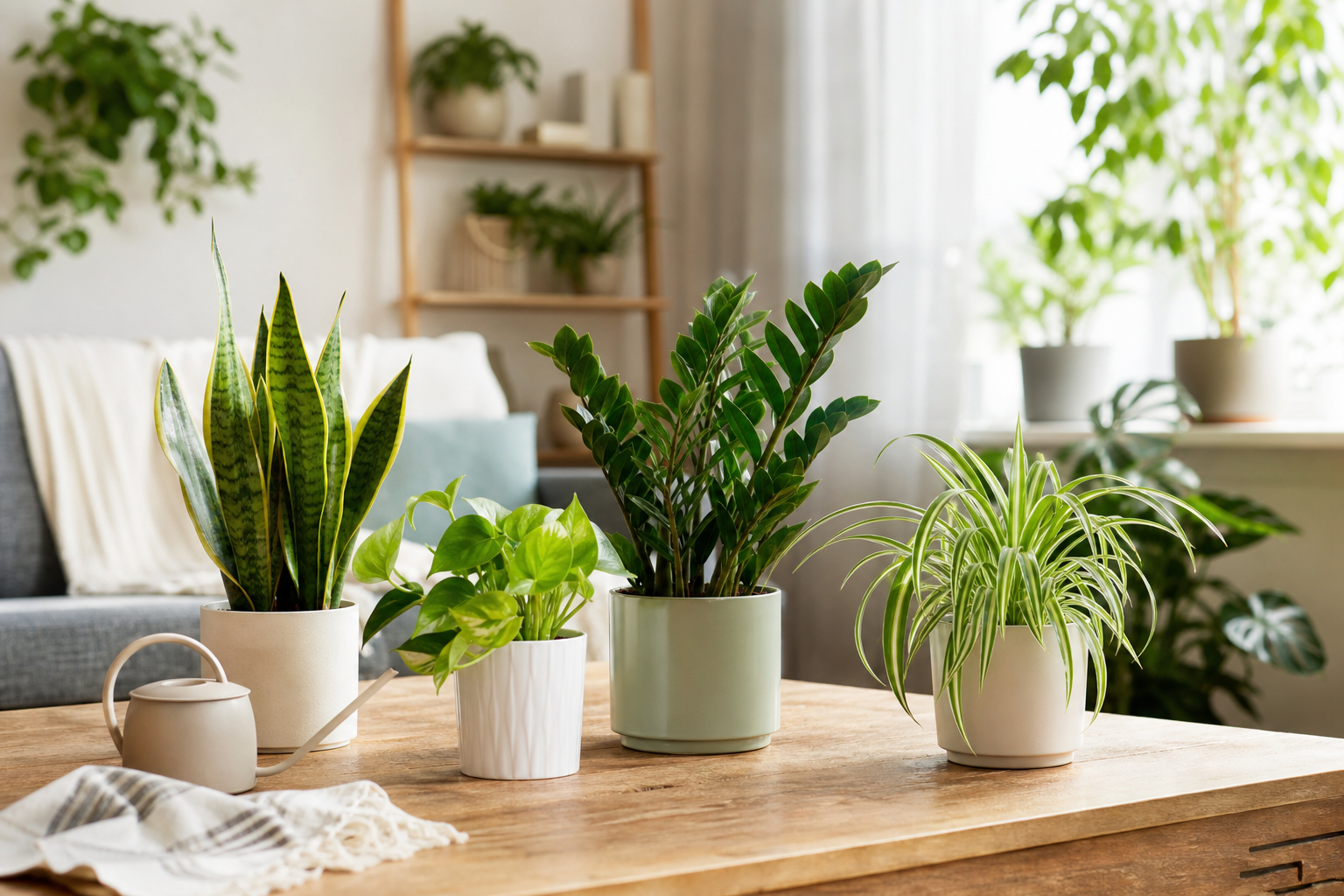

Which Indoor Plants Are Easiest to Care For? The best choices are tough, forgiving plants that handle normal indoor light, missed watering, and dry air. If you are new to houseplants, or you have lost a few before, you are not alone. Many indoor plants are easier than they look, and a small amount of steady care can keep them healthy for years.
Which Indoor Plants Are Easiest to Care For in Most Homes?
The easiest indoor plants usually have a few things in common. They do not need bright sun all day. They can wait a little longer between waterings. They also do not need special tools, rare soil, or daily attention.
For many homes in the United States, indoor conditions change with the seasons. Winter heat can make air dry. Summer air conditioning can cool rooms quickly. A good beginner plant should handle these changes without becoming weak right away.
Here are some of the most reliable easy-care indoor plants.
Snake Plant
Snake plant is one of the easiest indoor plants for beginners. It has tall, firm leaves that often grow upright like green swords. It can handle low light, though it grows better in medium or bright indirect light.
Snake plants do not like wet soil. In fact, the most common problem is too much water. Let the soil dry out before watering again. In many homes, this may mean watering every two to four weeks, depending on light and room temperature.
This plant works well in bedrooms, living rooms, and offices because it does not spread wide or need much space.
Pothos
Pothos is a friendly trailing plant with heart-shaped leaves. It is popular because it grows in many light conditions and tells you when it needs water. If the leaves begin to droop slightly, the plant is often thirsty.
Pothos can sit on a shelf, hang from a basket, or trail from a bookcase. It grows well in bright indirect light, but it can also manage in lower light. In very low light, its growth may slow and variegated leaves may become greener.
Trim long vines when they get too wild. This helps the plant look fuller and keeps it easy to manage.
ZZ Plant
The ZZ plant is a strong choice for people who forget to water. It has shiny, deep green leaves and thick underground rhizomes that store water. Because of this, it can stay healthy even when the soil dries out.
ZZ plants do well in low to medium indirect light. They grow slowly, so they do not need frequent repotting. They also keep a neat shape, which makes them useful for desks, entryways, and corners.
Avoid watering too often. If the stems become soft or the leaves turn yellow, the soil may be too wet.
Spider Plant
Spider plant is cheerful, simple, and well known for its arching leaves. Mature plants often produce small baby plants that hang down from long stems. This makes spider plants fun for families and new plant owners.
They prefer bright indirect light but can handle some lower light. Keep the soil lightly moist, but not soggy. If the leaf tips turn brown, it may be from dry air, tap water minerals, or inconsistent watering.
Spider plants look good in hanging baskets or on plant stands where their leaves can drape freely.
Peace Lily
Peace lily is easy to read because it droops when it needs water. After watering, it often perks back up. It has glossy leaves and may produce white blooms indoors when conditions are right.
Peace lilies prefer medium to bright indirect light. They can survive in lower light, but flowering may be less common. Keep the soil slightly moist, and avoid letting it stay soaked.
This plant is best for people who like checking their plants once or twice a week.
What Makes an Indoor Plant Low Maintenance?
A low-maintenance plant does not demand perfect care. It can handle normal life: travel, busy weeks, changing weather, and rooms that are not always bright.
The easiest plants usually have at least one of these strengths:
- Drought tolerance: They can survive if you forget to water for a while.
- Flexible light needs: They can grow in low, medium, or bright indirect light.
- Slow growth: They do not need constant trimming or repotting.
- Strong leaves or roots: They store water and recover from small mistakes.
- Few special needs: They do not require high humidity or exact temperatures.
Low maintenance does not mean no maintenance. Every plant still needs water, light, and the right pot. But the best beginner plants give you more room to learn.
Best Easy Indoor Plants by Room
Different rooms have different light, temperature, and humidity. A plant that loves a bathroom may not enjoy a dry, sunny windowsill. Matching the plant to the room makes care much easier.
Living Room Plants
Living rooms often have the best mix of space and light. If your living room has a window with filtered light, many easy plants will do well there.
Good living room choices include pothos, snake plant, ZZ plant, rubber plant, and monstera. A larger floor plant can make the room feel calm and finished. Smaller plants can sit on side tables or shelves.
If you enjoy soft home design details, a plant can also support quiet spaces. For example, if you have ever thought, Can You Create a Cozy Reading Corner in Your Home, a pothos, snake plant, or peace lily can add life without adding clutter.
Bedroom Plants
Bedrooms often need plants that are simple, tidy, and not too demanding. Snake plant and ZZ plant are excellent choices because they handle lower light and do not need frequent watering.
A small pothos can also work well on a dresser or shelf. Just make sure it gets some natural light during the day. If your bedroom is very dark, consider rotating the plant to a brighter room for a few days each month.
Avoid placing plants too close to heating vents or air conditioners. Fast air movement can dry soil and leaves more quickly.
Bathroom Plants
Bathrooms can be humid, which some plants enjoy. If your bathroom has a window, consider pothos, spider plant, peace lily, or philodendron.
Humidity can help leaves stay fresh, but light still matters. A windowless bathroom is not a good long-term home for most plants unless you use a suitable grow light.
Be careful with overwatering in bathrooms. Moist air can slow soil drying, so check the soil before adding more water.
Home Office Plants
Home offices are great places for low-care plants. A plant on a desk or shelf can make the space feel more relaxed.
ZZ plant, snake plant, and pothos are good office choices because they do not need daily care. If your office has bright indirect light, a spider plant or peperomia may also do well.
Choose a pot with drainage holes to avoid water sitting at the bottom. This simple detail prevents many common plant problems.
Easy Care Tips That Help Plants Thrive
Indoor plant care becomes much simpler when you follow a few basic habits. You do not need to be an expert. You only need to notice light, soil, and leaves.
Water Less Than You Think
Overwatering is one of the most common reasons indoor plants fail. Many easy-care plants prefer drying out between waterings. Before you water, touch the soil. If the top inch or two feels dry, the plant may be ready.
Do not water on a strict calendar without checking the soil. A plant near a sunny window may dry faster than one in a darker room. A small pot may dry faster than a large pot.
When you do water, water fully until some drains from the bottom. Then empty any saucer so roots do not sit in water.
Use the Right Light
Most easy indoor plants prefer bright indirect light. This means the room is bright, but the sun does not hit the leaves strongly for hours.
Direct sun through a hot window can burn some leaves. Very low light can make plants grow slowly and weakly. If a plant looks stretched, pale, or thin, it may need more light.
North-facing windows often give gentle light. East-facing windows usually give soft morning sun. South and west windows can be brighter and hotter, so plants may need to sit a few feet back.
Pick a Good Pot
A pretty pot matters, but drainage matters more. Choose a pot with a hole in the bottom whenever possible. This lets extra water escape.
If you use a decorative pot without drainage, keep the plant in a plastic nursery pot inside it. Remove the nursery pot for watering, let it drain, and then place it back.
The pot should not be much larger than the root ball. Too much extra soil can stay wet for too long.
Watch the Leaves
Leaves often show what a plant needs. Yellow leaves may mean too much water, not enough light, or normal aging. Brown crispy edges may mean dry air, underwatering, or mineral buildup. Droopy leaves can mean thirst, but they can also mean root trouble if the soil is wet.
Do not panic over one damaged leaf. Look for patterns. If several leaves change at once, check water, light, and soil first.
Common Mistakes With Beginner Houseplants
Even easy plants can struggle if the basics are wrong. The good news is that most problems can be fixed early.
One mistake is watering too often because the top of the soil looks dry. Sometimes the top dries while the lower soil is still wet. Use your finger or a simple moisture meter to check deeper.
Another mistake is moving plants too often. Plants need time to adjust to a spot. If you keep changing their light and temperature, they may drop leaves or stop growing.
A third mistake is fertilizing too much. Indoor plants usually need less fertilizer than outdoor plants. During active growth in spring and summer, a balanced houseplant fertilizer can help. In fall and winter, many plants slow down and need little or none.
Dusty leaves are also easy to forget. Dust blocks light and makes plants look dull. Wipe broad leaves with a soft damp cloth every few weeks.
Pet and Child Safety Notes
Some common indoor plants can be harmful if chewed or swallowed by pets or children. This does not mean you must avoid plants, but placement matters.
Snake plant, pothos, ZZ plant, peace lily, and philodendron may cause irritation or stomach upset if eaten. If you have curious pets or young children, place these plants out of reach or choose pet-friendlier options.
Spider plant is often considered a safer choice for homes with pets, but it is still best to prevent chewing. Any plant material can upset a pet’s stomach if eaten in large amounts.
For safety concerns, use trusted veterinary or poison control guidance. Plant labels may also list basic warnings.
Frequently Asked Questions
What is the easiest indoor plant for a total beginner?
Snake plant is often the easiest choice because it handles low light and missed watering well. It grows slowly, stays neat, and does not need much attention. Just avoid overwatering and use a pot with drainage.
How often should I water easy indoor plants?
Most easy indoor plants should be watered when the soil begins to dry. This may be weekly for some plants, or every few weeks for others. Always check the soil before watering instead of following one fixed schedule.
Can indoor plants survive in low light?
Some plants can survive in low light, including snake plant, ZZ plant, and pothos. However, most plants grow better with at least some natural indirect light. In very dark rooms, growth may be slow or weak.
Why are my easy-care plants turning yellow?
Yellow leaves often come from overwatering, poor drainage, or not enough light. A few old yellow leaves can be normal, especially near the base. If many leaves turn yellow, check the roots, soil moisture, and light level.
Do indoor plants need fertilizer?
Indoor plants can benefit from fertilizer during spring and summer, when they grow more. They usually need only a light amount. Too much fertilizer can damage roots, so it is better to use less than too much.
Final Thoughts on Easy Indoor Plants
The easiest indoor plants are the ones that fit your home and your habits. Snake plant, pothos, ZZ plant, spider plant, and peace lily are all strong choices for beginners. They forgive small mistakes and do not need expert care.
Start with one or two plants, learn how your light and watering routine works, and keep care simple. A healthy indoor plant does not need constant attention. It needs the right spot, the right amount of water, and a little patience.