

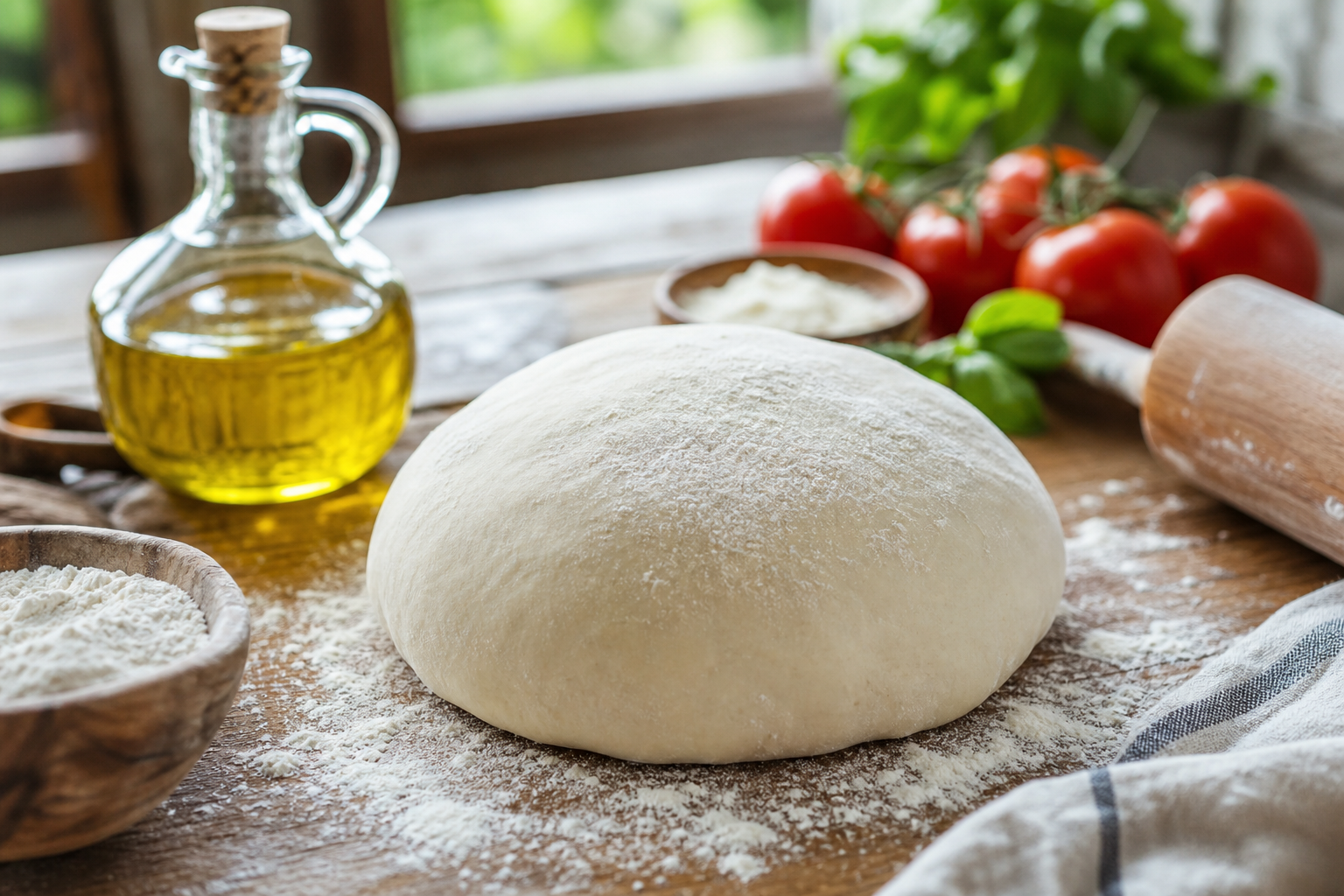

How Do You Make Homemade Pizza Dough from Scratch? It starts with a few basic ingredients, a bowl, and a little patience. Homemade pizza dough is simple, budget-friendly, and fun to make at home. You do not need special tools or chef skills. With flour, yeast, water, salt, and olive oil, you can make soft, chewy dough for pizza night in your own kitchen.
Why Homemade Pizza Dough Is Worth Making
Store-bought dough can be helpful, but homemade dough gives you more control. You can choose the texture, thickness, and flavor. You can make it thin and crisp, soft and puffy, or somewhere in between.
Homemade pizza dough also helps you understand what is in your food. There are no surprise ingredients, and you can adjust the recipe to match your taste. If you like a richer flavor, you can let the dough rise longer. If you want a faster dinner, you can use it the same day.
Making dough can also be a relaxing kitchen project. It fits well with a calm evening at home, much like thinking about Can You Create a Cozy Reading Corner in Your Home. Both are simple ways to make everyday life feel warmer and more personal.
How Do You Make Homemade Pizza Dough from Scratch? Basic Ingredients
Pizza dough uses simple pantry items. Each one has a clear job, so it helps to know why it matters.
Flour
All-purpose flour works well for homemade pizza dough. It is easy to find in most U.S. grocery stores and gives the dough a soft but chewy texture.
Bread flour is another good option. It has more protein, so it can make the crust chewier. If you want a classic pizza shop feel, bread flour is worth trying.
You can also use a mix of all-purpose flour and bread flour. This gives balance: soft enough to handle, but strong enough to stretch.
Yeast
Yeast helps the dough rise. It creates air bubbles, which make the crust light instead of dense.
Active dry yeast and instant yeast both work. If you use active dry yeast, mix it with warm water first and let it sit for a few minutes. If you use instant yeast, you can often mix it straight into the flour.
The water should be warm, not hot. Water that feels like a warm bath is usually right. Very hot water can hurt the yeast and stop the dough from rising.
Water, Salt, and Olive Oil
Water brings the dough together. The amount can change a little based on your flour, kitchen temperature, and humidity. A slightly sticky dough is often better than a dry dough.
Salt adds flavor and helps control the yeast. Without salt, pizza dough can taste flat.
Olive oil adds tenderness and a light richness. It also helps the crust brown nicely in the oven.
Simple Homemade Pizza Dough Recipe
This basic recipe makes enough dough for two medium pizzas or one large thick-crust pizza.
Ingredients
- 3 1/2 cups all-purpose flour, plus more for dusting
- 1 packet active dry yeast, about 2 1/4 teaspoons
- 1 1/4 cups warm water
- 2 tablespoons olive oil
- 1 teaspoon sugar
- 1 1/2 teaspoons salt
Step-by-Step Directions
- Add warm water, sugar, and yeast to a large bowl. Stir gently and let it sit for 5 to 10 minutes. The mixture should look a little foamy.
- Add olive oil, flour, and salt. Stir with a spoon until a rough dough forms.
- Move the dough to a lightly floured counter. Knead it for 8 to 10 minutes, until it feels smooth and stretchy.
- Place the dough in a lightly oiled bowl. Turn it once so the outside has a thin coat of oil.
- Cover the bowl with a clean towel or plastic wrap. Let it rise in a warm spot until doubled in size, about 1 to 2 hours.
- Punch the dough down gently to release air.
- Divide it into two pieces for medium pizzas, or keep it whole for a large pizza.
- Shape, top, and bake.
The dough should feel soft and elastic. If it sticks a lot, add flour one tablespoon at a time. If it feels dry or cracks, add a tiny splash of water and knead again.
How to Knead Pizza Dough the Easy Way
Kneading builds structure in the dough. This structure helps trap air from the yeast, giving your crust a good rise.
To knead by hand, press the dough forward with the heel of your hand. Fold it back over itself, turn it slightly, and repeat. Keep a steady rhythm. The dough will change as you work. At first, it may feel rough and sticky. After several minutes, it should become smoother.
You do not need to be perfect. If the dough tears a little, keep going. If your hands get sticky, dust them with a small amount of flour. Try not to add too much flour, because extra flour can make the crust tough.
A stand mixer with a dough hook can also knead the dough. Mix on low speed for several minutes, until the dough pulls away from the bowl and looks smooth.
Letting the Dough Rise
The rise is where the dough develops texture and flavor. A warm kitchen helps the dough rise faster. A cooler kitchen slows it down.
For a same-day pizza, let the dough rise at room temperature until doubled. This usually takes 1 to 2 hours.
For better flavor, you can let the dough rise slowly in the refrigerator. Place it in a covered, lightly oiled bowl and chill it overnight. Slow rising gives the crust a deeper taste and a better chew.
Before shaping cold dough, let it rest at room temperature for about 30 to 60 minutes. Cold dough can be tight and hard to stretch.
How to Shape Pizza Dough Without Tearing It
Shaping dough is easier when you are gentle. Start by pressing the dough into a flat circle with your fingertips. Push from the center toward the edges, but do not press hard on the outer rim if you want a puffy crust.
Pick up the dough and let gravity help stretch it. Turn it slowly in your hands. If the dough pulls back or feels tight, place it on the counter and let it rest for 10 minutes. This short rest helps the dough relax.
You can use a rolling pin if you prefer. A rolling pin makes shaping simple, especially for thin crust. The texture may be a little less airy, but it still tastes good.
Baking Homemade Pizza Dough
A hot oven is important for pizza. Most home ovens do not get as hot as pizza ovens, but you can still get great results.
Preheat your oven to 475°F if your oven allows it. Let it heat fully before baking. A pizza stone or baking steel can help create a crisp bottom crust. If you do not have one, use a baking sheet.
Place shaped dough on parchment paper or a lightly floured surface. Add sauce, cheese, and toppings. Do not overload the pizza, because too many toppings can make the crust soggy.
Bake until the crust is golden and the cheese is melted and bubbling. This often takes 10 to 15 minutes, depending on thickness and toppings.
Common Pizza Dough Problems and Easy Fixes
Pizza dough is forgiving. Most problems are easy to fix once you know what caused them.
- Dough is too sticky: Add flour one tablespoon at a time while kneading.
- Dough is too dry: Add water one teaspoon at a time until it softens.
- Dough did not rise: The yeast may be old, or the water may have been too hot or too cold.
- Dough keeps shrinking: Let it rest for 10 to 15 minutes before shaping again.
- Crust is pale: Use a hotter oven, bake longer, or place the pizza lower in the oven.
- Bottom is soggy: Use fewer wet toppings and preheat the baking surface well.
Small changes can make a big difference. Take notes if you plan to make pizza often. Over time, you will learn how your kitchen, oven, and favorite flour behave.
Tips for Better Flavor and Texture
Good pizza dough does not need to be complicated. A few habits can improve your results.
Use fresh yeast. If your yeast does not foam when mixed with warm water and sugar, it may not be active.
Measure flour carefully. Scooping flour straight from the bag can pack too much into the cup. For a lighter dough, spoon flour into the measuring cup and level it off.
Let the dough rest when needed. Rest time makes dough easier to stretch and helps prevent tearing.
Use enough salt. Pizza dough with too little salt tastes plain, even with flavorful toppings.
Try a longer rise. If time allows, an overnight rise in the refrigerator can make the dough taste richer.
Storing and Freezing Pizza Dough
Homemade pizza dough stores well, which makes it useful for busy nights.
To refrigerate dough, place it in a lightly oiled airtight container. Use it within a couple of days for best texture. Let it warm up before shaping.
To freeze dough, divide it into pizza-size portions after the first rise. Lightly oil each piece and place it in a freezer bag. Press out extra air before sealing.
To use frozen dough, thaw it in the refrigerator overnight. Then let it sit at room temperature until soft enough to shape.
This makes homemade dough practical, not just a weekend project. You can make a batch once and enjoy pizza later with less work.
Frequently Asked Questions
Can I make pizza dough without a stand mixer?
Yes, you can make pizza dough by hand with a bowl and a clean counter. Hand kneading takes a little time, but it is simple and works very well.
What flour is best for homemade pizza dough?
All-purpose flour is a great choice for beginners because it is easy to find. Bread flour makes a chewier crust, so it is also a strong option.
How long should pizza dough rise?
For same-day dough, let it rise until doubled, usually 1 to 2 hours. For deeper flavor, let it rise slowly in the refrigerator overnight.
Why is my pizza dough hard to stretch?
Dough becomes hard to stretch when it is cold or tense. Let it rest at room temperature for 10 to 15 minutes, then try again gently.
Can I freeze homemade pizza dough?
Yes, pizza dough freezes well after the first rise. Divide it into portions, oil lightly, seal well, and thaw overnight before using.
Final Thoughts on Homemade Pizza Dough
Making pizza dough from scratch is easier than many people expect. The ingredients are simple, and the process becomes more familiar each time you do it. Mix, knead, rise, shape, and bake. That is the heart of it.
The best part is that homemade dough can match your taste. You can make it thin, thick, crisp, soft, or chewy. Once you learn the basic method, pizza night feels more personal, more relaxed, and more enjoyable.