

How Do You Create More Storage in a Tiny Home? The short answer is to use every inch with purpose. Tiny homes work best when storage is planned from floor to ceiling, not added as an afterthought. With smart furniture, hidden spaces, wall storage, and better daily habits, even a very small home can feel calm, useful, and easy to live in.
How Do You Create More Storage in a Tiny Home Without Making It Feel Crowded?
The main goal is not only to add more bins, shelves, or cabinets. The real goal is to create storage that feels natural in the space. In a tiny home, too much visible storage can make the room feel busy. The best storage often blends in.
Start by looking at what you use every day. These items should be easy to reach. Seasonal items, extra bedding, tools, and keepsakes can go in harder-to-reach places. When storage matches your daily routine, your home feels less cluttered.
It also helps to think in zones. A tiny home may not have many rooms, but it still has activity areas. You may have a sleeping zone, cooking zone, work zone, and entry zone. Each area should store the items used there. This keeps you from moving things around all day.
For example, shoes, jackets, dog leashes, and bags belong near the door. Cooking tools belong close to the kitchen. Chargers and office supplies belong near your desk or table. This sounds simple, but it makes a big difference.
Color and design matter, too. Closed storage, light colors, and simple shapes can make a small space feel cleaner. Open shelves can be useful, but they need to be neat. If every wall is full of visible items, the home may feel smaller than it is.
Use Vertical Space From Floor to Ceiling
Walls are some of the most valuable storage areas in a tiny home. If you only use cabinets at waist height, you lose a lot of space. Tall shelves, hanging racks, hooks, and high cabinets can free up the floor and make the home easier to move through.
A tall bookcase can hold books, baskets, dishes, towels, pantry items, and decor. Wall-mounted shelves can work over a desk, bed, sofa, or kitchen counter. In the kitchen, rails and hooks can hold mugs, pans, or utensils.
High storage is best for items you do not need every day. This can include:
- Seasonal clothes, like winter coats or swimsuits
- Holiday decorations and extra linens
- Backup supplies, such as paper goods or cleaning refills
- Suitcases, camping gear, or sports items
- Memory boxes and keepsakes
Use matching baskets or labeled bins on high shelves. Labels save time because you do not need to pull down every box to find one thing.
Be careful not to overload the walls. Heavy items need proper support. Shelves should be mounted safely, especially if you live in a mobile tiny home. Weight also matters if the home is on wheels. Store heavy items low when possible and lighter items higher up.
Doors are another easy win. Over-the-door racks can hold shoes, cleaning tools, pantry goods, towels, or bathroom items. The inside of cabinet doors can hold cutting boards, spice racks, measuring spoons, or small baskets.
Choose Furniture That Works Harder
In a tiny home, furniture should do more than one job whenever possible. A normal bed, sofa, or table can take up a lot of room. A storage-friendly version can give that space back.
A bed with drawers underneath is one of the best tiny home storage ideas. If drawers are not an option, use low rolling bins under the bed. Store bedding, shoes, clothing, or extra towels there.
A bench with a lift-up seat can hold blankets, board games, pet supplies, or tools. It can also serve as dining seating, entry seating, or extra guest seating. A storage ottoman can work the same way.
A fold-down table can create a dining area or desk only when needed. When it folds against the wall, the floor feels open again. Nesting tables can also help because they tuck together when not in use.
Look for furniture that solves more than one problem:
- A sofa with hidden storage under the seat
- A bed with drawers, shelves, or a lift-up base
- A coffee table with storage inside
- A bench that works as seating and storage
- A desk that folds down from the wall
- Stools that stack or fit under a counter
The key is to avoid bulky pieces that only do one thing. Before buying furniture, ask, “What else can this store or support?” If the answer is nothing, it may not be the right fit.
Make the Kitchen More Efficient
Tiny home kitchens can be tricky because cooking requires many small items. Pots, pans, spices, food, plates, cleaning supplies, and appliances all compete for space. The solution is not always a bigger cabinet. It is often better organization.
Start by limiting duplicate tools. Many kitchens have several items that do almost the same job. In a tiny home, one good knife may be better than a large knife block. One mixing bowl set may be enough. A few stackable pots may work better than many separate pieces.
Use drawer dividers to keep small items from turning into a mess. Add pull-out shelves or bins inside lower cabinets so items in the back do not disappear. Clear containers can help pantry shelves stay neat, but they are only useful if they match how you cook.
Magnetic strips can hold knives or metal spice tins. A slim rolling cart can fit between appliances or cabinets. Hooks under shelves can hold mugs. A wall rail can hold utensils, towels, or small baskets.
If you use small appliances, be honest about which ones earn their space. A coffee maker used every day may deserve counter space. A waffle maker used twice a year may not.
In a tiny kitchen, the best storage is easy to clean and easy to reset. If putting things away is too hard, clutter will come back fast.
Find Hidden Storage in Common Areas
Many tiny homes have unused space hiding in plain sight. The area under stairs, under seats, above windows, and below built-ins can often become storage.
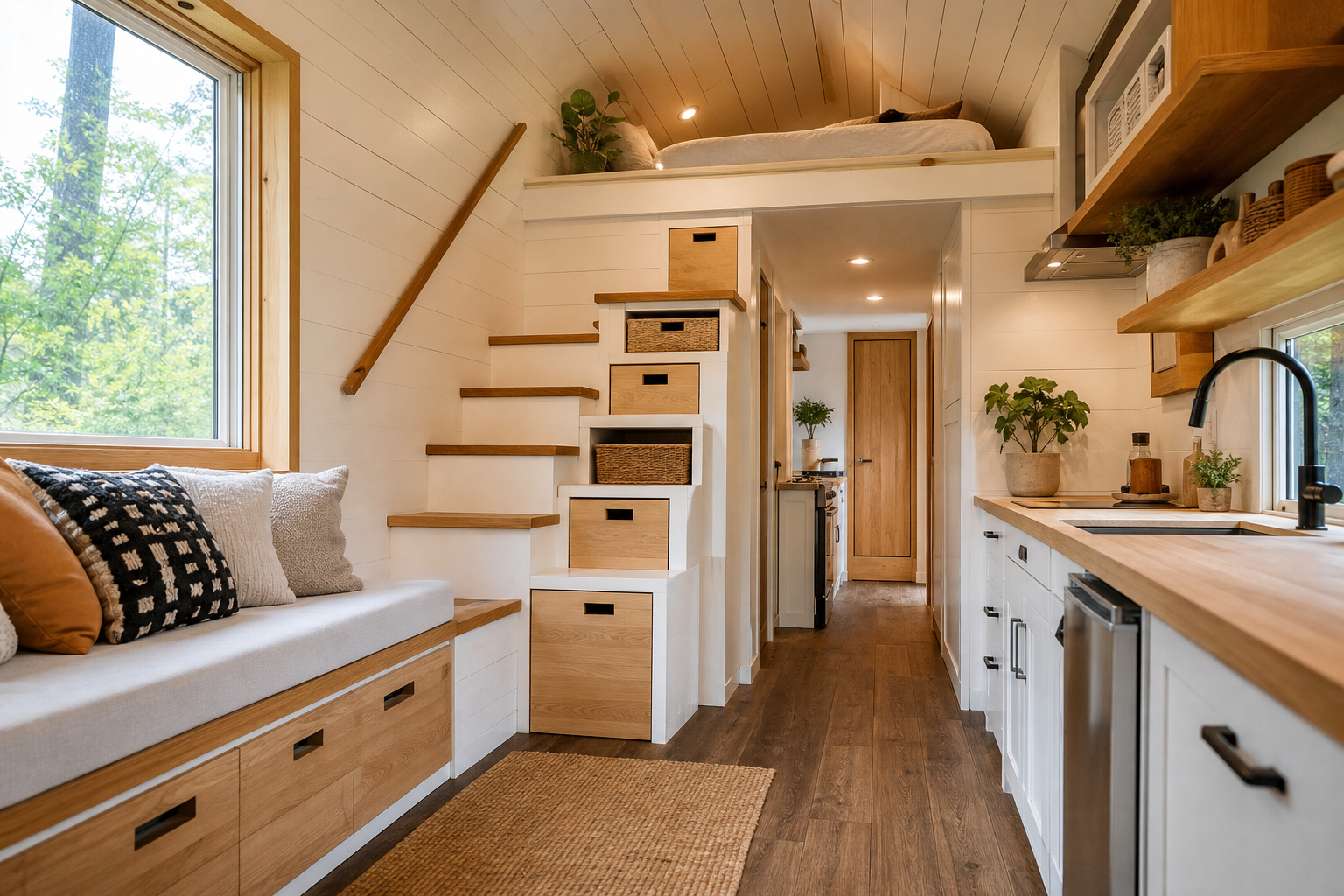
Stairs are especially useful. Each step can become a drawer, cubby, or cabinet. If your tiny home has a loft, stair storage can hold clothes, shoes, pantry items, books, or tools. A ladder uses less room than stairs, but it usually offers less storage.
Toe-kick drawers are another clever option. These are low drawers placed under cabinets, near the floor. They can hold baking sheets, pet bowls, cleaning cloths, or flat tools.
The space above windows and doors can hold narrow shelves. These shelves are good for books, baskets, plants, or small boxes. Since they are high, use them for light items.
Built-in seating is also a strong choice. A window seat, dining bench, or sofa platform can hide deep storage inside. The top can lift up, or drawers can pull out from the side.
Even the bathroom may have extra storage spots. Try shelves over the toilet, a mirrored medicine cabinet, hooks on the door, and slim baskets beside the sink. Keep only the products you use often. Small bathrooms feel crowded quickly when counters are full.
Declutter Before You Add More Storage
More storage is helpful, but it can also hide a bigger problem. If your tiny home is packed with things you do not use, no storage system will feel good for long.
Decluttering does not mean giving up everything you love. It means choosing what truly belongs in your life now. In a small home, every item takes up space, time, and attention.
A simple method is to sort items into four groups:
- Keep because you use it often or truly value it
- Store because it is seasonal or used only sometimes
- Donate or sell because it is still useful but not for you
- Recycle or throw away because it is broken, expired, or worn out
Work in small areas. Do one drawer, one shelf, or one basket at a time. This keeps the job from feeling too large.
Be careful with “just in case” items. Some are reasonable, like basic tools or first-aid supplies. Others sit untouched for years. If an item is easy to borrow, replace, or live without, it may not need a permanent place in your tiny home.
After decluttering, storage becomes much easier. You may find you already have enough room. You may also see exactly what type of storage you still need.
Use Smart Systems for Daily Life
Storage is not only about where things go. It is also about how smoothly your home works each day. If daily routines feel simple, clutter has fewer chances to pile up.
Create small drop zones for items that come and go. Near the door, use hooks for keys, a tray for mail, and a basket for shoes. In the kitchen, keep a clear spot for food prep. In the bathroom, use a small bin for daily products.
Charging stations are helpful, too. Phones, tablets, headphones, and cords can create messy surfaces. A small drawer or shelf with cord control can keep devices out of the way. If you enjoy home technology, the topic Can Smart Home Devices Simplify Daily Life? Key Everyday Benefits fits well with tiny home living because fewer steps and fewer loose items can make a small space feel easier to manage.
Labels can also help. They are not only for people who love organizing. Labels make it clear where things belong. This is useful if more than one person lives in the home.
Try a “one-touch” habit when possible. Instead of setting an item down now and moving it later, put it away the first time. This habit saves space because flat surfaces stay clear.
Keep Storage Flexible as Your Needs Change
Tiny home storage should not be too fixed. Life changes. You may start a new hobby, work from home, get a pet, or need different seasonal gear. If every storage space has only one exact use, the home may become harder to adjust.
Baskets, bins, pegboards, rolling carts, and modular shelves are useful because they can change with you. A basket that holds winter gloves now can hold craft supplies later. A pegboard in the kitchen can move to the office area. A rolling cart can serve as a pantry, bar cart, office station, or bathroom shelf.
Think about storage in layers. Permanent built-ins are great for large needs, like clothing, kitchen goods, and bedding. Flexible storage is better for changing needs, like hobbies, work tools, and seasonal items.
Also review your storage a few times a year. If a shelf is always messy, it may not fit the way you live. If a cabinet is hard to reach, move daily items somewhere better. Storage is not a one-time project. It is a living system.
The best tiny homes feel comfortable because everything has a reason and a place. When storage supports your real life, the home feels bigger, calmer, and more personal.
Frequently Asked Questions
What is the best storage idea for a tiny home?
The best storage idea is usually built-in furniture with hidden storage. Beds, benches, stairs, and sofas can hold many items without adding visual clutter. This keeps the floor open and makes the home feel less crowded.
How do I store clothes in a tiny home?
Use a mix of hanging space, drawers, bins, and seasonal storage. Keep everyday clothes easy to reach, and store off-season clothing under the bed or on high shelves. Choose fewer pieces that mix well together.
Are open shelves good for tiny homes?
Open shelves can be good if you keep them neat and simple. They work well for items you use often, like dishes or books. Too many open shelves can look cluttered, so balance them with closed cabinets.
How can I make a tiny bathroom hold more?
Use wall shelves, door hooks, slim baskets, and a medicine cabinet. Keep only daily products in the bathroom and store extras elsewhere. Small containers can help prevent counters and drawers from becoming messy.
Should I use storage bins in every room?
Storage bins are useful, but they should not become a place to hide clutter. Use bins for clear groups of items, such as tools, linens, or craft supplies. Label them so you can find things quickly.