

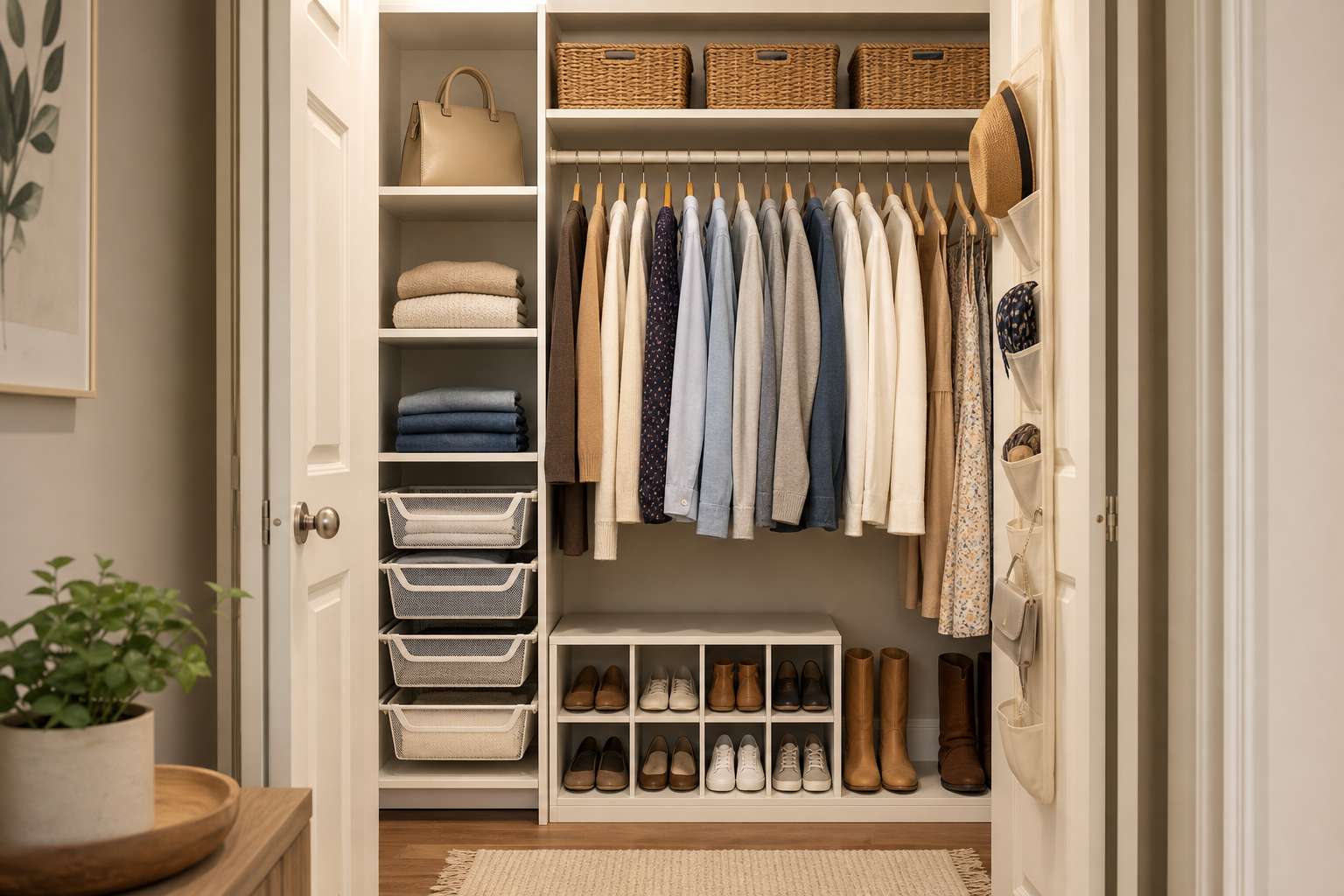

Which Storage Ideas Work Best in a Small Closet? The best ones make every inch easier to use, not just more packed. A small closet can hold more than it seems when shelves, rods, bins, hooks, and floor space work together. The goal is simple: keep daily items easy to reach, store off-season items neatly, and stop clutter from sliding back in. As editors who compare home organization ideas often, we look for storage that is practical, affordable, and simple enough to maintain in real life.
Which Storage Ideas Work Best in a Small Closet?
The storage ideas that work best in a small closet are the ones that match how the closet is used. A bedroom closet needs different tools than a hallway, linen, or entry closet. Before buying organizers, it helps to think about what is actually inside.
A small closet often has three hidden zones: vertical space, door space, and floor space. Most people use the main rod but ignore the wall above it, the back of the door, and the gap under hanging clothes. These areas can add useful storage without making the closet feel crowded.
The best small closet storage ideas usually include:
- A second hanging rod for shirts, pants, kids’ clothes, or folded-over jeans.
- Shelf dividers to keep stacks of sweaters, towels, or bags from falling over.
- Clear bins or labeled baskets for small items like scarves, belts, socks, or cleaning supplies.
- Over-the-door organizers for shoes, accessories, toiletries, or grab-and-go items.
- Hooks for bags, robes, hats, jewelry, or items used every day.
A good small closet setup should pass one basic test: can you find what you need in less than a minute? If the answer is yes, the system is working.
Start With a Clean Edit Before Adding Storage
More storage does not always solve a small closet problem. Sometimes it only hides the mess for a few weeks. The first step is to remove everything and sort it with honesty.
Group items by type. Put shoes together, fold clothes together, gather bags, and separate accessories. This makes it easier to see duplicates and items that do not belong in the closet at all.
Keep the items that fit the space and your daily life. Move off-season pieces, keepsakes, or rarely used items to another storage area if possible. A small closet should not carry the full weight of every item in the home.
Sort by Use, Not Just Category
Sorting only by category can create a neat closet that still feels hard to use. Instead, sort by how often each item is needed. Daily items should sit at eye level or within easy reach. Weekly items can go higher or lower. Rarely used items can go on the top shelf in bins.
For example, work shirts and favorite shoes should not be hidden behind formal wear used twice a year. A small closet works best when the most-used items get the best location.
Keep a “Maybe” Box Outside the Closet
Some items are hard to remove right away. A maybe box can help. Place unsure items in a labeled box outside the closet for a set period. If they are not used or missed, they probably do not need prime closet space.
This keeps the closet focused without forcing quick decisions. It also prevents the common problem of pulling everything out, getting tired, and putting it all back in.
Use Vertical Space From Floor to Ceiling
In a small closet, height matters. The space above the main rod and below hanging clothes is often wasted. Smart vertical storage can double the usefulness of the closet without changing the footprint.
A top shelf can hold bins for seasonal clothes, extra bedding, travel items, or memory pieces. Use matching bins if you like a clean look, or clear bins if you prefer to see what is inside. Labels help either way.
Under shorter hanging items, add a small drawer unit, shoe rack, or cube organizer. This space is especially useful under shirts, jackets, and folded pants. Long dresses and coats may need one side left open, but the other side can still hold lower storage.
Add a Double Rod for Short Clothing
A double rod is one of the most useful small closet upgrades. It creates two levels of hanging space. The upper rod can hold shirts, blouses, or jackets. The lower rod can hold pants, skirts, or kids’ clothing.
This idea works best when most hanging items are short. If the closet holds many long coats or dresses, use a double rod on only part of the closet. That gives a mix of long and short hanging space.
Use Stackable Bins and Drawers
Stackable bins and drawers make tall spaces easier to control. They are useful for items that do not hang well, such as workout clothes, pajamas, handbags, hats, or folded sweaters.
Drawers are best for things used often because they slide out easily. Bins are better for seasonal or backup items. If bins are stacked high, choose ones with lids that can handle weight and labels that are easy to read.
Make the Closet Door Work Harder
The back of the closet door is valuable storage. It is often empty, even in very small rooms. Door storage is best for light items that are used often.
An over-the-door shoe organizer can hold much more than shoes. The pockets can store gloves, small toys, hair tools, sunscreen, cleaning cloths, socks, or craft supplies. In a bedroom closet, it can also hold scarves, belts, and small accessories.
Door hooks are simple but useful. They can hold a robe, tote bag, tomorrow’s outfit, or a jacket. For renters, over-the-door hooks are often easier than mounted hardware.
Avoid loading the door with very heavy items. Too much weight can make the door hard to close or cause stress on the hinges. The goal is easy access, not another overfilled surface.
Choose Slim Hangers and Better Folding Methods
Hangers take up more space than many people realize. Thick plastic hangers, bulky wood hangers, and mismatched hangers can crowd a small closet. Slim hangers create a cleaner line and often free up rod space.
Velvet-style slim hangers are popular because clothes tend to stay in place. Smooth slim hangers can also work well for items that need to slide off easily. The main point is to keep the hanger style consistent and narrow.
Folding also matters. Bulky stacks fall over and waste shelf space. File folding in drawers lets you see each item from the top. Shelf stacks should be low enough to stay neat. If piles are too tall, add shelf dividers or move some items to bins.
Good folding areas include:
- Sweaters, which can stretch if hung for long periods.
- Jeans and casual pants, especially when rod space is limited.
- T-shirts and workout clothes, which fit well in drawers or bins.
- Seasonal items, such as scarves, swimsuits, and winter layers.
When hanging and folding are balanced, a small closet feels calmer and easier to use.
Add Shelves, Dividers, and Small Zones
A single shelf and rod rarely make the best use of a small closet. Extra shelves can create zones for different items. Even one added shelf can turn a messy upper area into usable storage.
Shelf dividers are helpful for folded items, handbags, linens, and towels. They keep stacks upright and stop soft items from spreading across the shelf. This is especially useful in closets without many built-in compartments.
Small zones also make the closet easier to maintain. Instead of one open space, create a shoe zone, bag zone, folded clothing zone, and accessory zone. Items are easier to put away when each one has a clear home.
For shared closets, zones are even more important. Each person can have a side, shelf, bin color, or labeled section. This reduces mixing and makes the closet feel less crowded.
Use the Floor Without Creating a Pile
The closet floor can be helpful or chaotic. Shoes, bags, boxes, and loose items often collect there. A good floor system keeps things off the actual floor or at least arranged in a clear way.
A low shoe rack is one of the easiest fixes. It keeps shoes paired and visible. If the closet is very narrow, a vertical shoe rack or hanging shoe shelf may work better. For boots, boot shapers or simple inserts can help them stand upright.
Small drawer units can also work on the floor, especially under short hanging clothes. They are useful for socks, undergarments, accessories, or folded casual wear. Choose drawers that open fully without hitting the closet door or trim.
Avoid deep floor bins for daily items. They can become messy because everything drops to the bottom. If using bins, reserve them for bulky or less-used items like blankets, sports gear, or off-season shoes.
Pick Clear Containers, Labels, or Both
Small closets become frustrating when items disappear. Clear containers solve this by showing what is inside. Labels solve it by giving every item a named place. The best choice depends on personal style.
Clear bins are useful for people who forget what they own when they cannot see it. They work well for shoes, accessories, toiletries, and seasonal clothing. Solid baskets look softer and more decorative, but they need labels to stay practical.
Labels do not need to be fancy. A simple tag, sticker, or tape label works. Use broad names that are easy to keep up with, such as “Winter Hats,” “Travel,” “Extra Sheets,” or “Sandals.” Very detailed labels can become annoying if the contents change often.
Avoid Common Small Closet Mistakes
Some storage ideas look good at first but fail in daily life. A closet can be organized and still be hard to use if the system is too complicated.
One common mistake is buying organizers before measuring. Always check width, depth, height, and door clearance. Another mistake is using too many tiny containers. Small bins can help, but too many create visual clutter and make items harder to return.
It is also easy to overfill every shelf. A little empty space is useful. It makes items easier to remove and put back. A closet packed edge to edge may look efficient, but it usually becomes messy faster.
The best small closet systems are simple. They leave room for hands to move, doors to close, and routines to stay easy.
Frequently Asked Questions
What is the best way to organize a very small bedroom closet?
The best way is to keep daily clothes at eye level, use slim hangers, add a second rod if possible, and place folded items in drawers or bins. Store seasonal pieces higher up so the main space stays easy to reach.
Are shelves or hanging rods better for a small closet?
Both are useful, but the better choice depends on what you own. Hanging rods work well for shirts, jackets, and dresses. Shelves are better for sweaters, jeans, bags, towels, bins, and items that do not hang neatly.
How can I store shoes in a small closet?
Use a low shoe rack, hanging shoe organizer, clear shoe boxes, or an over-the-door pocket organizer. Keep only the shoes you wear often in the closet, and move special-event or off-season pairs to less valuable storage space.
Do closet organizers really make a small closet bigger?
Closet organizers do not change the actual size, but they can make the space much more useful. By dividing shelves, adding rods, and using door space, they reduce wasted areas and make items easier to find.
What should not be stored in a small closet?
Avoid storing items that are rarely used, too bulky, damaged, or unrelated to the closet’s purpose. A small closet should not become a backup storage room for random boxes, old papers, or things without a clear home.