
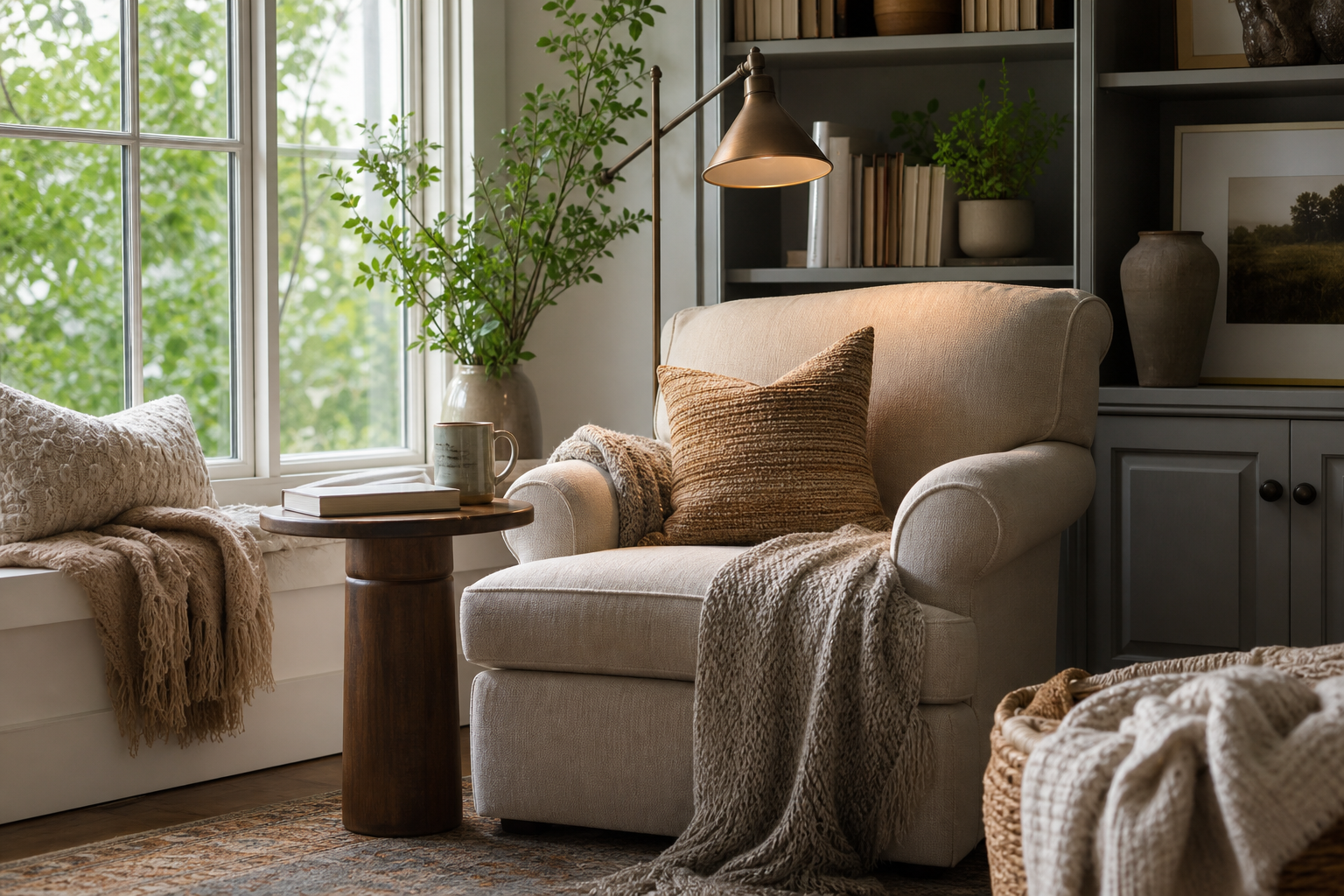

How Do You Design a Cozy Reading Nook? Start with comfort, quiet, and good light. A reading nook does not need to be large or expensive. It can be a sunny corner, a window seat, a spot under the stairs, or even one side of a bedroom. The goal is simple: create a small place that feels calm, supports your body, and makes reading easy. With the right seat, lighting, textures, and storage, almost any home can have a warm little escape for books, magazines, or a peaceful cup of tea.
How Do You Design a Cozy Reading Nook That Fits Your Home?
The best reading nook is one you will actually use. Before choosing pillows or paint colors, look at your daily habits. Do you read in the morning with coffee? Do you read at night before bed? Do you like total quiet, or do you enjoy being near family activity?
A cozy nook should feel separate, even if it is not in a separate room. You can create that feeling with a chair angled toward a window, a small rug underfoot, or a bookcase that forms a soft border. The space should invite you in without blocking the flow of the room.
Think about what “cozy” means to you. For some people, it means soft blankets and warm colors. For others, it means clean lines, natural light, and a clutter-free table. There is no single correct style. A good reading nook feels personal, easy to maintain, and comfortable for more than ten minutes.
Choose the Right Location
Location is the base of your reading nook. A beautiful chair in a noisy, awkward spot may not get used. A simple chair in a peaceful corner can become your favorite place in the house.
Look for a place that already has one or more helpful features: daylight, privacy, a nearby outlet, or a wall for shelves. Corners work well because they feel naturally sheltered. Window areas are popular because they offer light and a view. A wide hallway, landing, guest room, or unused dining room corner can also work.
Avoid areas with heavy foot traffic if you want quiet. If your home is busy, place the nook where you can face away from movement. Even a slight turn of the chair can make the space feel calmer.
Small Spaces That Work Well
You do not need a full room for a reading nook. Many cozy reading areas are built from forgotten spaces. The key is to use the space with purpose.
Good small-space options include:
- A bedroom corner with a chair, lamp, and basket for books
- A window area with a bench cushion and throw pillows
- An unused closet with the doors removed and shelves added
- A landing at the top of the stairs with a compact armchair
- A living room corner marked by a rug and floor lamp
In a small home or apartment, choose pieces that do more than one job. A storage ottoman can hold blankets. A side table with a shelf can hold books. A wall-mounted lamp can save floor space.
Quiet Corners in Busy Homes
If you live with children, roommates, pets, or a busy family, silence may be rare. That does not mean you cannot have a cozy reading nook. You may just need to use design to create a sense of privacy.
A tall plant, folding screen, open bookcase, or curtain can help define the area. Soft materials also reduce the feeling of noise. Rugs, pillows, curtains, and upholstered furniture make a space feel warmer and less echoing.
If possible, avoid placing the nook next to the television. If that is not possible, angle the chair away from the screen. Add a small lamp so your nook has its own focus, even when the rest of the room is active.
Pick Seating That Supports Real Comfort
The seat is the heart of the reading nook. It should fit your body, your space, and the way you like to read. Some people want a deep chair they can curl into. Others prefer a firmer seat with good back support.
Try to think beyond looks. A chair may be beautiful but uncomfortable after a few pages. Check the seat depth, arm height, and back angle. If you like to read for long stretches, support matters.
Popular seating choices include:
- An upholstered armchair with a soft back and supportive arms
- A chaise lounge for stretching out
- A window bench with a thick cushion
- A compact recliner for small rooms
- A loveseat if you read with a child, partner, or pet
Add an ottoman if you like to put your feet up. This can make a simple chair feel much more comfortable. If space is tight, choose a pouf or small footstool that can move around easily.
Layer Lighting for Day and Night
Lighting can make or break a reading nook. Good lighting protects your eyes and helps set the mood. Natural light is lovely during the day, but you also need a dependable light source for cloudy afternoons and evenings.
A reading lamp should shine directly on your book, not into your eyes. Floor lamps are useful beside chairs. Table lamps work well if you have a side table. Wall sconces are great for small spaces because they leave the floor clear.
Warm white bulbs often feel softer and cozier than cool bright bulbs. However, the light still needs to be strong enough for reading. If you can, use a dimmable lamp so the space can shift from bright reading time to relaxed evening comfort.
Place the light on the side opposite your writing hand if you take notes, so your hand does not cast a shadow. For most readers, the lamp should sit a little behind the shoulder or beside the chair.
Add Soft Textures and Warm Details
Texture is one of the easiest ways to make a reading nook feel cozy. Soft layers signal comfort before you even sit down. A plain chair can feel inviting with the right mix of fabric, warmth, and color.
Start with a throw blanket. Choose one that feels good against your skin. Then add one or two pillows for back or side support. A rug can ground the nook and make it feel like its own mini room.
You do not need many items. Too many pillows can make the chair hard to use. Too many decorative objects can make the space feel crowded. Aim for comfort first.
Cozy texture ideas include:
- A knit or fleece throw for chilly evenings
- A soft area rug under the chair and table
- Linen, cotton, velvet, or boucle pillow covers
- A woven basket for blankets or magazines
- Curtains that soften the light near a window
Color also affects mood. Warm neutrals, soft greens, deep blues, muted rusts, and gentle browns often feel calm and restful. Bright colors can work too, especially when used in small accents.
Plan Smart Storage for Books and Extras
A reading nook should keep books close without creating clutter. Storage does not need to be large. It just needs to match your habits.
If you read one book at a time, a small side table may be enough. If you like to keep several books nearby, add a shelf, cart, or basket. For children’s reading nooks, low shelves make books easy to see and reach.
Keep the most-used items within arm’s length. This may include reading glasses, bookmarks, a notebook, tissues, or a coaster. A small tray can keep these items from spreading across the room.
Built-in shelves look polished, but they are not required. Freestanding bookcases, wall shelves, or a narrow ledge can work well. In tight spaces, vertical storage helps. Use the wall above or beside the chair instead of taking up more floor area.
Bring in Personal Style Without Clutter
A cozy reading nook should feel like yours. Personal touches make the space special, but the area should still feel calm. Choose a few meaningful details instead of filling every surface.
You might add framed art, a favorite photo, a small plant, or a candle you do not need to light to enjoy. A ceramic mug, a pretty bookmark, or a vintage bookend can add character. The best details support the mood instead of distracting from it.
Nature-inspired pieces often work well in reading spaces. Plants, wood tones, woven textures, and stoneware can make the area feel grounded. If the nook is near a window, the view may be enough decoration on its own.
Keep editing the space over time. If a side table becomes a drop zone for mail, clear it. If a pillow looks nice but gets tossed on the floor every time you read, remove it. Comfort should lead the design.
Make the Nook Work for Every Season
A reading nook can change with the seasons without a full redesign. Small swaps keep the space fresh and useful all year.
In winter, add a heavier throw, warmer lighting, and richer colors. In summer, use lighter cotton blankets, breathable pillow covers, and a small fan if needed. Near a sunny window, consider curtains or shades to control glare and heat.
Seasonal comfort is also about air and temperature. A nook that is too cold, too hot, or too bright may be ignored. If the area is drafty, add a rug or move the chair slightly away from the window. If it gets strong afternoon sun, use light-filtering curtains.
The goal is to make reading feel easy in every season, not just on perfect days.
Common Mistakes to Avoid
Even a small reading nook can go wrong if it focuses only on style. The most common mistakes are simple and easy to fix.
One mistake is choosing a chair that looks good but does not support your body. Another is using light that is too dim. Many people also forget a place to set a drink, phone, or book. Without a table or shelf, the nook may feel inconvenient.
Clutter is another issue. A cozy space should not feel packed. Leave enough room to sit down, stand up, and move naturally. If you have to shift five items before reading, the design is working too hard.
Also, avoid placing the nook where you feel exposed or interrupted. Even in an open room, a small sense of enclosure helps you relax.
Frequently Asked Questions
What is the best chair for a cozy reading nook?
The best chair is comfortable, supportive, and sized for your space. An armchair, chaise, recliner, or cushioned bench can all work well if you enjoy sitting there for longer reading sessions.
How much space do I need for a reading nook?
You only need enough space for a seat, light, and small surface or storage option. A corner, window area, wide hallway, or bedroom spot can become a useful reading nook.
What kind of lighting is best for reading?
A focused reading lamp with warm, clear light is usually best. Place it beside or slightly behind your chair so the light falls on the page without glare.
How can I make a reading nook cozy on a budget?
Use items you already own, such as a chair, blanket, basket, or lamp. Rearranging furniture, adding a pillow, and clearing clutter can make a big difference.
Can a reading nook work in a living room?
Yes, a living room can hold a cozy reading nook if the area feels defined. Use a rug, lamp, side table, or angled chair to create a separate reading zone.