

How Do You Choose the Right Rug for Every Room? Start by thinking beyond color and pattern. A rug has a job to do. It can soften hard floors, define a seating area, protect a busy walkway, quiet a bedroom, or make a plain room feel finished. The right rug depends on where it will sit, how the room is used, who lives there, and how much cleaning you want to do.
Choosing well does not have to feel complicated. Once you understand size, material, placement, and style, each room becomes much easier to plan.
How Do You Choose the Right Rug for Every Room? Start With the Room’s Job
Every room asks something different from a rug. A living room rug needs to connect furniture and handle foot traffic. A bedroom rug should feel soft under bare feet. A dining room rug must allow chairs to move in and out without catching. An entryway rug needs to grab dirt and stay in place.
Before looking at designs, ask what the rug needs to solve. Is the room too echoey? Does the furniture feel like it is floating? Is the floor cold? Do you need a forgiving surface for kids or pets? These answers help narrow your choices.
A beautiful rug that does not fit your lifestyle can become a daily problem. A pale, high-pile rug may look lovely in a quiet reading corner, but it can be frustrating in a hallway. A flat, washable rug may not feel plush enough beside a bed, but it can be perfect in a kitchen.
Get the Rug Size Right First
Size is one of the most important parts of choosing a rug. A rug that is too small can make a room feel chopped up. A larger rug often makes furniture feel more connected and the room more settled.
You do not need to cover the whole floor. In many rooms, the rug should frame the main furniture area while leaving some floor visible around the edges. The goal is balance.
Here are practical size guidelines to keep in mind:
- Living room: At least the front legs of sofas and chairs should sit on the rug.
- Dining room: The rug should extend past the table far enough for chairs to stay on it when pulled out.
- Bedroom: The rug should reach beyond the sides and foot of the bed, or you can use runners on both sides.
- Hallway: Leave a border of flooring visible along both sides of the runner.
- Entryway: Choose a rug that fits the door swing and does not bunch up.
When in doubt, use painter’s tape to mark rug sizes on the floor. This simple step helps you see how a rug will look before you buy one.
Choose the Best Rug Material for Your Lifestyle
Rug material affects softness, durability, cleaning, and price. No single material is best for every room. The right choice depends on traffic, comfort, and maintenance.
Natural Fiber Rugs
Natural fibers can bring warmth and texture to a room. Wool is popular because it feels soft, holds up well, and works in many spaces. It is often a strong choice for living rooms, bedrooms, and home offices.
Cotton rugs tend to feel casual and are often lighter in weight. Some are easy to move and clean, depending on construction. They can work well in relaxed spaces, kids’ rooms, or layered looks.
Jute and sisal offer a textured, earthy style. They are often used in living rooms, dining rooms, and entryways. However, they may feel rough under bare feet and can be harder to clean if spills soak in.
Synthetic Fiber Rugs
Synthetic rugs, such as polypropylene, polyester, and nylon, are common choices for busy homes. They are often more resistant to stains and can be easier to clean than some natural fiber rugs.
These rugs can work well in family rooms, playrooms, dining rooms, and entryways. Many indoor-outdoor rugs are made with synthetic fibers, which makes them useful where spills, dirt, or moisture are more likely.
The tradeoff is feel. Some synthetic rugs are soft and comfortable, while others may feel less rich than wool. Look closely at pile height, backing, and texture before choosing.
Match Rug Type to Each Room
Each room has its own rhythm. Matching the rug to that rhythm helps your home feel both useful and stylish.
Living Room Rugs
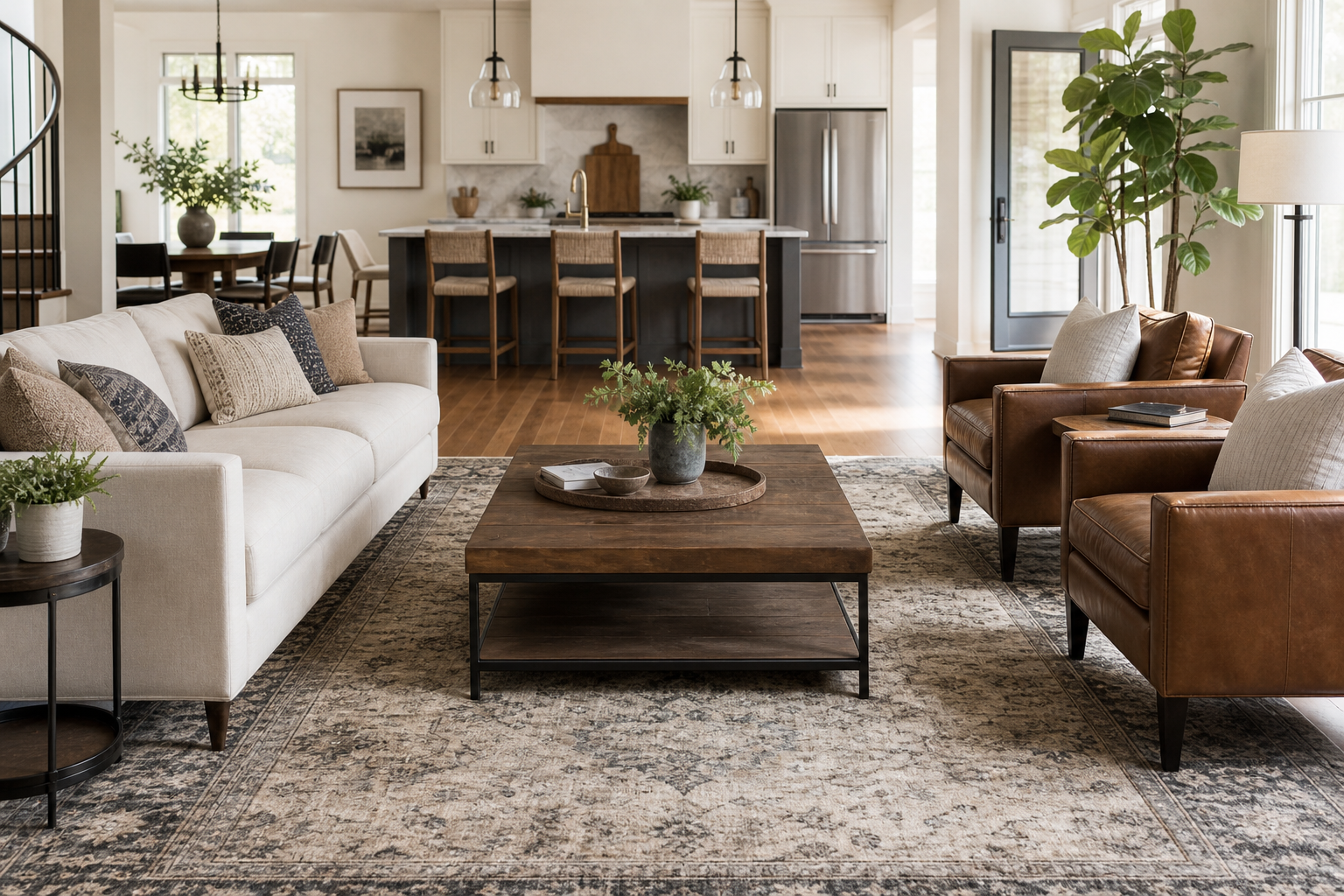
The living room is often the center of the home, so the rug should anchor the seating area. A rug that is too small can make the sofa, chairs, and coffee table feel disconnected.
For most living rooms, choose a rug large enough for at least the front legs of the main furniture pieces to sit on it. If the room is large, placing all furniture legs on the rug can create a more polished look.
Low- to medium-pile rugs are practical here. They feel comfortable but still allow tables and chairs to sit evenly. If you have kids or pets, patterns can help hide daily wear better than a solid light color.
Bedroom Rugs
A bedroom rug should make the room feel calm and comfortable. Softness matters more here than in many other spaces because you may step on the rug barefoot.
For a large bedroom, place a wide rug under the bed so it extends on both sides and beyond the foot. If that is not practical, use two runners along the sides of the bed. This gives you comfort where you need it most.
Choose colors and patterns that support rest. Soft neutrals, gentle blues, warm taupes, muted greens, and quiet patterns often work well. A bedroom rug can still have personality, but it should not fight with bedding and curtains.
Dining Room Rugs
Dining room rugs need careful sizing. The biggest mistake is choosing a rug that ends too close to the table. When chairs are pulled out, they should still sit on the rug. If chair legs catch the edge, the rug can become annoying and unsafe.
Flatweave and low-pile rugs are usually best for dining rooms. They make chairs easier to move and are simpler to clean under the table. Darker tones, mixed colors, or patterned rugs can also help hide small crumbs and marks between cleanings.
Avoid very shaggy rugs in dining rooms. Food can get trapped in the fibers, and chair legs may not move smoothly.
Kitchen Rugs
Kitchen rugs need to handle spills, crumbs, and standing. A small rug near the sink or a runner in a galley kitchen can add comfort and style. The key is choosing something easy to clean and safe underfoot.
Low-profile rugs work best because they are less likely to become a tripping hazard. A rug pad can help keep the rug from sliding, especially on tile, vinyl, or hardwood.
Look for washable or wipeable options if you cook often. Busy patterns can help hide everyday spots until cleaning day.
Entryway and Hallway Rugs
Entryways and hallways take a lot of wear. Shoes, dirt, water, bags, and pets all pass through these areas. A good rug here should be durable, low-profile, and stable.
For an entryway, make sure the door can open freely over the rug. In a hallway, choose a runner that leaves visible floor on each side. This keeps the space from looking crowded.
Darker colors, textured weaves, and small-scale patterns are practical choices. They can look welcoming while handling real-life traffic.
Bathroom Rugs
Bathroom rugs need to manage moisture. Choose rugs that dry well and can be washed regularly. Softness is nice, but safety and cleanliness matter more.
Avoid thick rugs that stay damp for a long time. A rug that holds moisture can feel unpleasant and may be harder to keep fresh. Use a rug pad or non-slip backing when needed, especially on smooth bathroom floors.
Think About Color, Pattern, and Style
A rug can either blend in or become the main design feature. Both choices can work. The best option depends on the room.
If your furniture is simple, a patterned rug can bring life to the space. If your room already has bold wallpaper, colorful art, or busy upholstery, a quieter rug may create balance.
Color also changes the mood. Light rugs can make a room feel open and airy, but they may show dirt more easily. Dark rugs can feel cozy and grounded, yet they may show lint or pet hair. Mid-tone rugs are often the most forgiving.
Consider these style tips:
- Use pattern in busy areas: Small patterns can help hide wear in family rooms, dining rooms, and entries.
- Repeat one color: Pick up a color from pillows, art, bedding, or curtains for a connected look.
- Balance warm and cool tones: Warm woods often pair well with creams, rusts, golds, and greens, while cool floors may work with blues, grays, and soft whites.
- Layer with care: A smaller patterned rug over a larger natural fiber rug can add depth, but both rugs should lie flat.
- Respect the room’s scale: Large rooms can handle bigger patterns, while small rooms often look better with softer designs.
You do not have to match everything. In fact, a room often feels more natural when the rug relates to the space without copying every color.
Do Not Forget Rug Pads and Safety
A rug pad is not just an extra. It helps a rug stay in place, adds comfort, and can protect floors. The right pad depends on the rug and flooring type.
In living rooms and bedrooms, a cushioned pad can make the rug feel thicker. In hallways, kitchens, and entryways, a thinner non-slip pad is usually better. Thick pads in narrow or busy areas may create edges that people can trip over.
Make sure the pad is slightly smaller than the rug so it does not show. Check that the pad is suitable for your floor, especially if you have hardwood or specialty flooring. Some pads can leave marks if they are not made for that surface.
Plan for Cleaning Before You Buy
A rug should fit the way you live, not just the way a room looks in photos. Before choosing, think about how often the room is used and what kind of messes happen there.
Homes with pets, children, or frequent guests usually need rugs that are easy to clean. Dining rooms and kitchens also benefit from low-pile or washable designs. Bedrooms and formal sitting rooms may allow for softer, more delicate rugs.
Read the care information before making a decision. Some rugs need professional cleaning. Others can be spot cleaned or washed, depending on size and construction. If regular maintenance sounds unrealistic, choose a more practical option.
Frequently Asked Questions
What size rug should I choose for a living room?
Choose a rug large enough to connect the main seating pieces. In most living rooms, the front legs of the sofa and chairs should sit on the rug. This helps the furniture group feel planned instead of scattered around the floor.
Is a washable rug a good choice for every room?
A washable rug is helpful in kitchens, entryways, kids’ rooms, and pet areas. It may not always offer the same weight or luxury feel as other rugs, but it can be very practical where spills and dirt are common.
Should a rug be lighter or darker than the floor?
Either can work, but contrast often helps the rug stand out. A light rug can brighten a dark floor, while a darker rug can ground a pale room. Mid-tone rugs are often easier to live with because they hide everyday marks well.
Can I put a rug over carpet?
Yes, you can place a rug over carpet to define an area or add color. Choose a rug with enough weight to lie flat, and use a rug pad made for carpet. Low-pile rugs usually work better than thick, uneven styles.
What rug is best for homes with pets?
Look for low-pile rugs with forgiving colors and patterns. Synthetic fibers or durable wool can work well, depending on your cleaning needs. Avoid loose loops if your pet’s claws may catch, and choose a rug that can handle frequent vacuuming.
Final Thoughts on Choosing Rugs Room by Room
The right rug should look good, feel good, and make sense for daily life. Start with the room’s purpose, then choose the correct size, material, pile height, and pattern. A rug in a quiet bedroom can be soft and plush, while a rug in an entryway should be tough and easy to clean.
When each rug fits the way the room is used, your home feels more comfortable and complete. The best choice is not always the most dramatic one. It is the rug that supports the space, suits your routine, and still makes you happy when you walk into the room.