

What Makes a Fireplace the Heart of a Living Room? It is more than heat, flames, or a pretty mantel. A fireplace gives the room a center. It draws people in, shapes how furniture is placed, and creates a feeling of comfort that is hard to copy. In many homes, the living room is where daily life slows down, and the fireplace often becomes the quiet anchor of that space.
What Makes a Fireplace the Heart of a Living Room? Comfort, Focus, and Feeling
A fireplace has a rare mix of function and emotion. It can warm the room, but it also changes the mood. Even when it is not in use, it often acts as the main design feature. People notice it first, gather near it, and decorate around it.
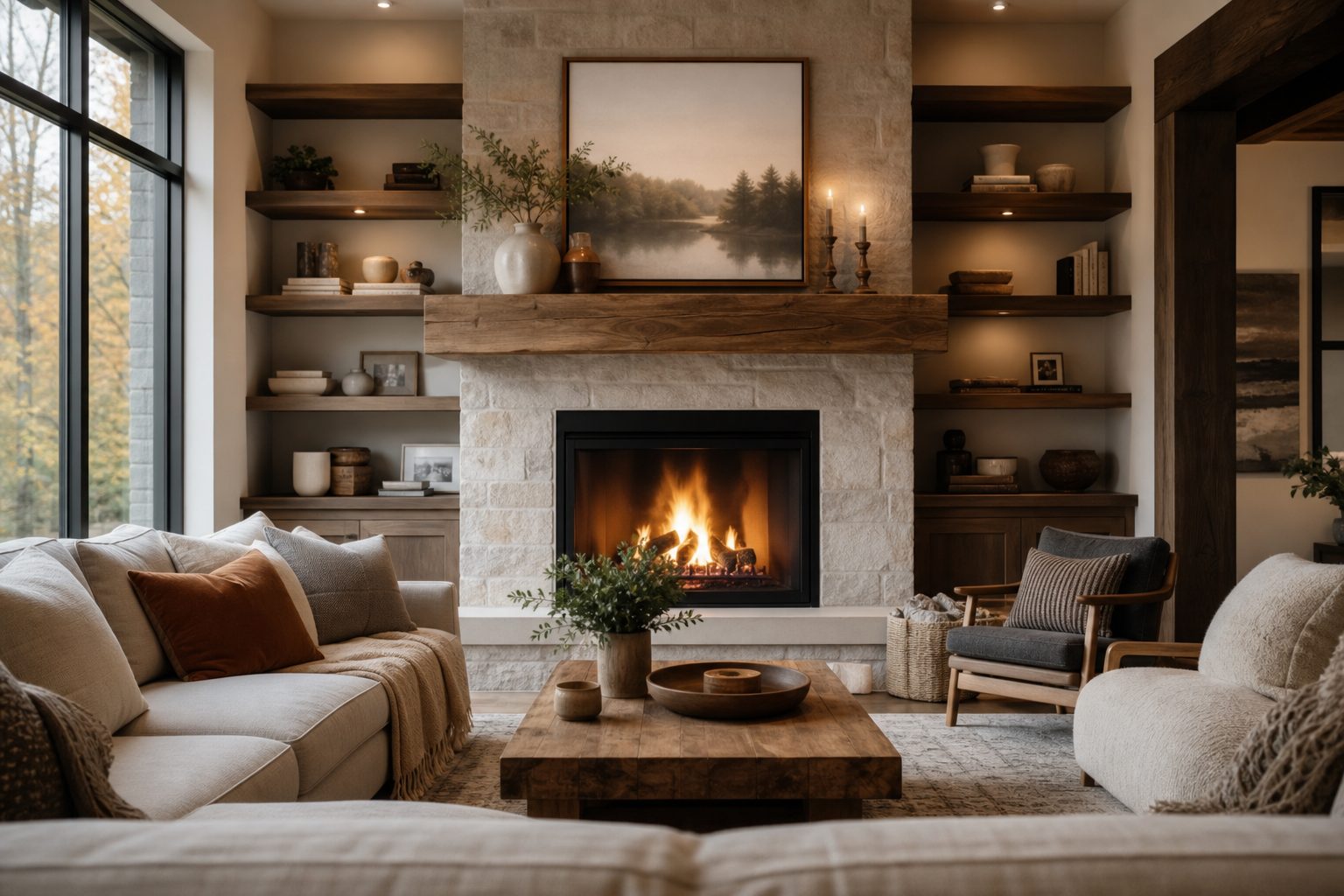
Part of its appeal comes from contrast. A living room may have screens, busy schedules, and modern furniture, but a fireplace brings in something simple and steady. The glow of a fire feels calm. The mantel can hold family photos, art, candles, or seasonal decor. The hearth can make the room feel grounded.
That is why a fireplace often feels less like an appliance and more like part of the home’s personality.
A Natural Focal Point That Organizes the Room
A strong living room usually needs a clear focal point. Without one, furniture can feel scattered, and the room may lack direction. A fireplace solves that problem in a natural way.
It Gives the Eye a Place to Land
When you enter a living room, your eye looks for something important. A fireplace offers that visual stop. It may be framed in brick, stone, tile, wood, or a clean modern surround. No matter the style, it creates structure on the wall.
This does not mean every fireplace must be large or dramatic. A small fireplace can still be powerful if it is well placed and balanced with the room. The key is that it feels intentional. A mirror above it, artwork nearby, or built-in shelves on each side can help it feel complete.
It Helps Furniture Make Sense
A fireplace also guides the layout. Sofas and chairs often feel best when they face or angle toward it. This creates a natural conversation area. Instead of a room that only points toward a television, the space can support talking, reading, relaxing, and spending time together.
Common furniture choices around a fireplace include:
- A sofa facing the fireplace for a classic, balanced layout
- Two chairs angled toward the hearth for easy conversation
- A coffee table centered between seating and the fireplace
- A soft rug that connects the seating area visually
- Side tables with lamps for reading and evening comfort
When these pieces work together, the fireplace becomes the center of daily living, not just a background detail.
Warmth You Can See and Feel
The warmth of a fireplace is both physical and visual. Real flames, glowing embers, or the soft effect of an electric fireplace can make a room feel more welcoming. The light changes the atmosphere in a way that overhead lighting often cannot.
Firelight has movement. It flickers, brightens, fades, and reflects on nearby surfaces. That movement makes a living room feel alive. It can soften hard edges, highlight textures, and make even a simple space feel layered.
There is also a seasonal connection. In colder months, a fireplace can make staying indoors feel special. In warmer months, the fireplace may still provide beauty through its materials, mantel decor, or architectural shape. The fire may not be on, but the feature remains present.
This year-round role is one reason fireplaces remain popular in living room design.
Style, Materials, and Personality
A fireplace can match almost any home style. It can look traditional, rustic, modern, coastal, farmhouse, or minimal. The materials and details around it tell the story.
Mantels, Surrounds, and Built-Ins
The mantel is often the most expressive part of the fireplace. A thick wood mantel can feel warm and casual. A painted mantel may feel classic and clean. A stone surround can add weight and texture. A sleek tile surround can give the room a more modern edge.
Built-ins can make the fireplace feel even more central. Shelves, cabinets, or display niches on each side create symmetry and storage. They also give homeowners a place to show books, baskets, ceramics, framed photos, and meaningful objects.
The best fireplace designs feel connected to the rest of the room. They do not have to match every piece exactly, but they should share a common style, color, or material.
Color, Texture, and Scale
Scale matters. A fireplace that is too small for a large wall may feel lost. One that is too heavy in a small room may feel crowded. The goal is balance.
Color and texture also play a big role. White brick can feel bright and relaxed. Dark stone can feel bold and cozy. Smooth plaster can feel calm and modern. Patterned tile can add charm and personality.
A fireplace can stand out or blend in, depending on the room’s design. Both choices can work. A bold fireplace makes a statement. A quiet fireplace supports the space without taking over.
Everyday Moments Around the Fire
A fireplace becomes the heart of a living room because life happens around it. It is where people sit with coffee in the morning, read on a quiet afternoon, or talk at the end of the day. It can be part of holiday traditions, winter evenings, and simple family routines.
The area around the fireplace often becomes a shared zone. Pets may rest near it. Children may play on the rug nearby. Guests may choose the chairs closest to the hearth. These everyday patterns give the fireplace emotional meaning over time.
Decor also changes around it. A mantel may hold greenery in winter, flowers in spring, or simple candles year-round. These small changes help the living room feel current without changing the whole space.
Practical Details That Shape the Experience
A beautiful fireplace still needs to work well for the home. The right type depends on the space, lifestyle, and local requirements. Wood-burning, gas, and electric fireplaces each offer a different experience.
Wood-burning fireplaces can provide a classic sound, scent, and flame pattern. Gas fireplaces are often easier to control. Electric fireplaces can be flexible in homes where venting or fuel lines are not practical. Each option has its own care needs, costs, and installation rules.
Important practical details include:
- Proper ventilation or power access, depending on fireplace type
- Safe spacing between the fireplace and furniture, curtains, or decor
- A hearth or surround material suited to heat exposure
- Regular cleaning and inspection based on the system used
- Local building codes and manufacturer instructions
These details may not be as exciting as choosing tile or a mantel, but they shape how comfortable and safe the living room feels.
Balancing the Fireplace With the TV
Many living rooms need both a fireplace and a television. This can be tricky because both want attention. The goal is to create balance instead of competition.
One common choice is placing the TV above the fireplace. This can work in some rooms, but height and viewing comfort matter. If the TV sits too high, watching it may feel uncomfortable. Another option is placing the TV beside the fireplace in built-ins or on a nearby wall. This allows the fireplace to stay warm and inviting while the TV remains useful.
The best setup depends on the room shape, seating distance, and how the household uses the space. A living room used mostly for movies may need a different layout than one used mostly for conversation.
Frequently Asked Questions
Does a living room need a fireplace to feel cozy?
No, a living room can feel cozy without a fireplace. Soft lighting, warm colors, layered textiles, and comfortable seating can all create comfort. Still, a fireplace adds a clear center and a special kind of warmth that many people love.
What is the best place for a fireplace in a living room?
The best place is usually where the fireplace can be seen, enjoyed, and safely used. A central wall often works well because it helps organize seating. Corner fireplaces can also work when the room layout supports them.
Should furniture face the fireplace or the TV?
It depends on how the room is used most often. If conversation and relaxation matter most, seating can face the fireplace. If watching TV is the main activity, furniture may need to balance both features with angled seating.
How can I make an unused fireplace look attractive?
An unused fireplace can still add style. The firebox can hold stacked logs, candles, a decorative screen, or a simple basket. The mantel can display art, a mirror, or seasonal pieces that match the room.
Are electric fireplaces good for living rooms?
Electric fireplaces can be a good choice for many living rooms. They are often flexible, easy to use, and available in many styles. They do not create the same experience as wood fires, but they can still add warmth and atmosphere.