

How Can You Keep a Home Cooler in Summer? The best answer is a mix of smart shade, steady airflow, less indoor heat, and better use of your cooling system. You do not always need major upgrades to feel a real difference. Small daily choices, like closing blinds at the right time or running fans the right way, can help your home feel cooler and more comfortable during hot weather.
How Can You Keep a Home Cooler in Summer? Start With the Heat Sources
A home gets hot for a few simple reasons. Sunlight pours through windows. Warm air slips in through gaps. Appliances add heat indoors. Your roof, walls, and attic can also hold heat and pass it into living spaces.
The first step is to slow that heat down before it spreads through the house. Think of your home like a cooler on a picnic. If you keep opening the lid and letting the sun hit it, the ice melts faster. Your house works in a similar way. Blocking heat early makes every other cooling method work better.
Block Sunlight Before It Warms the Room
Windows can make a room bright and cheerful, but in summer they can also turn it into a hot box. The strongest sunlight often hits south- and west-facing windows, especially in the afternoon.
Simple window habits can help:
- Close blinds, curtains, or shades during the hottest part of the day.
- Use light-colored curtains to reflect more sunlight.
- Keep bedroom shades closed in the afternoon so the room is cooler at night.
- Add exterior shade, such as awnings, outdoor shades, or well-placed plants.
- Use blackout curtains in rooms that get strong direct sun.
Exterior shade is especially helpful because it stops sunlight before it reaches the glass. Indoor curtains still help, but the glass may already be warm by the time sunlight hits the fabric.
Reduce Heat Made Inside the Home
Many everyday activities add heat indoors. Cooking, drying clothes, running large electronics, and using bright lights can all make rooms warmer. You may not notice each one on its own, but together they add up.
On very hot days, try to limit heat-making tasks during afternoon hours. Use a microwave, slow cooker, air fryer, or outdoor grill instead of the oven when possible. Run the dishwasher or dryer later in the evening. Turn off lights in empty rooms.
Even small electronics give off heat. Computers, game systems, and chargers can warm a small room. If a room already feels stuffy, unplug devices you are not using.
Make Your Cooling System Work Smarter
Air conditioning can make summer easier, but it works best when the home is not fighting against it. If cool air escapes or warm air keeps entering, the system has to run longer. That can leave rooms uneven and uncomfortable.
A few basic habits can help your cooling system do its job with less strain.
Set the Thermostat With Comfort and Consistency in Mind
A thermostat setting should keep your home comfortable without causing the system to cycle in an extreme way. Constantly moving the temperature up and down can make the house feel uneven. It may also cause the system to work harder during the hottest part of the day.
A steady setting is often better. If you use a programmable or smart thermostat, set a schedule that matches your routine. For example, the home can be a little warmer when everyone is away and more comfortable when people are home.
Avoid placing heat-producing items near the thermostat. Lamps, TVs, and direct sunlight can make the thermostat think the room is warmer than it really is. That may cause the air conditioner to run longer than needed.
Keep Vents, Filters, and Airflow Clear
Cool air needs a clear path. If a vent is blocked by a sofa, rug, bed, or curtain, the room may not cool well. Walk through the home and check each supply and return vent.
Air filters also matter. A dirty filter can slow airflow and make the system less effective. Filter needs vary by home, system, pets, dust levels, and filter type, so follow the guidance for your equipment.
Good cooling system habits include:
- Keep furniture and rugs away from vents and returns.
- Replace or clean air filters as recommended for your system.
- Keep interior doors open when possible to help air move.
- Make sure outdoor AC equipment is not blocked by leaves or clutter.
- Keep curtains from hanging over floor or wall vents.
If one room is always much hotter than the others, the issue may be airflow, insulation, ductwork, sun exposure, or room location. The cause is not always the thermostat.
Use Fans the Right Way
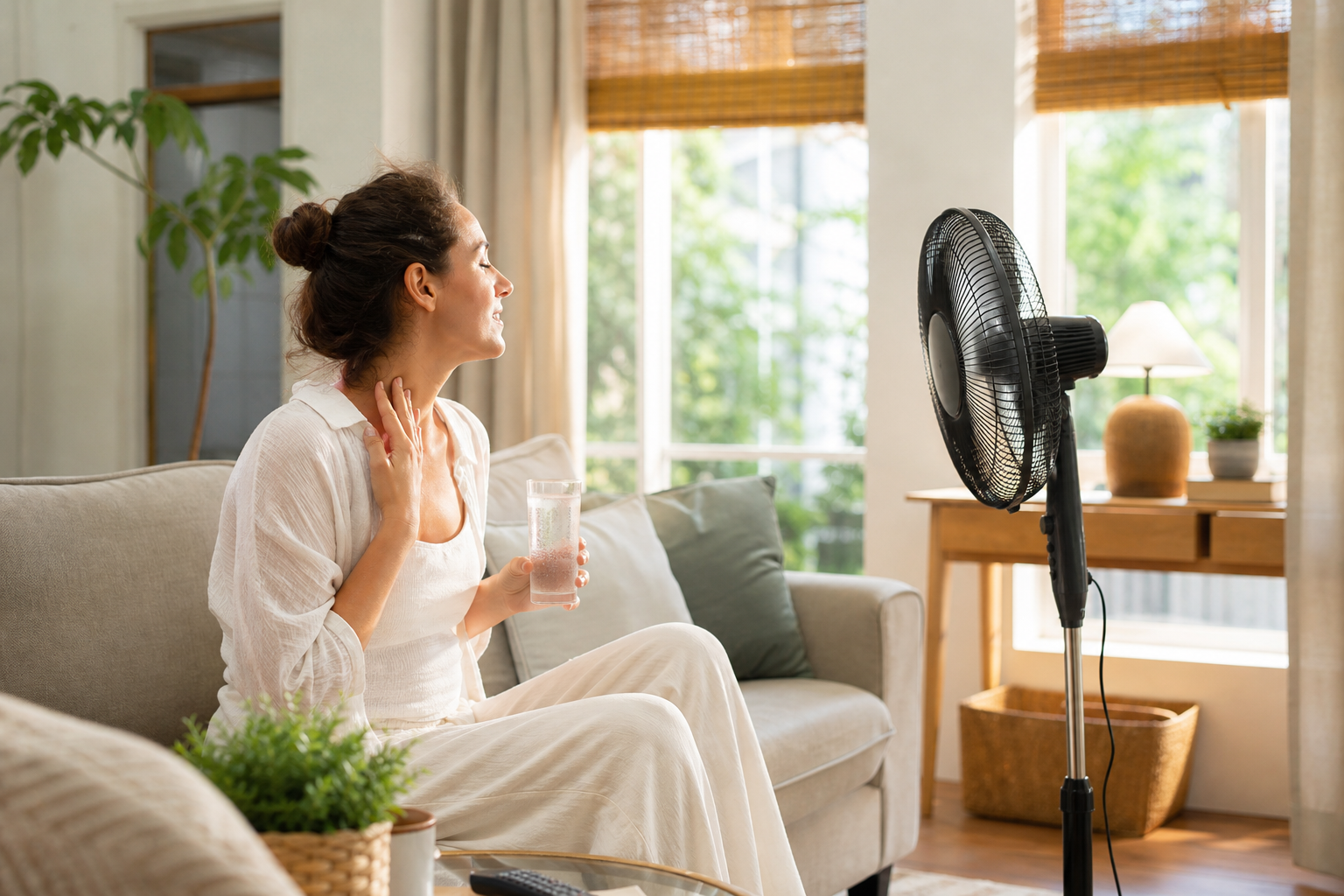
Fans do not lower the temperature of the air, but they make people feel cooler. Moving air helps sweat evaporate from the skin, which improves comfort. That means fans are most useful when people are in the room.
Ceiling fans should usually run counterclockwise in summer when viewed from below. This pushes air downward and creates a cooling breeze. Many ceiling fans have a small switch on the motor housing to change direction.
Portable fans can also help. Place a fan where it moves air across the area you use most, such as a sofa, desk, or bed. In the evening, if outdoor air is cooler than indoor air, a window fan can help bring in fresh air. If the outdoor air is hotter or humid, keep windows closed.
Fan safety matters too. Keep fans on stable surfaces, away from water, and away from loose fabric. Turn off fans in empty rooms unless they are being used to move cooler air through the house.
Seal Gaps and Improve Insulation
A cooler home is not only about making cold air. It is also about keeping hot air out and cool air in. Air leaks are common around doors, windows, attic openings, pipes, and electrical outlets on exterior walls.
You can often feel leaks by hand on a windy day or notice them when a room is harder to cool. Weatherstripping and caulk can help seal many small gaps. Door sweeps can reduce warm air coming in under exterior doors.
Attics are another important area. A hot attic can warm the ceiling below, especially in upstairs rooms. Good attic insulation helps slow heat transfer. Proper attic ventilation can also help manage trapped heat, depending on the home’s design.
Common places to check include:
- Gaps around window frames and door frames.
- Space under exterior doors.
- Attic hatches or pull-down stairs.
- Openings around plumbing or wiring.
- Fireplace dampers that are not fully closed when unused.
Sealing and insulation are not as exciting as a new gadget, but they can make a home feel more stable in both summer and winter.
Adjust Daily Habits for Cooler Rooms
Summer comfort often comes down to timing. The same task that feels fine at 9 p.m. can make a room miserable at 3 p.m. A few routine changes can keep heat from building indoors.
Morning is usually a better time for chores that create heat. If you bake, cook, iron, or run laundry, doing it earlier or later can help keep the afternoon cooler. Keeping doors and windows closed during the hottest hours also helps prevent warm air from entering.
Bedding and clothing matter too. Lightweight cotton or breathable fabrics can make sleep more comfortable. A heavy comforter may trap heat, even in an air-conditioned room. In bedrooms, keeping lamps and electronics away from the bed can reduce nearby heat.
Humidity also affects comfort. When air feels sticky, the body has a harder time cooling itself. Bathroom fans and kitchen exhaust fans can help remove moisture from showers and cooking. Use them during the activity and for a short time afterward, but avoid running exhaust fans all day because they can pull cooled air out of the house.
Keep the Kitchen From Heating the Whole House
The kitchen can be one of the biggest sources of indoor heat. Ovens and stovetops warm the room fast, and that heat can spread to nearby areas.
On hot days, choose meals that need less cooking. Salads, sandwiches, chilled pasta, fresh fruit, rotisserie chicken, and quick stovetop meals can keep the kitchen more comfortable. If you do cook, use lids on pots to hold heat in and cook faster. Run the exhaust fan while cooking to move warm, moist air outside when the fan vents outdoors.
Small appliances often create less heat than a full-size oven. A toaster oven, microwave, electric pressure cooker, or slow cooker can be useful in summer. The goal is not to stop cooking. It is to avoid adding unnecessary heat when the house is already warm.
Manage Windows and Doors by Time of Day
Windows can either help or hurt, depending on the outdoor temperature. If the air outside is cooler than the air inside, opening windows can bring relief. If outside air is hotter, open windows make the home warmer.
A common summer routine is to close windows, blinds, and curtains during hot daylight hours. In the evening, when outdoor air cools down, windows may be opened for fresh air if conditions are comfortable and safe. In the morning, close them again before the sun and heat build.
Doors matter too. Avoid leaving exterior doors open while bringing in groceries or talking outside. A few minutes can let a lot of warm air into the home, especially when the air conditioner is running.
Interior doors are different. Keeping them open often helps air move more evenly, especially in homes with central air. If doors must stay closed, the room may need a clear return-air path so air does not become trapped.
Frequently Asked Questions
What is the fastest way to cool a hot room?
Block direct sunlight, turn on a fan, close nearby doors or windows to hot areas, and reduce heat sources. If the home has air conditioning, make sure vents are open and not blocked. A cool shower, lighter clothing, and a cold drink can also help you feel better while the room temperature drops.
Should I leave windows open during the day in summer?
Usually, windows should stay closed during the hottest part of the day if outdoor air is warmer than indoor air. Open windows can let heat and humidity inside. They are more helpful in the evening or early morning when outdoor air is cooler and comfortable.
Do ceiling fans make a home cooler?
Ceiling fans do not lower the actual air temperature, but they make people feel cooler by moving air across the skin. In summer, many ceiling fans work best when set to push air downward. Turn fans off in empty rooms to avoid wasting electricity.
Why is my upstairs hotter than the downstairs?
Heat rises, and upper floors often get more warmth from the roof and attic. Sun exposure, weak airflow, poor insulation, or duct issues can also make upstairs rooms hotter. Closing blinds, improving airflow, checking vents, and reducing attic heat can all help.
Can curtains really help keep a home cooler?
Yes, curtains can help, especially when they block strong direct sunlight during hot hours. Light-colored or blackout curtains are often useful in sunny rooms. Exterior shade can be even more effective because it stops sunlight before it warms the window glass.