

How Can You Plan a Road Trip with Your Dog? Start by thinking about your dog’s comfort, safety, health, and daily routine. A good trip is not only about the route. It is also about rest stops, food, water, car safety, pet-friendly lodging, and quiet time. With a little preparation, a road trip can feel calm and fun for both you and your dog.
How Can You Plan a Road Trip with Your Dog? Start with the Basics
A dog-friendly road trip begins before you pack the car. Some dogs love rides, while others feel nervous, carsick, or restless. Your plan should match your dog’s age, health, size, and personality.
Think about how long your dog can stay relaxed in the car. A young puppy, senior dog, or anxious dog may need more breaks. A healthy adult dog may handle longer stretches, but still needs chances to walk, drink, and go potty.
Also consider your own travel style. If you like to drive for many hours without stopping, you may need to change that habit. Dogs do best when the day has a steady rhythm.
Check Your Dog’s Health Before Travel
Before a longer road trip, it is wise to make sure your dog is fit to travel. This is especially important if your dog has a health condition, takes medicine, is very young, or is older.
You may want to review vaccines, flea and tick protection, and any medicine your dog needs. If your dog gets carsick, ask a veterinarian about safe options. Never give human medicine unless a veterinarian says it is safe.
Bring a copy of important health information. Some hotels, campgrounds, boarding facilities, or groomers may ask for vaccine records. Having them ready can prevent stress during the trip.
Practice Short Drives First
If your dog is not used to car travel, do not make the first ride a long one. Start with short, calm drives around your area. Make the car feel normal and safe.
Try a ten-minute drive, then a twenty-minute drive, and slowly build from there. Watch for signs of stress, such as drooling, shaking, whining, pacing, or heavy panting. If your dog seems upset, slow down the training and keep rides short.
A favorite blanket, soft bedding, or familiar toy can help your dog feel more settled. The goal is to teach your dog that the car is a safe place, not a surprise.
Plan a Dog-Friendly Route
Your route matters as much as your destination. Dogs need breaks, shade, water, and safe places to walk. A simple map plan can make the drive easier and more relaxed.
Plan to stop often enough for your dog to stretch and relieve themselves. Many dogs do well with breaks every few hours, but your dog may need more. Weather, age, health, and energy level all affect this.
Avoid planning a route where you will be stuck for long periods without safe stopping places. Busy highways, extreme heat, and crowded travel days can make a trip harder.
Choose Safe Rest Stops
Not every stop is good for dogs. Look for places with space to walk away from traffic. Keep your dog on a leash at every stop, even if they are well trained. New smells, loud trucks, and other animals can distract even calm dogs.
At each stop, offer water and give your dog time to sniff. Sniffing is not wasted time. It helps your dog relax and understand the new place.
Be careful around hot pavement. In warm weather, asphalt can hurt paws. In cold weather, ice and road salt can bother them. Wipe paws if needed and check for cuts or irritation.
Research Pet Rules Before You Arrive
Pet-friendly does not always mean the same thing everywhere. A hotel may allow dogs but have weight limits. A campground may require leashes at all times. A park may allow dogs on some trails but not others.
Check rules before you depend on a stop. This helps you avoid last-minute changes when everyone is tired. Also confirm whether there are pet fees, restricted areas, or quiet hours.
If you plan to visit attractions, remember that many indoor places do not allow pets unless they are service animals. You may need to plan safe supervision or skip certain stops.
Pack the Right Dog Road Trip Supplies
Packing well can prevent many common travel problems. Try to keep your dog’s items in one bag or bin, so you can find things fast during stops.
Bring more food and supplies than you think you need. Delays happen. Stores may not carry your dog’s usual food. A sudden food change can upset your dog’s stomach, so staying consistent is helpful.
Useful items to pack include:
- Food, treats, bowls, and extra water for the drive
- Leash, collar or harness, ID tags, and waste bags
- Bedding, towels, toys, and a familiar blanket
- Medications, vaccine records, and basic first-aid items
- Grooming wipes, paw balm, and a brush if needed
- Crate, carrier, seat cover, or dog seat belt system
Keep essentials within reach. You do not want to unpack the whole car just to find a bowl or leash.
Prepare Identification and Contact Details
Before leaving, check your dog’s ID tag. It should have a current phone number. If your dog is microchipped, make sure the registration information is updated.
A clear recent photo of your dog can also be useful. If your dog gets loose, a photo helps people recognize them quickly. You can keep it on your phone.
Consider adding a temporary tag with your travel phone number if your usual tag is hard to read. Small steps like this can make a big difference in an emergency.
Keep Your Dog Safe in the Car
Car safety is one of the most important parts of traveling with a dog. A loose dog can distract the driver. In a sudden stop, a loose dog can also get hurt or hurt others in the car.
Use a crash-tested crate, carrier, travel harness, or seat belt system made for dogs. Choose a setup that fits your dog’s size and shape. Your dog should be able to sit, lie down, and stay comfortable.
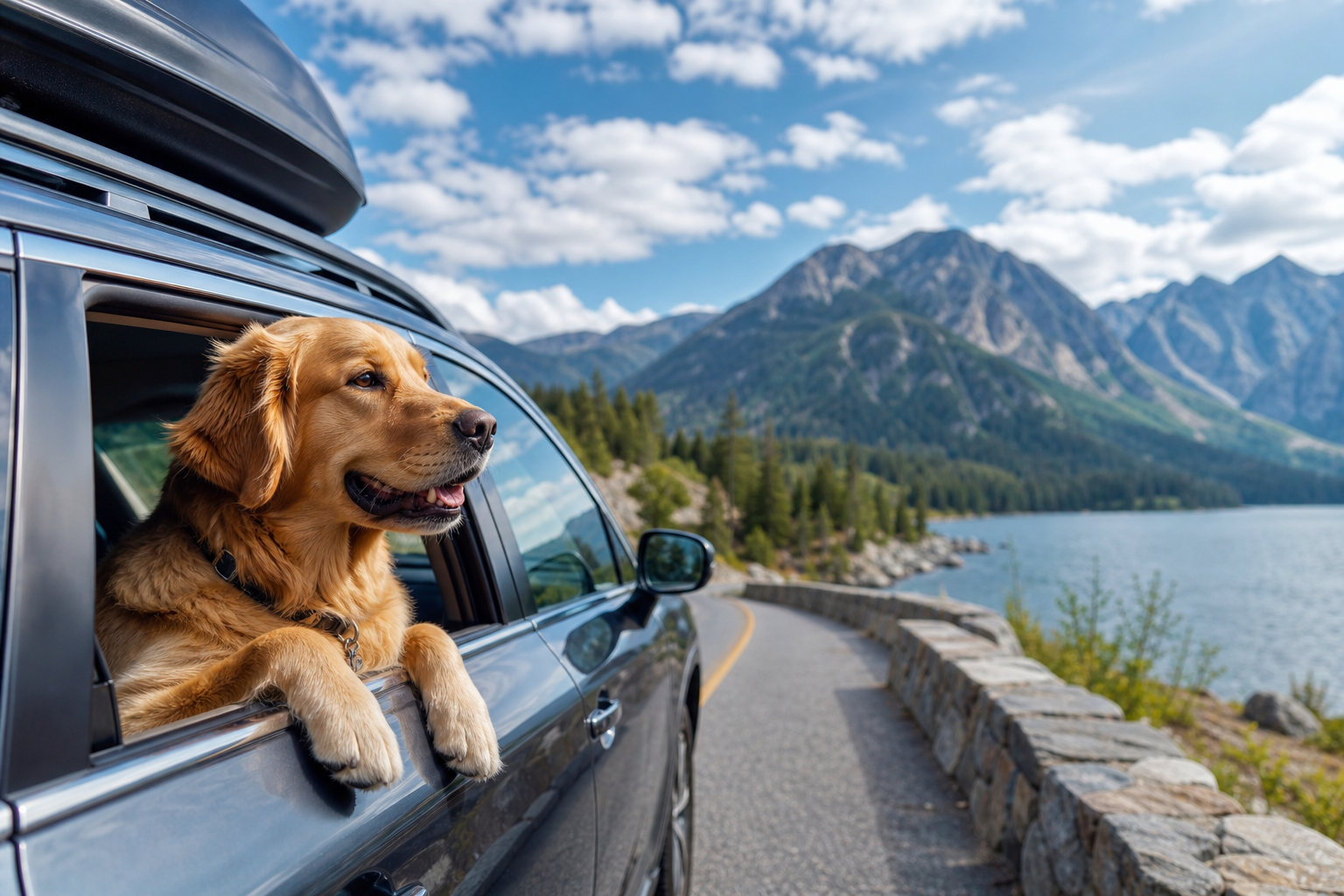
Do not let your dog ride with their head far out the window. It may look fun, but wind, dust, insects, or road debris can injure their eyes, ears, or face. Fresh air is fine, but keep windows at a safe level.
Never leave your dog alone in a parked car in warm or cold weather. Temperatures inside a car can become unsafe quickly. Even a short stop can be risky.
Manage Food, Water, and Breaks
Dogs often feel better when their routine stays close to normal. Feed your dog at usual times if possible. If your dog gets carsick, a lighter meal before driving may help, but avoid sudden changes without good reason.
Water is very important, especially in warm weather or at high activity stops. Offer small amounts often instead of waiting until your dog is very thirsty.
Plan breaks that include:
- A short walk on leash
- A chance to go potty
- Fresh water in a clean bowl
- A quick body check for burrs, ticks, or sore paws
- A calm moment before getting back in the car
Do not let your dog drink from puddles, lakes, or unknown water sources. Carry clean water instead. This reduces the chance of stomach upset.
Treats can help reward calm behavior, but do not overdo them. Too many treats during travel can lead to an upset stomach.
Help Your Dog Stay Calm
Road trips can be exciting, but they can also be overstimulating. New places, strange sounds, and long hours in the car may tire your dog out.
Keep the car environment steady. Loud music, sudden stops, and a crowded back seat can increase stress. A calm voice and predictable routine help your dog understand what is happening.
Some dogs relax with a covered crate, while others prefer to see their person. Notice what works for your dog. Comfort is not the same for every pet.
If your dog is anxious, do not punish fear. Instead, create space, slow down, and reward calm behavior. A patient approach usually works better than forcing your dog through stress.
Know Basic Road Trip Etiquette with Dogs
Good manners make travel easier for you, your dog, and the people around you. Always clean up after your dog. Keep them leashed unless you are in a safe, legal off-leash area.
Do not allow your dog to run up to strangers, children, or other dogs. Even friendly dogs can cause problems when they surprise people. Ask before letting anyone greet your dog.
In hotels or rentals, keep noise low. Bring a blanket or bed to reduce hair on furniture. If your dog barks at hallway sounds, choose a quieter room when possible or use white noise.
Respect local rules. Some beaches, trails, and parks have seasonal limits for dogs. Following signs protects wildlife, other visitors, and your pet.
Prepare for Weather and Emergencies
Weather can change the way you travel with a dog. In summer, avoid the hottest parts of the day for long walks. In winter, protect paws from ice, salt, and cold ground.
Keep a towel handy for rain, mud, or wet paws. A dirty dog is easier to manage when you are ready for it. If your dog has a thin coat, they may need a sweater in cold areas.
It also helps to know where emergency veterinary care is located along your route or near your overnight stay. You do not need to expect trouble, but it is better to be prepared.
A simple dog first-aid kit may include bandage material, tweezers, antiseptic wipes made for pets, and any personal medicine your dog needs. Store it where you can reach it quickly.
Frequently Asked Questions
How often should I stop during a road trip with my dog?
Many dogs need a break every few hours, but each dog is different. Puppies, senior dogs, and anxious dogs may need more frequent stops. Watch your dog’s body language and adjust the schedule as needed.
What should my dog ride in during the car trip?
Your dog should ride in a safe crate, carrier, harness, or dog seat belt system. The best choice depends on your dog’s size, comfort, and behavior. A loose dog in the car is not a safe travel plan.
Can I take my dog into restaurants while traveling?
Most indoor restaurants in the United States do not allow pets, except service animals. Some places have dog-friendly patios, but rules vary. Check policies before you arrive and never leave your dog in an unsafe car.
What if my dog gets carsick on the road?
Stop driving when it is safe, offer fresh air, and keep your dog calm. For future trips, ask a veterinarian about motion sickness options. A lighter pre-trip meal may help some dogs, but avoid sudden diet changes.
How can I make hotel stays easier with my dog?
Bring familiar bedding, keep your dog’s routine steady, and follow all pet rules. A tired, well-exercised dog is often quieter indoors. Do not leave your dog alone if they become stressed or bark often.