

What Can You Discover by Exploring Your Own Town Like a Tourist? More than many people expect. A familiar place can feel new when you slow down, look up, and treat each street like it has a story. You may find local history, small businesses, quiet parks, public art, and food you have passed for years without noticing. Seeing your town with fresh eyes can also help you feel more connected to the place you call home.
What Can You Discover by Exploring Your Own Town Like a Tourist?
Exploring your own town like a tourist means changing the way you move through daily life. Instead of rushing from home to work, the grocery store, or school pickup, you pay attention. You notice signs, buildings, sidewalks, murals, old churches, corner shops, and the way neighborhoods change from block to block.
Tourists often ask simple questions. Why is this street named that? What is the oldest building downtown? Where do locals eat breakfast? Is there a small museum, trail, lake, theater, or market nearby? These questions can turn a normal Saturday into a small adventure.
You do not need a plane ticket, hotel room, or big budget. The discovery is often close. It may be in a historic district, a family-owned bakery, a public garden, or a scenic overlook you have ignored because it was “too local.” When you explore this way, your town becomes less like a backdrop and more like a living place.
Hidden History in Everyday Places
Many towns in the United States have layers of history that are easy to miss. Some places have plaques on buildings, historic homes, old train stations, former mills, courthouse squares, or cemeteries that tell stories about earlier generations. Even newer towns may have roots in farming, mining, shipping, railroads, military life, or migration.
Looking at local history does not mean memorizing dates. It means noticing how the past shaped the present. A main street may show how people once shopped before big malls and online orders. An old theater may point to a time when downtown was the center of nightlife. A bridge, canal, or depot may explain why the town grew in a certain spot.
Local libraries and visitor centers often have maps, photo collections, and simple guides. Some towns also have walking tour signs or historic markers. These details can make a normal street feel like an open-air museum.
Old Buildings With New Uses
One interesting discovery is how older buildings are reused. A former bank may now be a restaurant. A school may become apartments. A warehouse may hold artist studios, shops, or event space. These changes show how a town adapts over time.
When you look at the shape of windows, brickwork, doors, and rooflines, you can often guess a building’s earlier purpose. You may also notice small details, such as carved dates, faded signs, or old loading docks. These features give character to places that might otherwise blend into the background.
Street Names and Local Stories
Street names can be clues. Some are named after early families, local leaders, natural features, or important events. Others may reflect industries that once mattered, such as Mill Road, Railroad Avenue, or Market Street.
Asking why a place has a certain name can lead to surprising stories. It may reveal a former orchard, a closed factory, a Native American place name, or a family that helped build the community. Even if the full story is hard to find, the question itself makes the town feel more interesting.
Landmarks You Forgot to Notice
Residents often stop seeing landmarks because they pass them so often. A statue in a park, a clock tower, a courthouse, a water tower, or a memorial may become part of the scenery. Looking like a tourist helps you pause and ask what these places mean.
Some landmarks are formal and well marked. Others are unofficial. A beloved diner, a painted wall, a record store, or a high school football field can be just as meaningful to local identity. These places often hold shared memories.
Local Food, Shops, and Small Businesses
One of the best things to discover is the local flavor of your town. Chain restaurants and big stores can be useful, but they rarely tell the full story. Independent cafés, bakeries, diners, bookstores, thrift shops, farmers markets, and family-run restaurants often show the personality of a place.
Eating like a tourist in your own town does not have to mean spending a lot. It may mean trying a lunch special at a place you have always passed, visiting a food truck area, or buying bread from a small bakery. It may also mean noticing regional foods that are common in your area but special to visitors.
Small businesses can also introduce you to people who know the town well. A shop owner might tell you about a local festival, a nearby trail, or a historic building. A server may recommend a dish that regulars love. These small exchanges can make your town feel warmer and more personal.
Useful places to notice include:
- A neighborhood café with local art on the walls
- A farmers market with seasonal produce and handmade goods
- A used bookstore, record shop, or antique store with local character
- A diner or restaurant that has been around for years
- A bakery, butcher shop, or specialty market tied to local traditions
Exploring local businesses also helps you understand how different neighborhoods feel. One area may be known for breakfast spots. Another may have international grocery stores. Another may be full of boutiques, barbershops, or repair stores. Together, they create a fuller picture of daily life.
Parks, Trails, and Quiet Corners
Your town may have more outdoor spaces than you realize. Parks, walking trails, greenways, river paths, community gardens, and small nature areas are easy to overlook when they are not part of your routine. Tourists often search for these places because they offer a break from traffic and noise.
A simple walk can change your view of home. You may discover a creek behind a shopping center, a shaded trail near a school, or a small park with a view of the sunset. Some towns have benches, picnic areas, public gardens, birding spots, or playgrounds tucked into neighborhoods.
Nature also helps you notice the seasons. Trees blooming in spring, farmers market produce in summer, bright leaves in fall, and quiet streets in winter all change the way a town feels. Seeing these changes can make familiar places feel fresh again.
Public Art and Creative Spaces
Murals, sculptures, painted utility boxes, and community art projects can tell you what a town values. Some art celebrates local history. Some honors cultural groups. Some simply adds color and joy to plain walls.
Creative spaces may include small galleries, community theaters, music venues, craft fairs, or arts centers. You may not think of your town as an “arts destination,” but local creativity is often hiding in plain sight. Even a mural behind a grocery store can become a favorite discovery.
Views, Water, and Open Space
Not every town has mountains, beaches, or famous scenery. Still, many places have views worth noticing. A hill, bridge, riverbank, lake, field, or rooftop parking deck may offer a different angle on the place you know.
Water features are especially easy to miss if they sit behind roads or buildings. A small river, pond, canal, or reservoir can shape a town’s history and mood. Open spaces can also show how your town connects to the land around it.
Culture, Community, and Everyday Life
Exploring your town like a tourist can show you the culture that daily routines hide. Culture is not only found in museums. It appears in school events, church suppers, local sports, holiday parades, weekend markets, and neighborhood festivals. It also appears in languages spoken at shops, food traditions, music, and public celebrations.
In many U.S. towns, different communities have shaped the local identity. You may find signs of immigrant history, military families, college life, farming roots, industrial work, or long-standing neighborhoods. Paying attention to these details can build respect for the people around you.
You may also notice how people use shared spaces. Who gathers at the park in the morning? Where do teenagers go after school? Which café has older residents reading the paper? Which block gets busy on Friday night? These patterns show the social life of a town.
Local culture can be simple but meaningful:
- A high school team that brings people together
- A seasonal fair or parade that fills downtown streets
- A library event that reflects community interests
- A music night, open mic, or outdoor concert
- A neighborhood market where people greet each other by name
These moments remind you that a town is not only roads and buildings. It is a network of habits, memories, and relationships.
How a Tourist Mindset Changes Your View of Home
The biggest discovery may not be a place at all. It may be a new attitude. A tourist mindset helps you become curious again. It teaches you to slow down, ask questions, and enjoy small details. This can make daily life feel less automatic.
When you explore nearby places, you may also feel more pride in your town. You may see care in a restored building, beauty in a public garden, or creativity in a small business. You may also notice problems, such as empty lots, broken sidewalks, or places that need support. Both kinds of noticing matter because they make you more aware of your community.
This mindset can also help families, couples, and friends share low-pressure time together. A walk through downtown, a visit to a local museum, or a picnic in a park can feel like a mini trip without the stress of travel.
Finding Surprise Without Going Far
Surprise does not always require distance. Sometimes it comes from turning down a different street, entering a shop you have never visited, or reading a plaque you used to ignore. A short walk can reveal a new restaurant, a quiet garden, or a historic detail.
The key is to leave room for noticing. When every minute is planned, small discoveries disappear. When you move more slowly, the familiar becomes more open.
Seeing Value in Ordinary Places
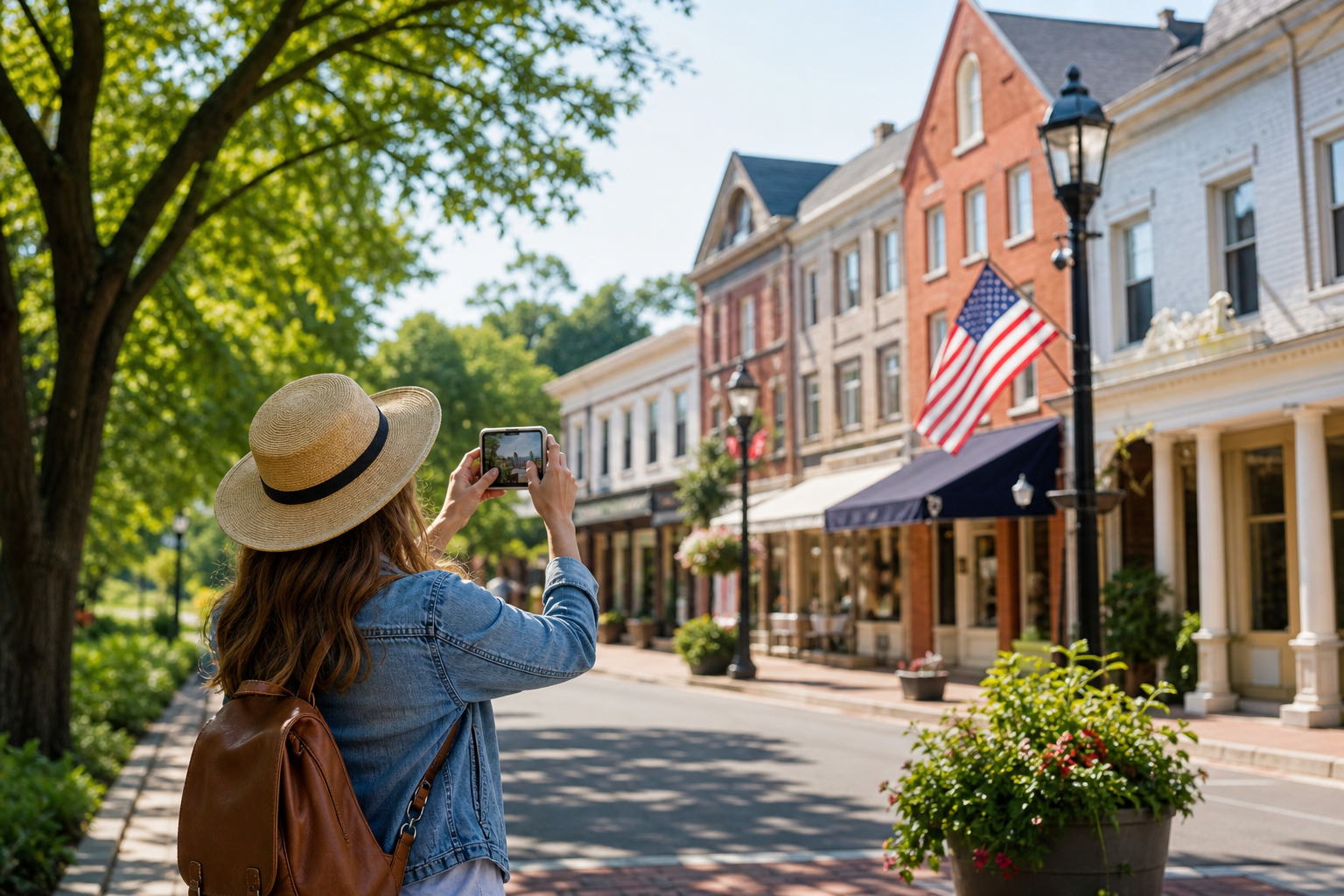
Tourists often take photos of things residents walk past without thinking. This can feel funny, but it is also useful. It reminds you that ordinary places may have beauty, history, or meaning.
A row of old storefronts, a bright mural, a busy diner counter, or a tree-lined street can become part of your personal map. These details help create a sense of belonging.
Frequently Asked Questions
Is exploring your own town like a tourist worth it?
Yes, it can be worth it because it helps you see familiar places with fresh eyes. You may discover local history, food, art, parks, and small businesses you never noticed before.
How can I explore my town without spending much money?
You can walk downtown, visit a public park, read historic signs, browse a library display, or look for free community events. Many discoveries cost little or nothing.
What should I look for first in my own town?
Start with places you usually pass but never enter or study closely. Main streets, parks, markets, old buildings, and local restaurants often offer easy discoveries.
Can this be fun for families with children?
Yes, children often enjoy simple local adventures because everything feels new when they are invited to notice details. Parks, murals, statues, snacks, and short walks can work well.
Does a small town have enough to explore?
A small town can have plenty to discover, even without famous attractions. Local stories, family businesses, nature spots, community events, and historic buildings can all be meaningful.
A Fresh Look at the Place You Call Home
Exploring your own town like a tourist can reveal history, flavor, nature, art, and community. It can also change how you feel about home. The streets may be the same, but your attention is different.
When you look closely, a familiar town becomes richer. A corner store becomes part of a neighborhood story. A park becomes a place of rest. A mural becomes a sign of creativity. A quiet street becomes a link to the past.
The answer to “What Can You Discover by Exploring Your Own Town Like a Tourist?” is both simple and wide. You can discover places, people, memories, and details that were always nearby. Most of all, you can discover that home still has the power to surprise you.