

What Makes Traditional Crafts Worth Preserving? The answer starts with people. Traditional crafts are not only objects on a shelf, a wall, or a table. They are signs of skill, memory, culture, and care. A woven basket, a handmade quilt, a clay pot, or a carved wooden bowl can carry years of learning in one simple form. In a world filled with fast products, traditional crafts remind us that useful things can also be meaningful, beautiful, and deeply human.
What Makes Traditional Crafts Worth Preserving? The Human Value Behind the Object
Traditional crafts are worth preserving because they connect hands, minds, and communities. They show how people solved daily problems with the tools, materials, and knowledge they had. Many crafts began as practical work. People needed clothing, dishes, blankets, furniture, tools, and decoration. Over time, these useful items became art forms.
A handmade object often shows the maker’s decisions. The shape, color, texture, and pattern may reflect local taste, family history, or personal style. This makes traditional crafts different from many mass-produced goods. They are not always perfect in a machine-made way, but that is part of their charm.
Skills Passed From One Generation to Another
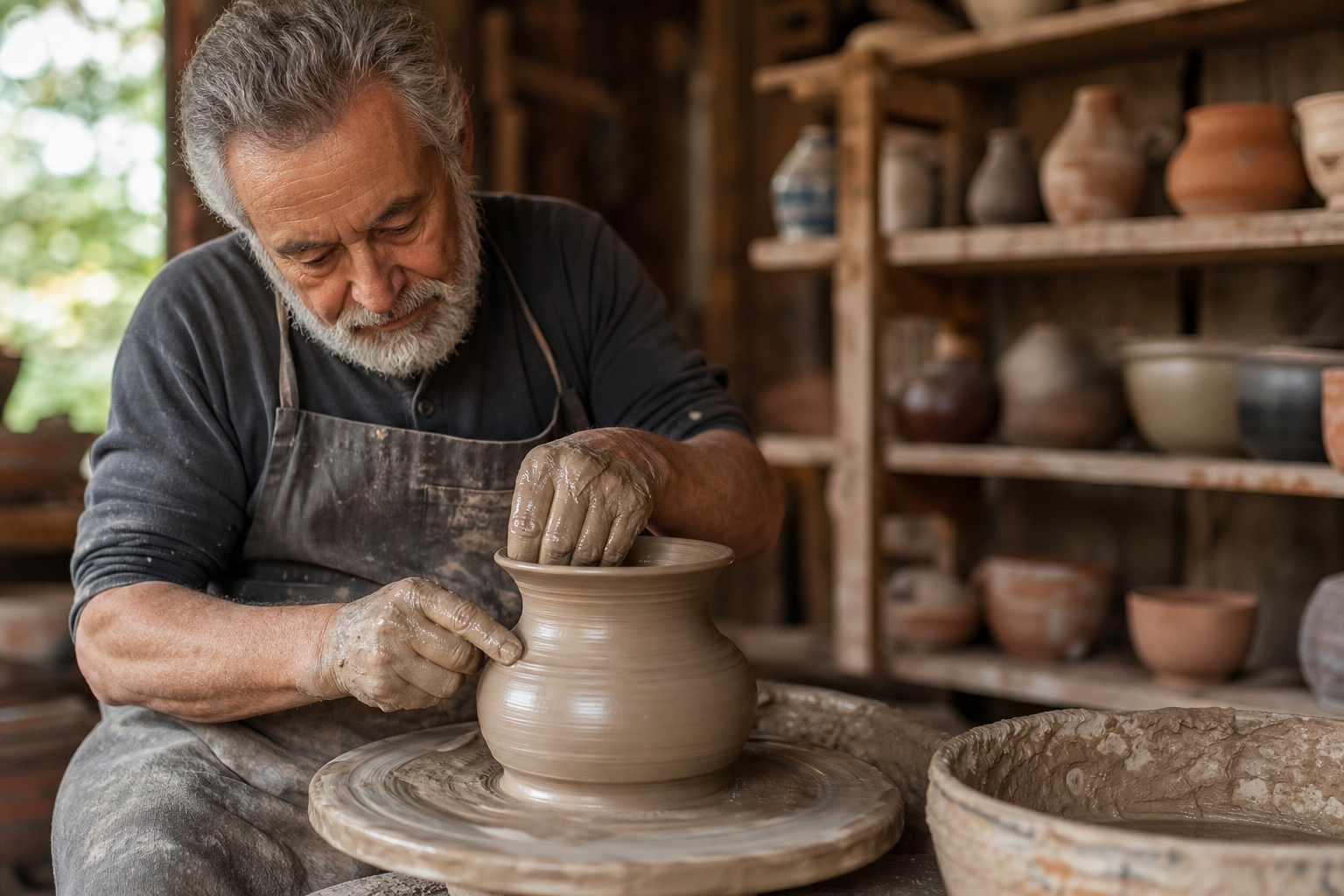
Traditional crafts often survive through teaching. A parent, grandparent, neighbor, or community elder may show a younger person how to shape clay, stitch cloth, braid fiber, or carve wood. This kind of learning is slow and personal. It is not only about steps. It is also about patience, touch, timing, and judgment.
Some skills are hard to explain in words. A craftsperson may know when clay has the right moisture by feel. A weaver may hear when the loom is working correctly. A woodworker may understand grain by sight and touch. These skills can be lost if no one practices them.
Preserving crafts helps keep this knowledge alive. It protects practical wisdom that books or videos may not fully capture.
Stories Held in Materials and Patterns
Many traditional crafts include symbols, colors, and patterns that tell stories. A quilt pattern may reflect family life. A basket design may show a connection to a place. A style of pottery may reveal how a community used local clay. Even simple choices can carry meaning.
Consumers may see a craft item as decoration, but for the maker it may be part of a much larger story. That story can include migration, celebration, survival, faith, or local identity. Preserving crafts helps protect these stories from being forgotten.
Beauty That Comes From Time and Care
Traditional crafts often take time. A handmade textile may require many hours of preparation before the final piece appears. Wood may need drying, clay may need shaping and firing, and natural fibers may need cleaning and spinning. The process can be long, but that time gives the object its character.
This slow care creates a different kind of beauty. It is not only visual. It is felt in the weight of a mug, the warmth of a blanket, or the smooth edge of a carved spoon. Traditional crafts remind us that beauty can come from attention, not speed.
Cultural Identity and a Sense of Belonging
Traditional crafts help people understand where they come from. In the United States, many communities carry craft traditions shaped by Native American, African American, European, Latin American, Asian, and many other cultural roots. These traditions are part of family life, regional history, and community pride.
Crafts can also help people feel connected across generations. A handmade object may remind someone of a kitchen, a farm, a holiday, a church gathering, a market, or a childhood home. It can hold memory in a way that feels simple and direct.
When traditional crafts disappear, communities may lose more than a product. They may lose a way to share values, celebrate heritage, and teach young people about identity.
Crafts as Living Culture
Traditional crafts are not frozen in the past. They can grow and change while still respecting their roots. A maker may use an old method with new colors. A potter may shape a classic form for modern kitchens. A textile artist may use a traditional stitch in a fresh design.
This balance is important. Preserving crafts does not mean stopping change. It means keeping the heart of the tradition alive while allowing makers to respond to today’s needs and tastes.
Respect for Cultural Meaning
Some crafts have deep cultural or spiritual meaning. Certain designs, methods, or materials may belong to specific communities. Consumers should understand that traditional crafts are not just “styles” to copy. They are connected to real people and histories.
Respect matters. Learning the background of a craft can help buyers and admirers appreciate it in a thoughtful way. It also helps avoid treating culture as a trend.
Quality, Sustainability, and Everyday Use
Traditional crafts often show a strong link between beauty and function. Many handmade objects are made to be used, repaired, and kept. This can make them a thoughtful alternative to disposable goods.
A handmade chair, blanket, basket, or bowl may be designed for daily life. When people value these items, they may also value the labor behind them. This can change how they think about shopping, waste, and care.
Useful qualities of many traditional crafts include:
- Durable materials: Wood, clay, wool, cotton, leather, metal, and plant fibers can last when handled well.
- Repairable forms: Handmade goods are often easier to mend, patch, refinish, or adjust.
- Timeless design: Simple, useful shapes can stay relevant even as trends change.
- Local character: Materials and methods may reflect a region’s climate, resources, and history.
- Personal connection: Knowing how something was made can make people treat it with more care.
Repair and Long-Term Value
Many traditional crafts were created in times when people could not easily replace broken items. Because of that, repair was often part of the culture. A quilt could be patched. A chair could be re-caned. A pot might be repurposed. A tool handle could be replaced.
This repair mindset feels important today. It teaches consumers that value does not end when an item shows wear. Sometimes wear adds character. A well-used handmade object can become more personal over time.
Slower Making and Less Waste
Traditional craft methods often make careful use of materials. A maker may save scraps, reuse offcuts, or plan designs around the size of available materials. While not every handmade item is automatically sustainable, many craft traditions encourage resourcefulness.
This approach can help consumers think more clearly about what they own. It supports the idea that fewer, better items can bring more satisfaction than many short-lived products.
Objects With Practical Purpose
Traditional crafts are not only for museums or display cases. Many belong in everyday life. Handmade mugs can hold coffee. Woven baskets can store blankets. Quilts can warm a bed. Carved spoons can serve food.
Using these items can make daily routines feel richer. A simple breakfast or quiet evening can feel more grounded when the objects around us have texture, history, and human touch.
Economic and Community Benefits
Preserving traditional crafts can support local makers and small creative businesses. Many craftspeople work independently or in small studios. Their work may help support families, local markets, cultural festivals, and community events.
Craft traditions can also support tourism in a responsible way when visitors learn about local heritage and respect the makers. People may travel to see pottery regions, weaving communities, woodworking shops, or craft fairs. These experiences can build appreciation for place-based skills.
For consumers, buying or collecting traditional crafts can be more than a style choice. It can help keep skilled work visible. It can also help create demand for real craftsmanship instead of cheap copies.
Still, it is important to be fair. Handmade work takes time, and fair prices should reflect skill, materials, and labor. When traditional crafts are undervalued, makers may find it harder to continue.
Challenges Facing Traditional Crafts Today
Traditional crafts face real challenges. Many consumers are used to low prices and fast delivery. Handmade goods can cost more because they take longer to make. This can make it hard for craftspeople to compete with factory-made products.
Younger generations may also face pressure to choose more stable or higher-paying work. If craft training does not provide a clear path to income, fewer people may learn the skills.
Another challenge is imitation. Machine-made products may copy the look of traditional crafts without supporting the communities behind them. This can confuse consumers and reduce respect for original work.
Materials can also become harder to find. Some natural materials may be limited, expensive, or affected by changes in land use. Tools and workshop space can add more difficulty.
Preserving traditional crafts means understanding these pressures. It requires respect for both the art and the maker’s real working life.
How Consumers Can Appreciate Traditional Crafts Thoughtfully
Consumers do not need to be experts to value traditional crafts. A little curiosity goes a long way. Looking closely at an object can reveal how it was made, what materials were used, and what choices shaped it.
Thoughtful appreciation can include:
- Learning the maker’s background when that information is available and shared respectfully.
- Noticing materials and technique instead of only judging color or price.
- Understanding fair value by remembering that handmade work includes time, training, and skill.
- Using items with care so they last longer and keep their purpose.
- Avoiding careless copies that borrow cultural styles without respect or context.
Appreciation also means accepting that handmade items may have small differences. These differences are not flaws in the usual sense. They show the presence of the maker’s hand.
Traditional crafts invite people to slow down. They ask us to look, touch, ask, and remember. That experience can make ordinary objects feel special without making them fragile or distant.
Why Preservation Matters in Modern Life
Modern life offers speed and convenience, and those things have value. But speed alone cannot meet every human need. People also need connection, memory, identity, and beauty. Traditional crafts help answer those needs in a quiet but powerful way.
They remind us that useful objects can carry meaning. They show that older knowledge can still serve present-day life. They help communities keep their voices visible in a changing world.
Preserving traditional crafts is not about rejecting modern design or technology. It is about making room for different ways of creating. It is about honoring skill that was built over time. It is about seeing makers as culture keepers, problem solvers, and artists.
When consumers understand this, handmade objects become more than things to own. They become bridges between past and present, maker and user, place and home.
Frequently Asked Questions
Why are traditional crafts important today?
Traditional crafts are important today because they protect skills, stories, and cultural identity. They also offer meaningful alternatives to fast, disposable products.
Are traditional crafts always expensive?
Traditional crafts can cost more because they take time, skill, and quality materials. The price often reflects careful labor, not just the finished object.
Can traditional crafts change over time?
Yes, traditional crafts can change while still respecting their roots. Makers often adapt old methods to fit modern homes, needs, and tastes.
How can I tell if a craft is handmade?
Look for small differences, visible tool marks, material details, and information about the maker. Handmade items often show careful variation rather than machine-perfect sameness.
Are traditional crafts only for decoration?
No, many traditional crafts are made for daily use. Baskets, bowls, blankets, furniture, and textiles can be both practical and beautiful.