

How Do You Choose Your First Pair of Hiking Boots? The best answer starts with comfort, fit, trail type, and support. Your first boots do not need to be the most expensive pair on the shelf. They need to match your feet, your hikes, and the weather you expect. A good pair can help you feel steady, reduce rubbing, and make walking on dirt, rocks, roots, and mud more enjoyable.
Why Your First Hiking Boots Matter
Hiking boots are different from everyday sneakers. They are made to handle rough ground, changing weather, and longer walks. They often have stronger soles, better grip, and more support around the foot and ankle.
For a new hiker, the right boots can make the trail feel easier. The wrong boots can cause blisters, sore arches, hot spots, or tired legs. This does not mean every beginner needs a heavy boot. It means your choice should fit your plans.
If most of your hikes are short and on smooth paths, a lighter boot or hiking shoe may be enough. If you plan to hike rocky trails, carry a backpack, or walk in wet weather, a stronger boot may feel better.
The key is to choose based on real use, not just appearance. A boot may look rugged but still feel wrong on your foot. Comfort should guide the decision from the start.
How Do You Choose Your First Pair of Hiking Boots?
Choosing your first pair is easier when you break the decision into simple parts. Think about where you will hike, how long you will walk, and what your feet need to feel comfortable.
Match the Boot to Your Hiking Style
Start with the kind of hiking you expect to do most often. Many beginners begin with local parks, state parks, forest paths, or easy mountain trails. These hikes may not require a stiff, heavy boot.
For short day hikes on well-kept trails, lightweight hiking boots or hiking shoes can work well. They are often more flexible and easier to wear right away. For longer hikes, rocky ground, or carrying a loaded pack, mid-cut or high-cut boots can add support.
If you plan to hike in wet grass, mud, or light snow, waterproof boots may be useful. If you hike mostly in hot, dry weather, breathable boots may feel better because they let more air reach your feet.
Understand Boot Height
Hiking boots come in different heights. Each one has a purpose.
Low-cut hiking shoes sit below the ankle. They feel light and flexible. They can be good for easy trails, dry weather, and hikers who want less weight on their feet.
Mid-cut boots rise around the ankle. They offer more support than low-cut shoes but are not as heavy as tall boots. Many first-time hikers choose this style because it balances comfort and protection.
High-cut boots rise above the ankle. They can feel more secure on rough ground and while carrying weight. They may also feel stiff at first, so they are not always the best choice for easy day hikes.
Think About Weight and Flexibility
Heavy boots can feel strong and protective, but they may also tire your legs faster. Light boots feel easier to walk in, especially for beginners. The best choice depends on your trail and your body.
A flexible boot bends more naturally as you walk. This can feel comfortable on easy trails. A stiffer boot can protect your feet from sharp rocks and uneven ground, but it may need more time to feel comfortable.
Try to avoid buying more boot than you need. A very stiff backpacking boot may be too much for short weekend hikes. At the same time, a soft shoe may not be enough for rocky or wet trails.
Fit Comes First
Fit is the most important part of buying hiking boots. Even a high-quality boot can hurt if it does not match your foot shape. A good fit should feel snug but not tight. Your toes should have room to move, and your heel should not slide up and down too much.
Feet can swell during hiking, especially on warm days or longer walks. This is one reason hiking boots often feel better when they have a little extra space in the toe box. Too much space, however, can lead to rubbing.
Check Toe Room
Your toes should not touch the front of the boot when you stand, walk, or go downhill. On descents, your foot moves forward. If there is not enough room, your toes can hit the boot and become sore.
A simple test is to lace the boots and walk down a ramp or stairs if available. Pay attention to the front of your toes. They should feel free, not pressed.
Wide feet may need a wide size, not just a larger size. Going up in length to fix width can create heel slipping. Many hikers do better when they look for boots made in wide options.
Watch the Heel
Your heel should stay mostly in place. A small amount of movement can be normal, especially before the boot breaks in. But if your heel lifts a lot, the boot may rub and cause blisters.
Good lacing can help hold the heel down. Some boots have extra lace hooks near the ankle. These allow you to tighten the top and keep the heel more secure.
If your heel slips in many boots, the shape of the boot may not match your foot. Trying a different brand or model can help because each one fits differently.
Wear the Right Socks
Try hiking boots with the socks you plan to wear on the trail. Thick socks can change the fit. Thin socks can leave extra space. Cotton socks are often less comfortable for hiking because they hold moisture. Wool or synthetic hiking socks usually manage sweat better.
Good socks can help prevent rubbing, but they cannot fix a bad boot fit. If a boot pinches, presses, or feels painful in the store, it will likely feel worse on the trail.
Materials, Waterproofing, and Traction
The materials in a hiking boot affect comfort, weight, water protection, and durability. You do not need to know every technical detail, but a basic understanding helps.
Leather boots can be strong and supportive. Some feel stiff at first and may need break-in time. Fabric and synthetic boots are often lighter and more breathable. They may feel comfortable sooner, but they may not be as sturdy as heavier leather styles.
Waterproof boots are useful for wet trails, rain, puddles, and muddy paths. They can keep outside water from getting in. However, waterproof boots may feel warmer because they do not breathe as much as non-waterproof boots.
Traction matters on dirt, gravel, wet leaves, and rock. Look at the bottom of the boot. Deep tread patterns can grip loose ground better than flat soles. A firm sole can also protect your feet from sharp stones.
Useful features to compare include:
- Toe protection: A reinforced toe can help when you bump rocks or roots.
- Ankle padding: Soft padding can improve comfort around the ankle bones.
- Lug pattern: Larger sole lugs can improve grip on dirt and mud.
- Midsole support: A supportive midsole can reduce foot fatigue on longer hikes.
- Water resistance: Some boots handle light moisture, while waterproof models offer more protection.
No single feature makes a boot perfect. The full fit and feel matter more than one label on the box.
Trying Boots Before You Decide
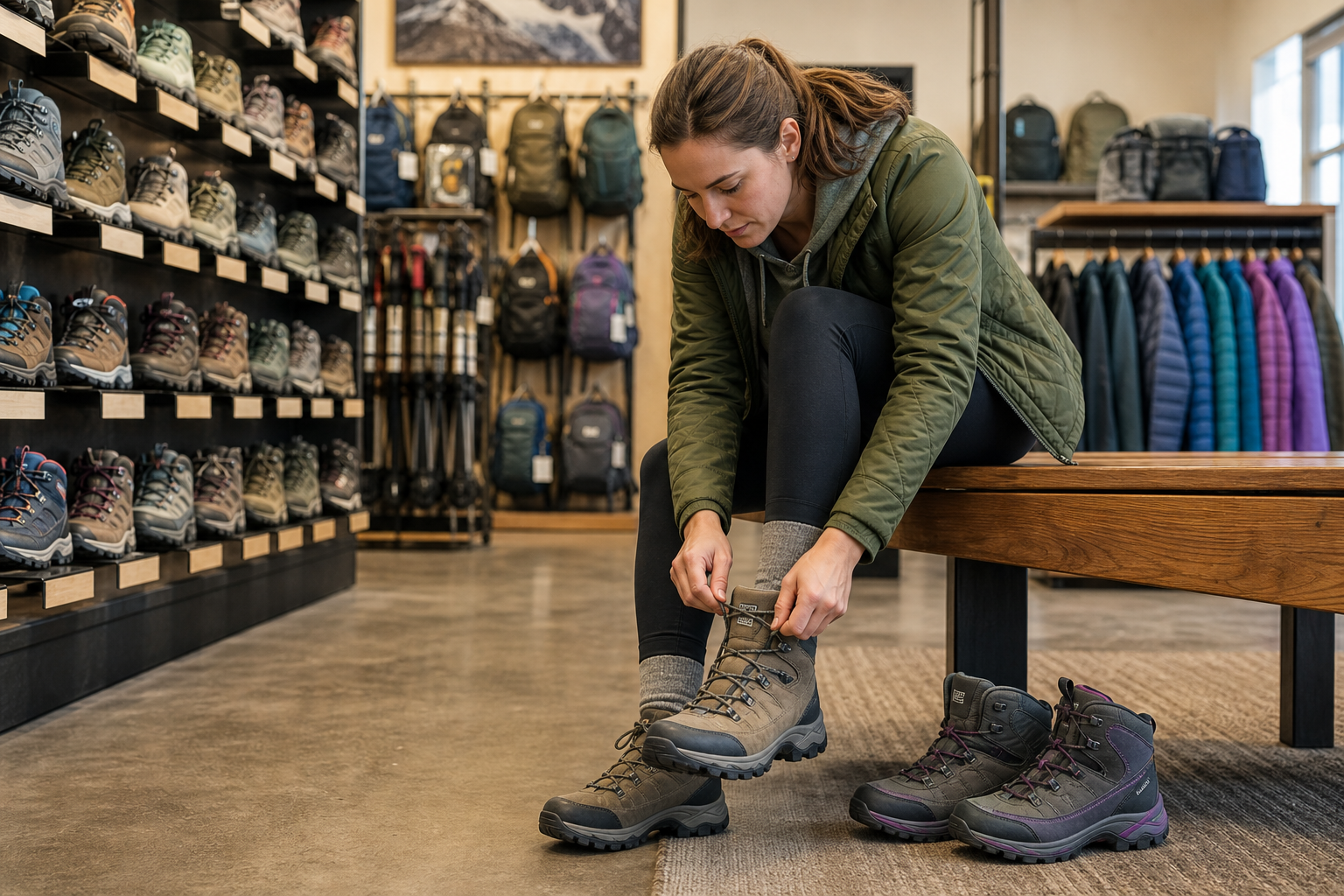
Trying boots carefully can prevent many problems. It is best to try them later in the day because feet may be slightly larger after walking or standing. This can give a more realistic fit for hiking.
Put both boots on and lace them fully. Walk around for several minutes. Do not judge them only while sitting down. Notice pressure points, rubbing, heel movement, and toe space.
If possible, test them on an incline. Going uphill can show whether the heel lifts. Going downhill can show whether the toes hit the front. Side-to-side movement can show whether the boot feels stable.
Pay attention to these signs of a poor fit:
- Toes press into the front of the boot.
- The heel slips with every step.
- The sides pinch your forefoot.
- The arch feels unsupported or painful.
- The ankle collar rubs in one sharp spot.
- One boot feels much different from the other.
It is normal for boots to feel firm. It is not normal for them to feel painful. “Breaking in” can soften a boot, but it should not be used to explain away serious discomfort.
Breaking In Your First Hiking Boots
New hiking boots should be worn before a long hike. This helps your feet and boots adjust to each other. It also helps you find small fit problems before you are far from home.
Start by wearing them indoors for short periods if the return policy allows it. Then use them for short walks around your neighborhood. After that, try an easy local trail. Increase time and distance slowly.
During break-in, notice hot spots. A hot spot is an area that feels warm or irritated before a blister forms. Common places include the heel, toes, and sides of the foot. Adjusting laces or socks may help. If the same spot hurts every time, the boot may not be the right shape.
Some light boots need little break-in time. Heavier leather boots may need more. Still, a boot should become more comfortable, not more painful, as you wear it.
Common Mistakes Beginners Make
First-time buyers often focus on color, price, or brand before fit. Those things can matter, but they should come after comfort and use.
One common mistake is choosing boots that are too small. Street shoe size is only a starting point. Hiking boots may fit differently. Your feet also need room for swelling and downhill walking.
Another mistake is buying the toughest-looking boot for easy trails. Extra weight and stiffness can make hiking less fun. A beginner on simple trails may enjoy a lighter boot more.
Some hikers ignore socks during fitting. This can lead to a boot that feels fine with thin socks but too tight with hiking socks.
Others skip the break-in period. Even comfortable boots can rub if worn for the first time on a long trail.
A smart first pair should feel good, fit your main hiking plans, and give enough support without feeling bulky.
Frequently Asked Questions
Should hiking boots feel tight when new?
Hiking boots should feel snug, but they should not feel tight or painful. Your toes need space, and your heel should stay secure without strong pressure.
Are waterproof hiking boots better for beginners?
Waterproof boots can be helpful in wet areas, muddy trails, or rainy weather. In hot, dry places, breathable non-waterproof boots may feel cooler and more comfortable.
Can I hike in regular sneakers instead of hiking boots?
Regular sneakers can work on very easy, dry, and smooth paths. Hiking boots or hiking shoes usually offer better grip, support, and protection on rougher trails.
How much room should I have in hiking boots?
You should have enough room to wiggle your toes and walk downhill without toe pressure. The boot should still hold your midfoot and heel securely.
Do I need expensive hiking boots for my first pair?
You do not need the most expensive boots for your first hikes. A comfortable, well-fitting pair that matches your trails is more important than price alone.