

How Do You Choose Clothes That Work Well Together? Start with a simple idea: your clothes should support each other, not fight for attention. A good outfit feels balanced in color, fit, style, and purpose. You do not need a huge closet or expensive pieces. You need clear choices, a few reliable basics, and a way to see what belongs together. This guide explains how to build outfits that feel easy, polished, and true to your daily life.
Why Clothes Work Well Together
Clothes work well together when they share something in common. That “something” may be color, shape, fabric weight, mood, or the event you are dressing for. A soft cotton T-shirt, straight jeans, and white sneakers work because they all feel casual and relaxed. A silky blouse, tailored pants, and loafers work because they feel more refined.
Problems often happen when one item sends a different message from the rest. For example, a beachy linen shirt may feel odd with shiny party shoes. A formal blazer may look stiff with very worn gym shorts. Mixing styles can be fun, but it works best when there is a clear reason for the mix.
Think of an outfit like a small team. Each piece has a job. One piece may stand out, while the others support it. When every item tries to be the star, the outfit can feel busy.
How Do You Choose Clothes That Work Well Together? Start With a Base
A strong outfit often begins with one simple base. This can be a pair of jeans, black pants, a skirt, a dress, or a plain top. Once you choose the base, it becomes easier to add the next pieces.
Pick One Main Item First
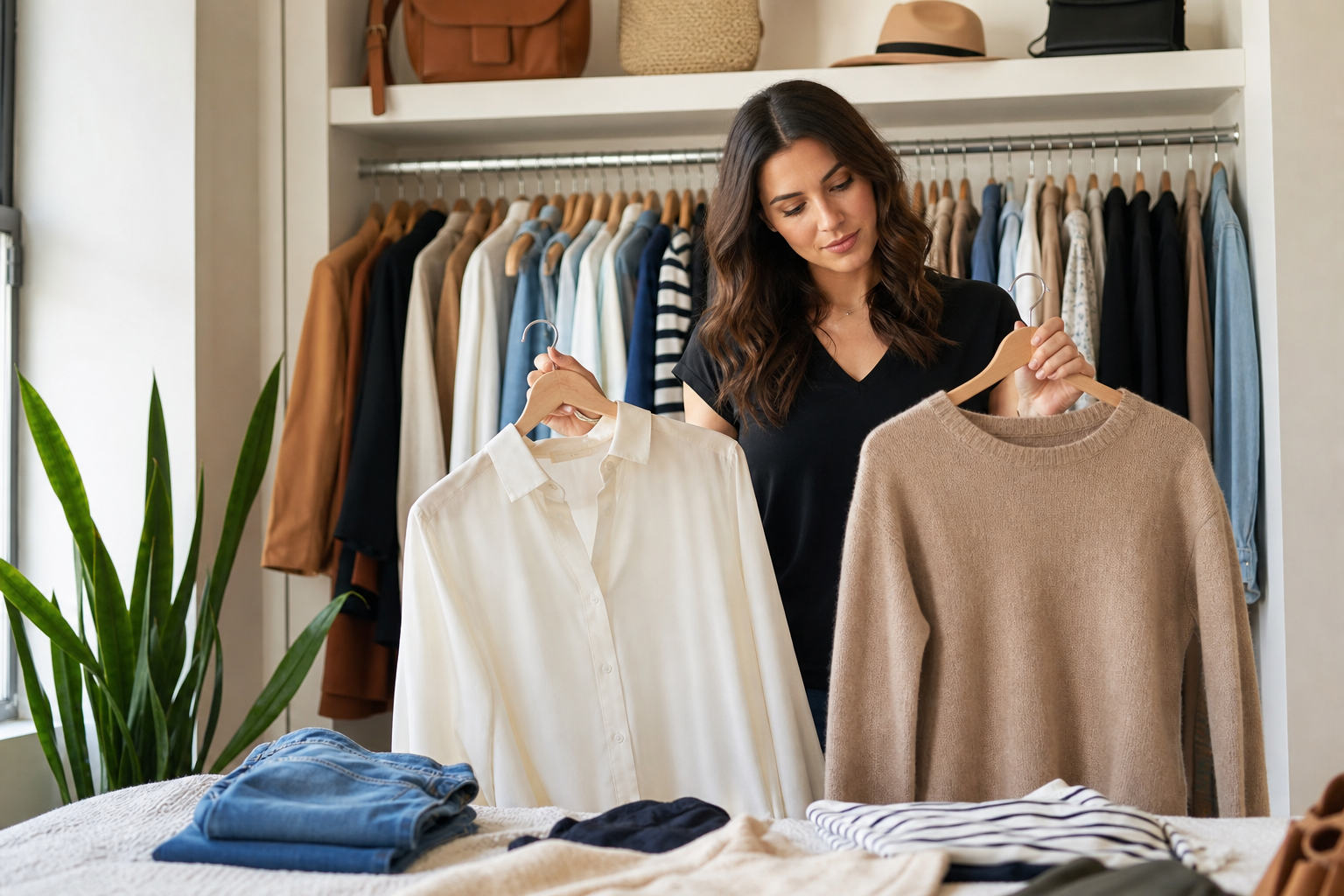
Choose one item you know you want to wear. It might be a favorite sweater, a printed skirt, or a new pair of shoes. Then build around it.
If the main item is bold, keep the other pieces calmer. If the main item is simple, you can add interest with color, texture, or accessories. This keeps the outfit from feeling random.
For example, if you start with red pants, pair them with a white shirt, denim jacket, and neutral shoes. If you start with a plain navy dress, you might add a patterned scarf or gold earrings.
Match the Dress Level
Before adding more clothes, ask where you are going. Clothes that work for a coffee run may not work for a wedding, office meeting, or dinner date.
Try to keep the dress level similar across the outfit:
- Casual: T-shirts, jeans, sweatshirts, sneakers, simple sandals
- Smart casual: blouses, chinos, dark denim, loafers, clean boots
- Dressy: tailored pants, dresses, blazers, heels, polished flats
You can mix one casual piece with dressier pieces, but keep it intentional. A blazer with jeans can look stylish because both pieces are clean and structured. A formal dress with muddy sneakers may look careless unless that contrast is part of your personal style.
Check the Shape
Fit and shape matter as much as color. If everything is loose, you may feel hidden. If everything is tight, the outfit may feel uncomfortable. A balanced shape is usually easier to wear.
A helpful rule is to pair volume with structure. Wide-leg pants often look good with a fitted or tucked top. A flowy blouse can pair well with straight jeans or a pencil skirt. An oversized sweater can work with leggings or slim pants.
You do not need to follow strict body rules. The goal is comfort and balance. Stand in front of a mirror and look at the full outline, not just one item.
Use Color Without Stress
Color is one of the easiest ways to make clothes look connected. You do not need to know advanced color theory. A few simple habits can help you get dressed faster.
Build Around Neutrals
Neutrals are colors that mix easily with many other colors. Common neutrals include black, white, gray, navy, beige, cream, denim blue, olive, and brown. They help strong colors and prints feel calmer.
A closet with useful neutrals gives you more outfit options. For example, a white T-shirt can work with blue jeans, a floral skirt, black trousers, or tan shorts. A navy sweater can pair with gray pants, white jeans, or a plaid skirt.
Neutrals are not boring when the fit and fabric look good. A cream sweater with dark jeans and brown boots can look warm, simple, and complete.
Try a Three-Color Limit
If you are unsure, use no more than three main colors in one outfit. This does not include tiny details like buttons or small jewelry. A three-color limit keeps the look clean.
Good examples include:
- Navy jeans, white shirt, tan jacket
- Black skirt, gray sweater, burgundy flats
- Cream pants, olive top, brown belt
- Blue dress, white cardigan, silver jewelry
This is not a law. It is a tool. Once you feel more confident, you can add more color if it fits your style.
Repeat a Color
Repeating a color makes an outfit feel planned. If your shoes are brown, a brown belt or bag can tie the outfit together. If your scarf has blue in it, blue jeans or a blue jacket can help the scarf belong.
The colors do not need to match perfectly. Similar tones often work well. A soft beige bag can still look good with tan sandals. A deep green sweater can work with olive sneakers.
Mix Patterns and Textures Carefully
Patterns and textures add interest. They can make simple outfits feel more personal. The key is to avoid too much competition.
A pattern is a print, such as stripes, florals, plaid, polka dots, or animal print. Texture is how fabric looks and feels, such as denim, leather, knit, satin, corduroy, or linen.
If you are new to mixing, try one pattern at a time. Pair a striped shirt with plain jeans. Wear a floral dress with a solid jacket. Let the print be the focus.
When you want to mix patterns, keep them connected:
- Use one large pattern and one small pattern.
- Choose patterns that share at least one color.
- Keep the rest of the outfit simple.
- Use stripes as a neutral because they mix well with many prints.
Texture is often easier than pattern. A chunky sweater, smooth jeans, and leather boots can look rich without being loud. A cotton shirt under a suede jacket also adds depth while staying simple.
Create a Closet That Makes Outfits Easier
Choosing clothes that work well together starts before you get dressed. It starts with what is in your closet. If your closet is full of pieces that do not match your life, outfits will feel hard.
Know Your Real Routine
Think about a normal week. Where do you actually go? Work, school, errands, church, gym, dinner, family events, or quiet days at home? Your closet should fit that real life.
If you work from home, you may need comfortable tops, soft pants, and a few neat layers for video calls or errands. If you go to an office, you may need trousers, blouses, blazers, and shoes that are comfortable all day.
A useful closet supports your common days first. Special outfits are fine, but they should not take over the space.
Keep Your Best Basics Visible
Basics are simple pieces that work with many outfits. They are not always plain, but they are easy to repeat. When your best basics are easy to see, you can build outfits faster.
Helpful basics may include:
- A white or cream T-shirt
- Dark blue or black jeans
- Simple trousers in black, navy, or tan
- A cardigan or light jacket
- A button-down shirt
- Comfortable clean sneakers
- Flats, loafers, or ankle boots
- A simple dress you can layer
Choose basics in colors and fits you enjoy. A basic that you never wear is not useful.
Remove What Confuses You
Some clothes make outfit planning harder. They may not fit, feel uncomfortable, or match anything else. You do not have to remove everything at once. Start with the pieces that cause stress.
Set aside clothes that are damaged, too small, too large, itchy, or linked to a style you no longer like. If you are unsure, place them in a separate area for a short time. If you do not miss them, that tells you something.
A smaller closet with better choices can feel larger than a packed closet full of problems.
Use Accessories to Finish the Outfit
Accessories help clothes work together. They include shoes, belts, bags, jewelry, scarves, hats, and hair items. They can connect colors, add polish, or change the mood.
Shoes are especially important. They can make jeans feel casual, smart, or dressy. Clean white sneakers make an outfit relaxed. Loafers feel classic. Heeled boots add more shape. Sandals can feel easy and warm-weather ready.
Belts are useful when an outfit needs structure. A belt can define the waist, break up a long top, or connect with shoes. Jewelry can add light near the face. A simple necklace, hoops, or watch can make a plain outfit feel finished.
Try not to overload accessories. If you wear large earrings, you may not need a bold necklace. If your bag is bright, your shoes can be quiet. Let one or two accessories do the main work.
Check the Whole Outfit Before You Leave
A final check can save you from outfit doubt. Look at your full outfit in a mirror, including shoes and outerwear. Many people judge an outfit too early, before adding the finishing pieces.
Ask yourself four easy questions:
- Do the colors feel connected?
- Does the fit feel comfortable when I move?
- Does the outfit match where I am going?
- Is one piece standing out too much by accident?
If something feels wrong, change only one piece first. Swap the shoes, add a jacket, tuck the shirt, or remove one accessory. Small changes can fix the whole look.
Also consider the weather. A great outfit is less useful if you are too cold, too hot, or worried about rain. In the United States, weather can change quickly by region and season, so layers often help. A light jacket, cardigan, or coat can make an outfit more practical and complete.
Frequently Asked Questions
What colors are easiest to match?
Neutral colors are usually easiest to match because they work with many shades. Black, white, navy, gray, beige, denim blue, and brown are helpful starting points.
Can I wear black and brown together?
Yes, black and brown can look stylish together when the outfit feels intentional. Repeat the brown in shoes, a belt, or a bag for balance.
How many patterns can I wear at once?
One pattern is the easiest choice, especially for everyday outfits. If you wear two, choose patterns that share a color and have different sizes.
Do my shoes need to match my bag?
No, your shoes and bag do not need to match exactly. They should simply look like they belong in the same outfit and dress level.
How can I make simple clothes look better?
Focus on fit, clean shoes, balanced colors, and one nice accessory. Simple clothes often look best when they are neat, comfortable, and well cared for.
Final Thoughts
Choosing clothes that work well together is a skill you can build. Start with one main item, match the dress level, balance the shape, and use color with care. Keep useful basics in your closet, and let accessories finish the look without making it busy.
The best outfits are not always the most expensive or trendy. They are the ones that fit your life, feel good on your body, and make sense from head to toe. When your clothes support each other, getting dressed becomes calmer, quicker, and more enjoyable.