

How Do You Choose Your First Pair of Hiking Boots? The short answer is: start with fit, match the boot to your trails, and do not buy more boot than you need. Your first pair should feel comfortable, support your feet, and help you walk safely on dirt, rocks, roots, and mud. A good hiking boot does not have to be the most expensive one. It has to be the right one for your feet and your plans.
How Do You Choose Your First Pair of Hiking Boots? Start With Your Hiking Style
Before looking at brands, colors, or materials, think about where you will hike. A person walking easy park trails needs a different boot than someone carrying a heavy backpack in the mountains.
If your hikes are short and mostly flat, you may not need a tall, stiff boot. A light hiking shoe or mid-cut boot can be enough. If you plan to hike on rocky trails, wet ground, or steep hills, you may want more ankle support, stronger soles, and better protection.
Your first pair should fit your real life, not a dream trip you may never take. Many beginners buy boots that are too heavy because they think heavy means safer. In truth, heavy boots can make your legs tired faster if you do not need that much support.
Think about these common hiking situations:
- Easy day hikes: Choose light boots or hiking shoes with flexible soles.
- Rocky or uneven trails: Look for stronger soles, toe protection, and good grip.
- Wet or muddy paths: Consider water-resistant or waterproof boots with deeper tread.
- Cold-weather hikes: Choose boots with space for warm socks and good coverage.
- Backpacking trips: Pick boots with more support for carrying extra weight.
The best hiking boots make walking feel steady, not clumsy. They should protect your feet while still letting you move naturally.
Fit Comes First: Comfort Matters More Than Looks
A hiking boot can have great reviews and still be wrong for your feet. Fit is the most important part of choosing your first pair. If the boot rubs, pinches, or lets your heel slide too much, it can cause blisters and sore spots.
Try boots later in the day if possible. Feet often swell a little after walking or standing. This can help you avoid buying boots that feel fine in the morning but tight on the trail.
Wear the socks you plan to use for hiking. Thick socks can change the fit. Thin socks can make a boot feel too loose. If you use insoles, bring them too.
Check the Toe Box
Your toes need room. When you walk downhill, your feet slide slightly forward. If the toe box is too short, your toes may hit the front of the boot. This can be painful, especially on long hikes.
Stand in the boots and wiggle your toes. You should have space, but your foot should not swim around. A toe box that is too tight can cause rubbing, numbness, or pressure on the sides of your feet.
Watch Your Heel
A small amount of heel movement is normal in some boots, especially before they break in. But your heel should not lift a lot with each step. Too much heel slip often leads to blisters.
Walk around on flat ground and, if the store has one, try an incline ramp. Going uphill and downhill can show problems that are not clear on a flat floor. If your heel rises too much, try a different size, a different lacing method, or another boot shape.
Test Width and Pressure Points
Some feet are narrow. Some are wide. Some have high arches or flat arches. Hiking boots come in different shapes, so do not assume one size will work in every brand.
Pay attention to pressure on the sides of your feet, the top of your foot, and around your ankle bones. A boot should feel snug, not tight. There should be no sharp rubbing or hard spots. Do not count on a painful boot becoming perfect later. Some materials soften, but a poor fit usually stays poor.
Understand Hiking Boot Types
Hiking footwear comes in several basic styles. Knowing the difference can make shopping easier.
Hiking Shoes
Hiking shoes look closer to sneakers, but they have better grip and more trail support. They are usually light and flexible. They work well for easy day hikes, dry trails, and people who like a faster walking pace.
The downside is that they offer less ankle coverage. They may also provide less protection from mud, water, and loose rocks. Still, for many beginners, hiking shoes are a smart and comfortable choice.
Mid-Cut Hiking Boots
Mid-cut boots rise above the ankle. They offer more support than hiking shoes without feeling as heavy as tall backpacking boots. Many first-time hikers do well with this style because it balances comfort, support, and protection.
A mid-cut boot can help on uneven trails, light mud, and longer day hikes. It is also a good option if you want more confidence but do not want a very stiff boot.
Backpacking Boots
Backpacking boots are built for harder trails and heavier loads. They often have stiff soles, strong uppers, and high ankle support. They can be helpful when carrying a pack for overnight trips.
For a first pair, backpacking boots may be more than you need unless you already know you will carry heavy gear. They can take more time to break in and may feel bulky on simple trails.
Materials, Waterproofing, and Soles
The parts of a boot affect comfort, weight, warmth, and durability. You do not need to become a gear expert, but a few basics help.
Leather boots can be strong and long-lasting. Full-grain leather is often tough but can feel stiff at first. Split-grain leather and fabric mixes are often lighter and more breathable. Synthetic materials can dry faster and cost less, but durability varies.
Waterproof boots can be useful in wet grass, shallow mud, light rain, and snow. However, waterproof boots can feel warmer because they may not breathe as well. If you hike mostly in hot, dry weather, a breathable boot may be more comfortable.
The sole is also important. Look for tread that matches your trail. Deep lugs help in mud and loose dirt. A sticky rubber sole can help on rock. A stiffer sole protects your feet on sharp ground, while a flexible sole feels more natural on easy paths.
For many beginners in the United States, trail conditions can change quickly by region. A dry desert path in Arizona is different from a muddy forest trail in Oregon or a rocky route in New England. Choose for the places you will actually walk most often.
Try Boots the Smart Way
Shopping for hiking boots should not feel rushed. Give yourself time to compare styles and sizes.
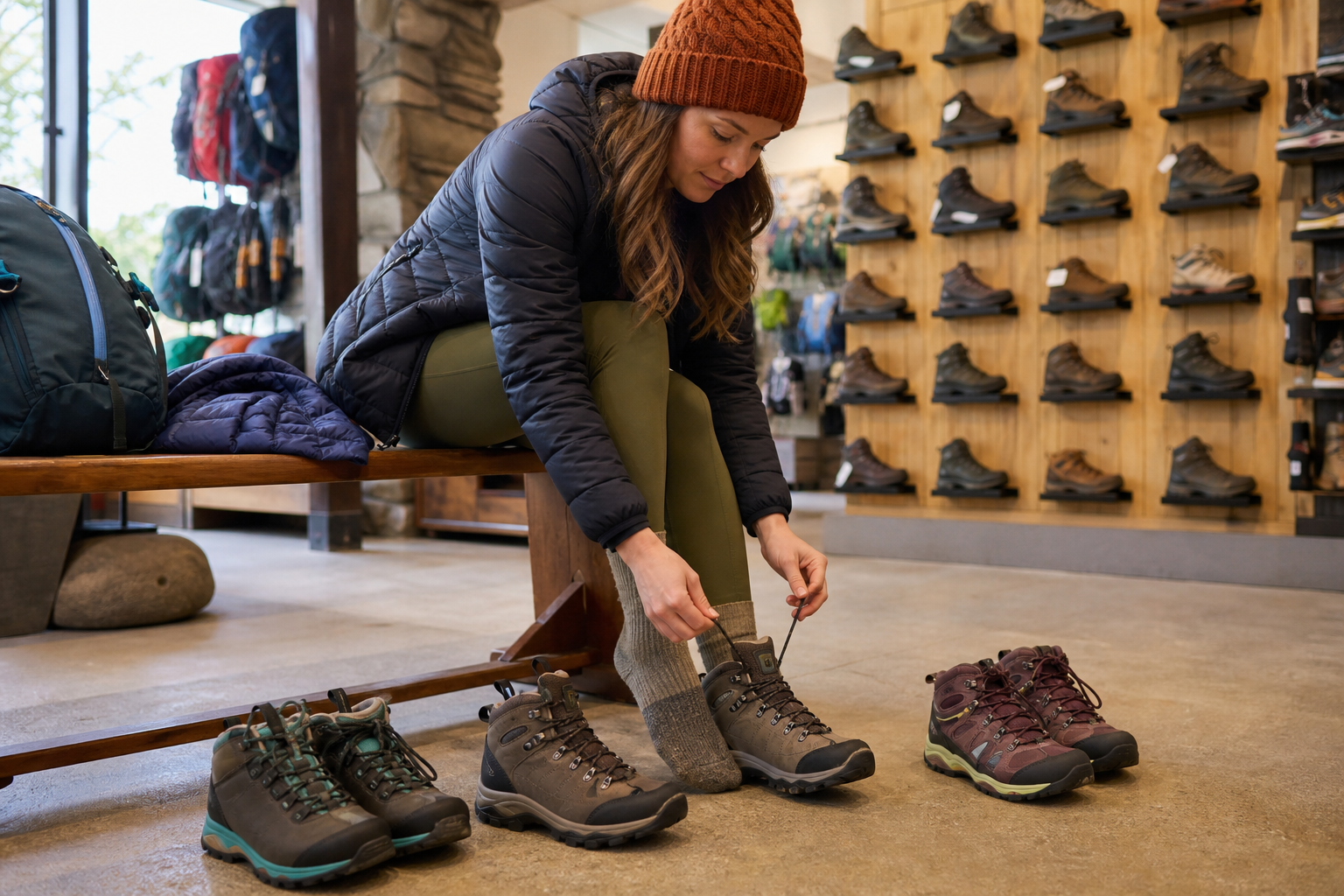
When trying boots, lace them fully. A loose boot in the store will not tell you much. Use the hooks at the top if the boot has them. Walk for several minutes, not just a few steps.
Notice how your feet feel after moving around. Good boots should feel stable and secure. They may feel more structured than running shoes, but they should not hurt.
A simple fitting checklist can help:
- Your toes can wiggle without hitting the front.
- Your heel stays mostly in place while walking.
- The boot feels snug around the middle of your foot.
- There is no sharp rubbing at the ankle or toes.
- The sole grips the floor and feels steady.
- The boot does not feel too heavy for your stride.
If you are between sizes, try both. Also try different widths if available. Feet are not always the same size, so fit the larger foot first. You can adjust the smaller foot with lacing, socks, or insoles if needed.
Break-In Time and First Hikes
Even comfortable boots need some time with your feet. Do not make your first hike in new boots a long mountain route. Wear them at home for short periods, then on walks around your neighborhood.
After that, try a short local trail. Notice any hot spots, rubbing, or pressure. Hot spots are areas that feel warm or irritated before a blister forms. If you feel one, stop and adjust your socks or laces.
Some light boots need little break-in time. Stiffer leather boots may need more. Break-in should make a good boot better. It should not turn a bad boot into a good one.
Socks also matter. Cotton socks hold moisture and may increase rubbing. Many hikers prefer wool or synthetic hiking socks because they manage sweat better. The right sock can improve comfort, reduce friction, and help your feet stay dry.
At home, hiking gear can become part of a calm routine. After reading trail guides or maps, a thought like Can You Create a Cozy Reading Corner in Your Home fits naturally with planning peaceful outdoor time. Rest, comfort, and preparation all help make hiking more enjoyable.
Common Mistakes to Avoid
New hikers often make the same boot-buying mistakes. These are easy to avoid once you know them.
Do not buy boots only because they look good. Color and style are nice, but fit and function matter more on the trail.
Do not choose boots that are too small. Your feet may swell during hikes, especially in warm weather or on long walks. Tight boots can become painful fast.
Do not assume waterproof is always better. Waterproof boots can be useful, but in hot weather they may trap heat. Breathable footwear may be more comfortable on dry trails.
Do not ignore weight. A heavy boot may protect well, but it can also make each step harder. If your hikes are simple, lighter footwear may be smarter.
Do not skip testing with hiking socks. Regular everyday socks can change how boots feel. Always test with the socks you will wear outdoors.
Finally, do not wait until the night before a trip to buy boots. Give yourself time to try them, break them in, and decide if they truly work.
Care Basics for Your First Hiking Boots
Good care helps boots last longer and perform better. After a hike, remove dirt and mud with a soft brush or damp cloth. Let boots dry at room temperature. Avoid placing them near high heat, such as a heater or campfire, because heat can damage materials.
Take out the insoles after wet hikes so the inside can dry. Loosen the laces and open the tongue. This helps air move through the boot.
If your boots are leather, they may need occasional conditioning. If they are waterproof, they may need treatment over time to keep water beading on the surface. Follow the care instructions for your specific boot material.
Store boots in a cool, dry place. Do not leave them in a hot car for long periods. Simple care can keep them comfortable for many miles.
Frequently Asked Questions
Should hiking boots feel tight when new?
Hiking boots should feel snug, but they should not feel painfully tight. Your toes need room to move, and your heel should stay mostly in place. A little stiffness can improve with wear, but pinching, numbness, or sharp pressure is a warning sign.
Are hiking boots better than hiking shoes for beginners?
Not always. Hiking shoes can be better for easy trails, warm weather, and short day hikes. Boots may be better for rocky paths, mud, ankle support, or carrying a heavier pack. The best choice depends on your trail, foot comfort, and walking style.
How much room should I have in the toe area?
You should have enough room to wiggle your toes and avoid hitting the front of the boot downhill. The fit should not be so loose that your foot slides around. A secure middle fit with space up front is usually best.
Do I need waterproof hiking boots for my first pair?
You need waterproof boots only if you often hike in rain, mud, wet grass, or snow. For hot, dry trails, breathable boots or shoes may feel cooler and more comfortable. Waterproofing is useful, but it is not required for every beginner.
How long should hiking boots last?
Boot life depends on materials, trail conditions, care, and how often you hike. Rough rock, mud, and heavy use wear boots faster. Cleaning them, drying them properly, and storing them well can help extend their useful life.