

What Makes Traditional Crafts Worth Preserving? The answer begins with people. Traditional crafts are not just objects on a shelf or patterns on fabric. They carry memory, skill, care, and identity. In the United States, many consumers are looking for items that feel personal, lasting, and meaningful. Traditional crafts meet that need because they connect daily life with human hands, local history, and cultural beauty.
What Makes Traditional Crafts Worth Preserving? A Simple Look at Their Value
Traditional crafts are skills passed from one person to another over time. They may include weaving, quilting, pottery, basket making, woodworking, beadwork, metalwork, embroidery, leatherwork, and many other forms. Some are linked to a region. Some are linked to a family. Others come from Native, immigrant, rural, or community traditions.
They are worth preserving because they hold more than function. A handmade bowl can hold soup, but it can also hold a story about clay, place, and practice. A quilt can warm a bed, but it can also show family history, color choices, and patient labor.
In a world full of fast products, traditional crafts remind us that time has value. They show that beauty does not always need to be perfect or machine-made. Small marks from the maker can become part of the charm. These details help consumers feel a stronger connection to the things they own and use.
Traditional crafts also teach us to notice. The grain of wood, the rhythm of stitches, the shape of a basket, or the smooth glaze on a mug can make ordinary moments feel richer.
The Human Stories Behind Handmade Objects
Traditional crafts matter because they keep human stories alive. Every craft has a maker, and every maker learns from someone or something. That learning may come from a parent, grandparent, teacher, neighbor, cultural group, or years of personal practice.
Skills Passed Through Generations
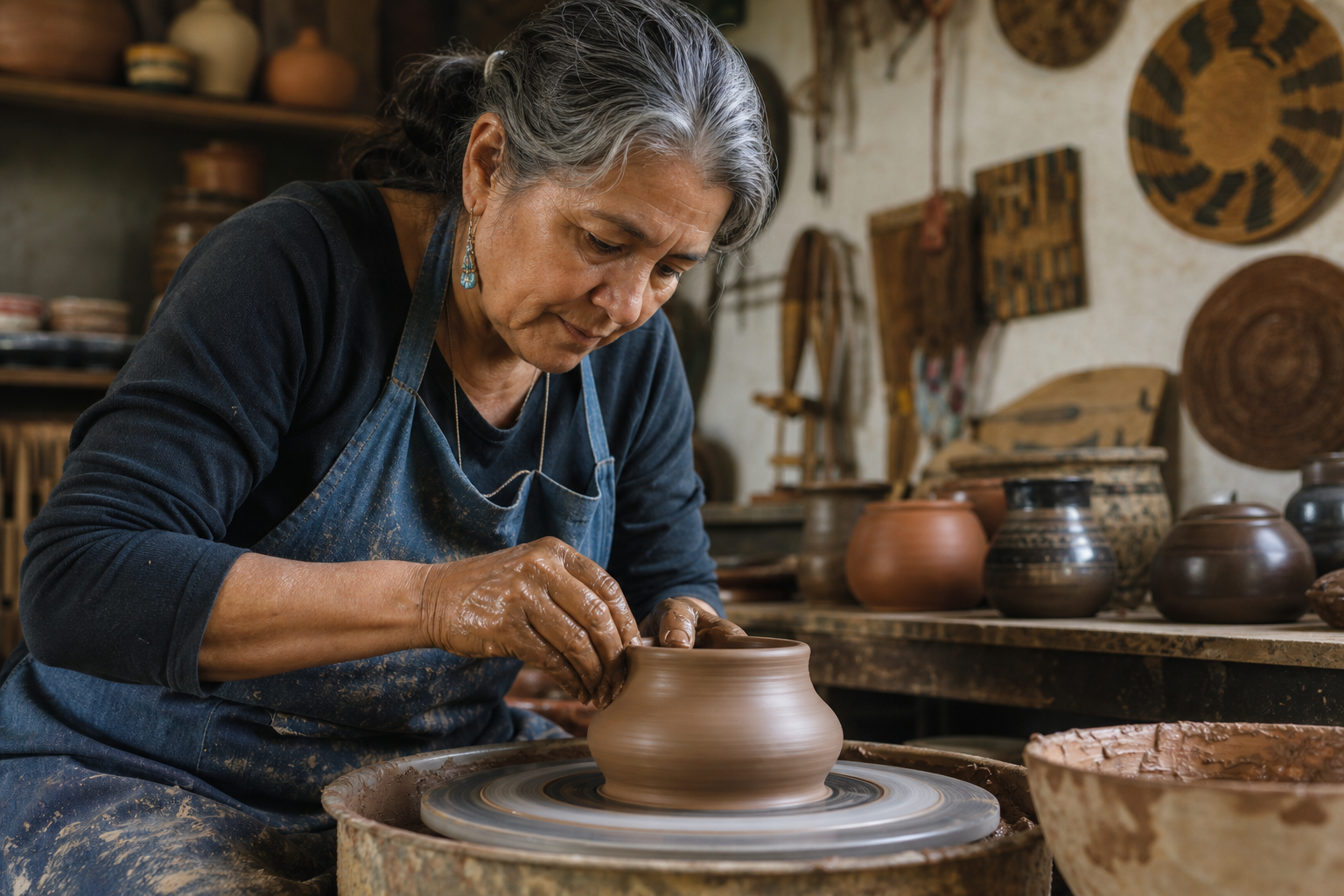
Many crafts survive because people teach them with care. A child watches an elder sew, carve, dye, or shape clay. Over time, the child learns the movement of the hands, the tools, and the reasons behind each step.
This kind of learning is different from reading instructions. It includes patience, listening, and respect. A teacher may explain why a certain stitch is used or why a certain wood is chosen. These lessons build skill, but they also build memory.
When a traditional craft disappears, the loss is not only about the finished object. The loss includes techniques, stories, local words, songs, habits, and ways of thinking.
Culture You Can See and Touch
Traditional crafts give culture a physical form. They allow people to see and touch ideas that might otherwise feel abstract. A pattern can show a connection to a homeland. A carving style can reflect a spiritual belief, a local animal, or a regional landscape. A woven piece can show how a community understands color and form.
For consumers, this can create a deeper kind of appreciation. Instead of seeing an item as simple decoration, they can understand it as part of a living culture. That understanding encourages respect.
It is also important to remember that some craft traditions are sacred or specific to certain communities. Preserving them should include care, consent, and honesty. Appreciation is strongest when it does not take without understanding.
Personal Meaning in Everyday Life
Traditional crafts can make a home feel warm and grounded. A handmade basket by the door, a carved wooden spoon in the kitchen, or a woven blanket on a chair can bring texture and feeling into daily spaces.
This is one reason craft fits naturally into home life. A craft can shape the mood of a room, much like the question, Can You Create a Cozy Reading Corner in Your Home, points to the comfort people seek in personal spaces. Handmade pieces often support that comfort because they feel real, useful, and full of character.
Why Traditional Crafts Matter in Modern Consumer Life
Modern life often moves quickly. Many products are bought, used, and replaced without much thought. Traditional crafts offer a slower and more thoughtful choice. They help consumers ask better questions about what they bring into their homes.
A handmade item may not always be the cheapest option. However, value is not only about price. Value can also mean durability, beauty, repairability, and meaning.
Traditional crafts encourage mindful ownership. Instead of filling a room with many things, a person may choose a few items that matter. A single well-made ceramic vase or handwoven textile can bring more joy than several mass-produced objects that feel forgettable.
Traditional crafts can also support local and small-scale creative work. When consumers understand the time and skill behind an item, they may better respect fair pricing and quality. This helps keep craft knowledge active.
Common reasons consumers appreciate traditional crafts include:
- Uniqueness: Handmade pieces often have small differences that make each one special.
- Quality: Many traditional methods focus on strength, careful details, and long use.
- Story: A craft item can connect to a place, maker, family, or cultural practice.
- Beauty: Natural materials and hand techniques often create rich texture and warmth.
- Meaning: Traditional crafts can reflect identity, memory, and personal taste.
These reasons show why craft is not old-fashioned in a negative way. It can feel fresh because it offers something many people still want: a closer connection to what they use every day.
Craftsmanship, Sustainability, and Care
Traditional crafts often support a more careful relationship with materials. This does not mean every handmade item is automatically sustainable. Still, many craft traditions grew from using available local materials wisely. Makers often learned how to avoid waste because resources were valuable.
Materials With a Sense of Place
Crafts are often shaped by what is nearby. Clay from a region, wool from local sheep, wood from a certain tree, or plant dyes from a landscape can all affect the final object. This gives craft a strong sense of place.
A mass-produced item may look the same anywhere. A traditional craft may remind people of a mountain area, desert, coastal town, farm region, or urban neighborhood. That local feeling adds emotional value.
Materials also teach respect. A woodworker must understand how wood moves. A potter must understand moisture and heat. A weaver must understand tension. These skills come from working closely with nature and tools over time.
Repair, Reuse, and Long Life
Many traditional crafts are made to last. They are often built with methods that allow repair. A chair can be re-caned. A quilt can be patched. A basket handle can be replaced. A wool garment can be mended.
This matters because it changes how consumers think about ownership. If something can be repaired, it does not need to be thrown away quickly. It can stay in a home longer and gather more meaning.
Repair also creates a different idea of beauty. A mended item can show care instead of damage. The repair becomes part of the story.
Slower Production and Better Attention
Traditional crafts usually require time. Even when a maker is highly skilled, the process may include many steps. Cutting, shaping, drying, stitching, sanding, firing, polishing, or finishing cannot always be rushed.
That slower pace allows attention. It gives the maker time to make choices and correct problems. For consumers, this can result in objects that feel thoughtful and balanced.
Slow production can also help people appreciate labor. When someone understands that a woven rug or hand-built pot took many hours, they may treat it with more respect.
Economic and Community Benefits of Preserving Crafts
Traditional crafts can support real people and communities. In many places, craft is part of local identity and small business life. Markets, studios, museums, workshops, and community events can all help keep traditions visible.
When craft traditions remain active, they can provide income for makers. They can also create pride in a town, tribe, neighborhood, or cultural group. A craft can become something people gather around, celebrate, and teach.
Craft also supports learning across ages. Older makers may share knowledge with younger people. Young makers may bring new designs, tools, or uses while still respecting tradition. This exchange keeps craft alive rather than frozen in the past.
Preserving craft does not mean every item must stay exactly the same forever. Traditions can grow. A potter may use an old method with a new shape. A quilter may use a traditional block in modern colors. A basket maker may teach historic forms while also exploring new uses.
The key is respect. Change can be healthy when it honors the roots of the craft and gives credit to its sources.
How Consumers Can Recognize and Respect Traditional Crafts
Consumers do not need to be experts to appreciate traditional crafts. A little curiosity goes a long way. Looking closely, asking fair questions, and learning about makers can help people make better choices.
Before buying or displaying craft items, it helps to think about origin and context. Is the item connected to a living tradition? Is the maker named? Is the cultural background clear? Does the seller explain the process honestly?
Helpful questions include:
- Who made it? Knowing the maker or community adds trust and meaning.
- How was it made? Process details can show skill and time.
- What materials were used? Materials often reveal quality and place.
- Is it presented respectfully? Cultural items should not be treated as random trends.
- Can it be used and cared for properly? Good care helps preserve the item longer.
Consumers can also learn to enjoy signs of handwork. Slight color shifts, tool marks, uneven lines, or small texture changes may be normal. These are not always flaws. Often, they are proof that a human hand shaped the piece.
Respect also means avoiding cheap copies that imitate cultural work without supporting the people connected to it. When possible, transparency matters. Honest craft should not hide where it comes from.
Traditional Crafts as a Bridge Between Past and Present
One of the strongest reasons to preserve traditional crafts is that they connect time periods. They bring the past into present life without turning it into a museum piece. A hand-thrown mug can be used every morning. A woven rug can welcome guests. A quilt can comfort someone during a cold night.
This daily use keeps tradition alive. It shows that heritage is not only something to study. It can be something to touch, carry, wear, and enjoy.
Traditional crafts also invite reflection. They remind consumers that many useful things were once made close to home by people with deep skill. They show that convenience is not the only value. Patience, care, and beauty matter too.
In the United States, where many cultures meet, traditional crafts can also build understanding. They help people see the richness of different communities. They can encourage better conversations about history, identity, migration, land, and family.
Preserving crafts is not about rejecting modern life. It is about keeping human skill and cultural memory within modern life. A home can have new technology and still make room for handmade pottery, carved wood, woven fibers, or stitched cloth.
Frequently Asked Questions
Why are traditional crafts important today?
Traditional crafts are important because they preserve skill, culture, and memory in useful forms. They also offer consumers meaningful alternatives to products that feel temporary or impersonal.
Are traditional crafts only valuable if they are old?
No. A newly made craft can be valuable when it uses respected methods, honest materials, and cultural knowledge. Living traditions continue through makers who practice them today.
How can I tell if a craft item is authentic?
Look for clear information about the maker, materials, process, and cultural background. Authentic items are usually presented with respect, not vague claims or copied designs.
Can traditional crafts change over time?
Yes. Traditions can grow while still honoring their roots. Many makers use inherited skills in fresh ways that fit modern homes and lifestyles.
Why do handmade crafts often cost more?
Handmade crafts often cost more because they require time, skill, materials, and careful work. The price may also support an individual maker or small creative community.
Final Thoughts
Traditional crafts are worth preserving because they carry stories, skills, culture, and care into everyday life. They help consumers see objects as more than things to buy and replace. A handmade item can connect a person to a maker, a place, a tradition, and a slower way of noticing beauty.
In a fast-moving world, traditional crafts remind us that human hands still matter. Their value lives in their use, their meaning, and the respect we give them.