
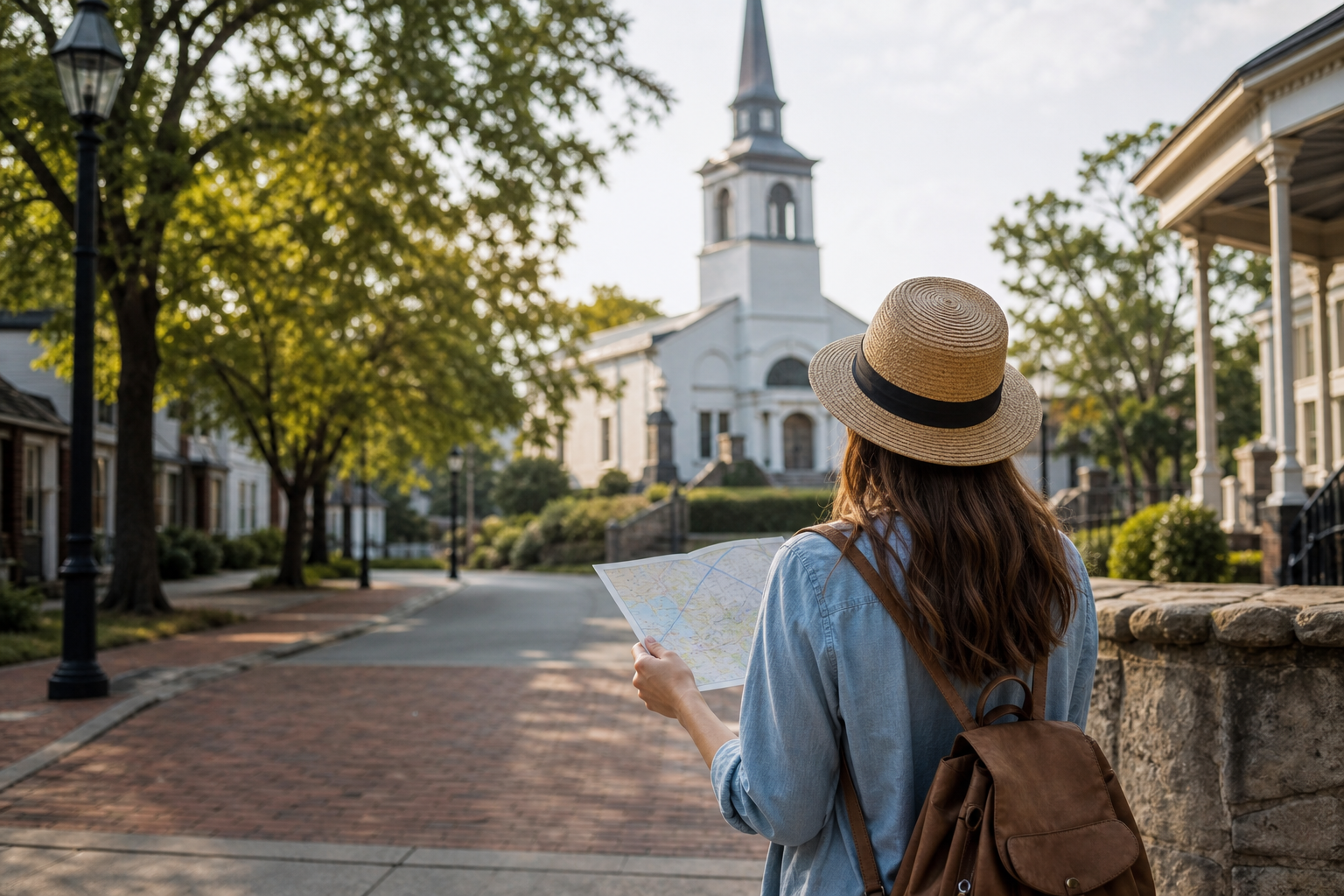

What Can You Discover by Exploring Your Own Town Like a Tourist? More than most people expect. A familiar street can feel new when you slow down, look up, read signs, enter small shops, and notice details you usually pass without thinking. Your town may hold local history, quiet parks, hidden art, family-owned restaurants, and stories that make daily life feel richer.
Exploring close to home is also simple. There is no airport, hotel booking, or long drive required. You already know the basic layout, but you may not know the deeper character of the place. Seeing your town like a visitor can turn an ordinary weekend into a small adventure.
What Can You Discover by Exploring Your Own Town Like a Tourist?
When people travel, they often pay close attention. They read plaques, take photos, ask questions, try local food, and walk more slowly. At home, many people do the opposite. They drive the same roads, visit the same stores, and follow the same routine.
Changing that habit can reveal new layers of your community. You may discover why a street has its name, where an old building once served a different purpose, or how a neighborhood changed over time. You may find a trail behind a library, a mural on the side of a market, or a small museum you have passed for years.
The main discovery is often a new sense of connection. Your town stops being only a place for errands and becomes a place with texture, memory, and personality.
Hidden History in Everyday Places
Local history is not always locked inside a museum. It can appear in courthouse squares, old theaters, cemeteries, train stations, schools, churches, and main streets. Many American towns have layers shaped by migration, industry, farming, trade, transportation, and community traditions.
Old Buildings With New Stories
An old brick building might now be a coffee shop, but it may once have been a bank, hotel, warehouse, or general store. These changes show how a town adapts. Look for dates carved into stone, faded painted signs, original windows, and unusual rooflines.
Even if a building is not famous, it may still tell a local story. A former post office may show where the town center used to be. An old factory may explain why nearby homes were built close together. A restored theater may reflect a time when downtown was the main gathering place.
Street Names, Plaques, and Landmarks
Street names often carry clues. Some are named after early families, local leaders, trees, rivers, or industries. Historical markers, if your town has them, can explain events or people connected to the area.
Reading these details can change how you move through town. A road is no longer just a route to the grocery store. It becomes part of a larger map of memory, work, and community life.
Local Museums and Archives
Small museums and local history rooms can be surprisingly rich. They may hold old photographs, maps, tools, school records, uniforms, newspapers, and family stories. These places are usually designed for regular people, not only experts.
A town archive can help you understand how people lived, worked, celebrated, and faced hard times. It can also show how much has changed and how much has stayed the same.
Food, Shops, and Local Flavor
One of the easiest ways to explore your town like a tourist is through food and small businesses. Visitors often search for places that feel local. Residents sometimes overlook them because they are too close and familiar.
A locally owned bakery, diner, taco shop, barbecue place, farmers market, or ice cream stand can offer a stronger sense of place than a chain business. The menu, décor, service style, and regular customers can all reflect the area.
Small shops can be just as interesting. A used bookstore, craft store, plant shop, antique mall, record store, or family hardware store may carry items and knowledge you will not find elsewhere. Owners and staff often know the town well. A short conversation can reveal neighborhood changes, local traditions, or nearby places worth noticing.
A tourist mindset does not mean spending a lot of money. It means paying attention. Window displays, handwritten signs, seasonal products, and community bulletin boards can all show what matters locally.
Nature Close to Home
Many people travel to enjoy nature, but they miss natural spaces nearby. Your town may have more green areas than you realize, especially if you normally drive past them.
Parks, creeks, public gardens, lakes, bike paths, school fields, and shaded sidewalks can offer peaceful moments. Even a small pocket park can feel fresh when you sit for a while instead of rushing through.
Nature exploration also changes with the season. A street lined with trees may feel different in spring bloom, summer shade, fall color, and winter quiet. Birds, flowers, clouds, and evening light can make familiar places feel new.
Some simple things you might notice include:
- A walking trail behind a community center or sports field
- Native plants growing along a creek or roadside path
- A quiet bench with a better view than expected
- Public gardens cared for by volunteers or local groups
- A sunrise or sunset angle you never noticed during your commute
Seeing local nature can also make daily life feel calmer. You do not need a national park to enjoy fresh air, open space, and small beauty.
Public Art, Architecture, and Creative Details
Art is not always inside a gallery. It can appear on walls, utility boxes, sidewalks, fences, windows, and public buildings. When you explore like a tourist, you may notice murals, sculptures, mosaics, painted benches, or decorated storefronts.
Architecture is another part of the experience. Your town may include Craftsman homes, mid-century buildings, old farmhouses, modern apartments, town squares, or historic storefronts. Looking at design helps you understand how people built for climate, money, taste, and daily needs.
Creative details often hide in plain sight. A carved doorway, colorful tile, neon sign, garden gate, or old clock can become a small landmark. These features give a town its visual identity.
Photography can help you see more carefully, even if you never share the pictures. Framing a shot makes you notice color, shadow, shape, and contrast. It also helps you remember what stood out.
People, Traditions, and Community Life
A town is more than streets and buildings. It is also the people who use them. Exploring like a tourist can help you see community life with fresh eyes.
Local traditions may include seasonal parades, high school games, art walks, farmers markets, holiday lights, cultural festivals, library events, or town meetings. These gatherings show what people value and how they connect.
You may also notice everyday social patterns. Seniors meeting for breakfast, parents talking near a playground, teens walking after school, runners using the same route, or neighbors caring for shared gardens all show community in action.
Public places reveal a lot about a town’s personality. A busy library may show a strong reading culture. A packed ball field may show deep support for youth sports. A lively main street may show pride in local business.
This is also where home life and town life meet. After a day of local exploring, small comforts can feel even better. A question such as Can You Create a Cozy Reading Corner in Your Home fits naturally with the same idea: appreciating familiar spaces in a more thoughtful way.
How to Explore Without Leaving Your Comfort Zone
Exploring your own town does not require a strict plan. A gentle approach often works best. The goal is to see familiar places from a new angle, not to rush through a checklist.
Walk Instead of Driving
Walking helps you notice details that disappear from a car window. You can see garden signs, porch decorations, old stonework, window displays, and small paths. You can also hear sounds, smell food, and feel how one area connects to another.
Choose a safe, public area and move at an easy pace. A few blocks can be enough. The point is attention, not distance.
Visit at a Different Time of Day
A place can feel different in the morning, afternoon, and evening. A downtown street may be quiet before shops open, busy at lunch, and warm with lights after sunset. A park may feel peaceful early and lively later.
Changing the time of your visit can reveal patterns you usually miss. It can also help you understand how different groups use the same space.
Ask Simple Questions
Curiosity is a tourist’s best tool. You do not need to ask deep or personal questions. Simple questions can open doors to local knowledge.
You might ask a shop worker how long the business has been there, where a mural came from, or what nearby place people often overlook. Many people enjoy sharing basic local information when asked kindly.
Budget-Friendly Ways to Feel Like a Tourist
Local exploring can be low-cost or free. That is one reason it works well for families, couples, friends, and solo outings. The experience depends more on attention than spending.
Ideas include:
- Take a self-guided walk through an older neighborhood or downtown area
- Visit the public library and look for local history displays or maps
- Pack snacks and sit in a park you rarely use
- Browse a farmers market and notice regional foods or crafts
- Find public art and compare different styles around town
- Stop at an independent café and observe the local rhythm
- Walk near a river, lake, or town square if one is available
These simple activities can make a regular day feel special. They also build a stronger memory of where you live.
Why Local Exploring Feels Good
Exploring close to home can improve how you feel about your town. Familiarity sometimes creates boredom, but attention can bring back interest. When you notice beauty, history, and effort around you, your sense of place becomes stronger.
It can also reduce the pressure often connected with travel. There is no need to see everything. There is no fear of missing a famous attraction. You can return anytime, look again, and understand more with each visit.
For families, local exploring can teach children to observe and ask questions. For adults, it can break routine without major planning. For longtime residents, it can renew pride. For newer residents, it can build belonging.
The best discoveries are not always dramatic. Sometimes they are small: a friendly conversation, a peaceful bench, a great sandwich, a beautiful doorway, or a story about a building you thought you knew.
Frequently Asked Questions
Why should I explore my own town like a tourist?
Exploring your own town like a tourist helps you notice history, beauty, food, and community details you may usually miss.
Do I need to spend money to enjoy local exploring?
No, many local discoveries are free, including parks, public art, walking routes, libraries, and historic streets.
What is the best place to start in my town?
A downtown area, public library, local park, or older neighborhood is often a simple and interesting starting point.
How can families make local exploring fun for kids?
Families can turn the outing into a simple scavenger hunt for murals, signs, animals, landmarks, and unusual buildings.
Can local exploring help me feel more connected?
Yes, learning local stories and noticing community life can make your town feel more meaningful and familiar.