
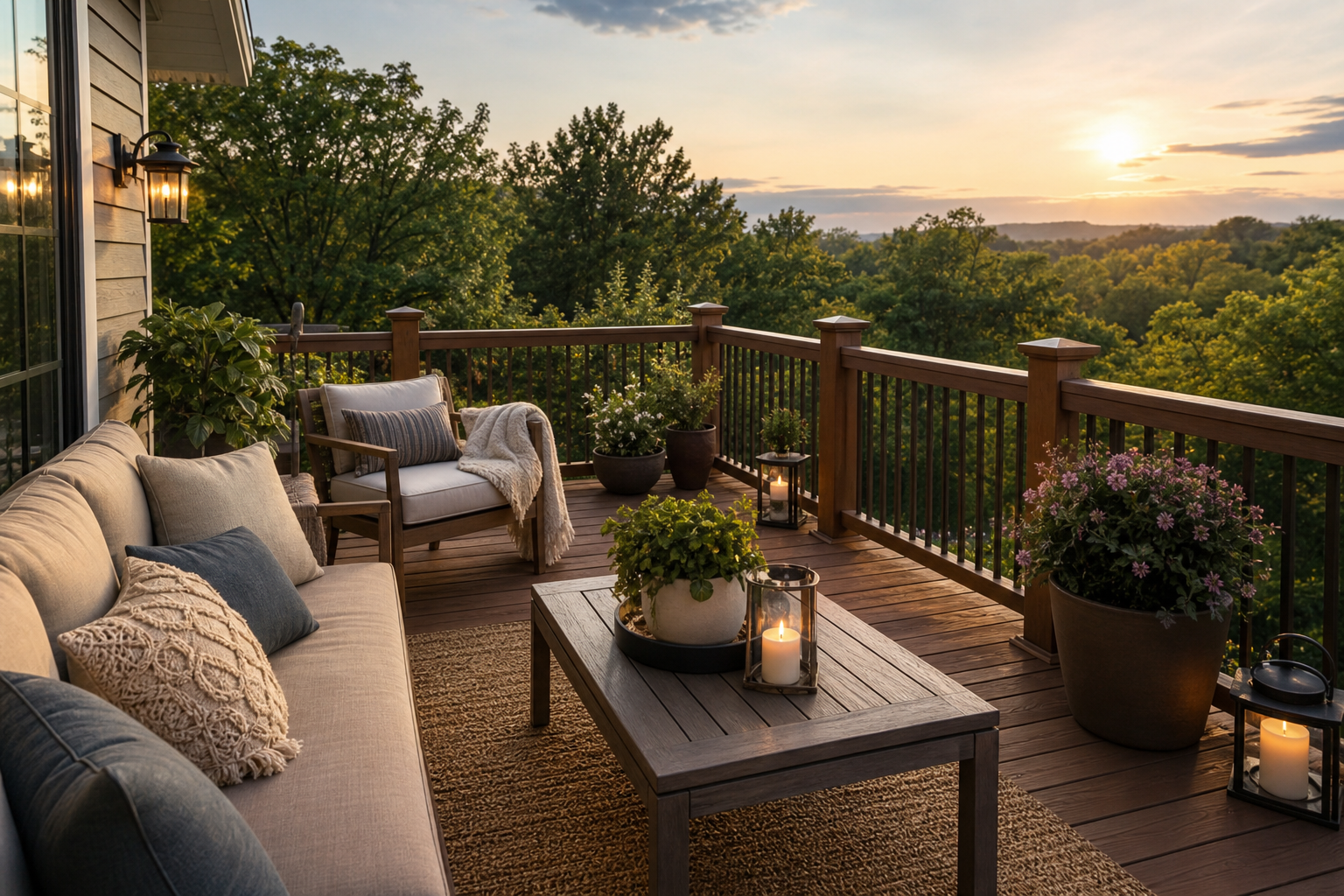

A deck can be much more than a platform behind the house. With the right mix of comfort, shade, privacy, lighting, and personal style, it can feel like an outdoor room made for rest. So, what turns a deck into a relaxing outdoor space? It is not one single feature. It is the way every detail works together to make the space feel calm, easy to use, and welcoming.
A relaxing deck should fit daily life. It may be a quiet place for morning coffee, a shaded spot for reading, or a comfortable area for casual meals with family. The best deck design supports how people actually live, not just how the space looks in photos.
What Turns a Deck Into a Relaxing Outdoor Space? Start With Comfort
Comfort is the foundation of a relaxing deck. If the seating is stiff, the sun is too strong, or the layout feels crowded, people will not use the space for long. A deck should invite people to sit down and stay.
Outdoor furniture plays a major role. Deep seats, supportive cushions, and smooth surfaces make a big difference. Furniture should also match the size of the deck. A small deck may feel better with two lounge chairs and a side table than with a large dining set that blocks movement.
Think about how the deck will be used most often. A family that eats outside may need a table with enough room to move around. Someone who wants a peaceful reading area may prefer a single chair, an ottoman, and a small table for a drink or book.
Comfort also includes temperature. In many parts of the US, decks can become too hot in summer or too chilly in the evening. Shade, fans, rugs, and throws can help make the space more pleasant across more of the year.
Layout Makes the Deck Feel Easy
A relaxing outdoor space should feel simple to use. People should not have to move furniture every time they step outside. A clear layout helps the deck feel calm and organized.
The best layout usually creates zones. Even a modest deck can have separate areas for sitting, dining, and plants. These zones do not need walls. A rug, a bench, or a group of planters can help define each area.
Leave enough space for walking. Paths from the door to the stairs, grill, or seating area should be open. If people need to squeeze between chairs or step around tables, the deck may feel stressful instead of restful.
Create a Main Gathering Spot
Every relaxing deck needs a clear place to settle. This might be a sofa facing two chairs, a dining table under an umbrella, or a pair of rockers near the railing. The main gathering spot should feel balanced and easy to reach.
Place seating so people can talk without raising their voices. If the deck has a good view, face the seats toward it. If the view is not ideal, turn the furniture inward to create a cozy feel.
A small table within reach of each seat adds function. People need somewhere to set a glass, phone, snack, or book. These small details often decide whether a deck feels finished.
Keep Movement Smooth
Traffic flow is easy to overlook, but it matters. A relaxing deck should not feel like an obstacle course. Doors should open fully. Steps should stay clear. Grill areas should have enough space for safe use.
Simple layout choices can improve flow:
- Place larger furniture along walls, rails, or wide corners.
- Keep the center path open when possible.
- Use round tables in tight spaces because they are easier to walk around.
- Choose folding or stackable pieces for small decks.
- Avoid too many décor items on the floor.
When movement feels smooth, the whole deck feels more peaceful.
Shade and Weather Protection Add Calm
Sunshine is one of the joys of having a deck, but too much direct sun can make the space hard to enjoy. Shade helps control heat, glare, and comfort. It also protects furniture and makes the deck more useful during the day.
There are many ways to add shade. Umbrellas are flexible and often work well for dining areas. Pergolas create structure and can support shade fabric or climbing plants. Retractable awnings offer control because they can be opened or closed as needed.
Covered decks provide the most protection, but they are not the only option. Even a small shade sail or a row of outdoor curtains can soften the space and make it feel more private.
Weather protection also matters. Outdoor rugs should dry well. Cushions should be made for exterior use. Storage benches can keep pillows and throws clean when the weather changes. A relaxing deck is easier to enjoy when it does not require constant work.
Privacy Helps the Space Feel Like a Retreat
A deck feels more relaxing when it has a sense of privacy. This does not mean blocking every view. It means creating enough separation from neighbors, streets, or nearby windows so people feel at ease.
Privacy can be added in soft, attractive ways. Tall planters, lattice panels, outdoor curtains, and screens can all reduce exposure. Plants are especially helpful because they add life and texture while also creating a gentle barrier.
The best privacy choice depends on the deck’s location. A raised deck may need screening along one side. A ground-level deck may benefit from shrubs or container plants around the edge. In a close neighborhood, even a partial screen can make a big improvement.
Privacy should not make the deck feel boxed in. Leave some open views for light, air, and connection to the yard. The goal is comfort, not isolation.
Lighting Sets the Evening Mood
Lighting can change the entire feeling of a deck. Bright overhead lights may be useful for tasks, but softer lighting is usually better for relaxing. A layered lighting plan helps the deck feel warm and safe after sunset.
String lights are popular because they add a gentle glow. Step lights improve safety. Lanterns, table lamps rated for outdoor use, and wall lights can make the deck feel like an outdoor living room.
Good lighting does not need to be complicated. It should match how the deck is used. A dining area may need light over the table. A lounge area may need low, warm light near the seating. Stairs and edges should be visible enough for safe movement.
Smart controls can also support comfort. Timers, dimmers, and app-based controls can make outdoor lighting easier to manage. For homeowners interested in connected living, the topic Can Smart Home Devices Simplify Daily Life? Key Everyday Benefits connects well with the idea of making outdoor spaces more convenient and enjoyable.
Natural Elements Make the Deck More Restful
Nature is one of the main reasons people enjoy outdoor spaces. Bringing natural elements onto the deck can make it feel softer and calmer. Plants, wood tones, stone accents, and water features can all help.
Plants are often the easiest place to start. They add color, movement, and texture. Herbs can be useful near a dining or grilling area. Tall grasses can move gently in the breeze. Flowering plants can brighten the space during warmer months.
Natural materials also affect mood. Wood furniture, woven baskets, clay pots, and stone-look planters can make a deck feel grounded. These details help balance hard surfaces like decking boards and railings.
A small water feature can add sound, but it should be simple to maintain. If upkeep becomes annoying, it may reduce relaxation instead of adding to it.
Color and Texture Shape the Atmosphere
Color has a strong effect on how a deck feels. Soft, natural colors often create a peaceful mood. Beige, gray, green, navy, and warm white can work well outdoors. Brighter colors can also be used, but they may feel best as accents.
Texture adds comfort and interest. Outdoor rugs, cushions, throws, planters, and woven furniture can make the deck feel less bare. These items also help connect the deck to the style of the home.
A relaxing deck does not need to match the inside of the house exactly, but it should feel related. If the home has a simple, modern look, the deck may feel best with clean lines and neutral colors. If the home feels cozy and traditional, softer cushions and classic furniture may fit better.
Too many colors or patterns can make a space feel busy. A simple approach often feels calmer. Choose one main color, one or two accent colors, and a few natural textures.
Sound, Scent, and Small Details Matter
Relaxation is not only visual. Sound and scent also shape the experience. A deck near a busy road may need privacy screens, plants, or a water feature to soften background noise. Wind chimes can be pleasant, but they should be used with care so they do not become distracting.
Scent can come from flowers, herbs, or nearby trees. Lavender, rosemary, mint, and basil are common container choices, though climate and care needs vary. Scented candles may also add atmosphere when used safely and never left unattended.
Small details help the deck feel personal. A favorite mug, a soft throw, a tray for snacks, or a basket for outdoor pillows can make the space more useful. Relaxing spaces often feel lived in, not perfect.
Useful details may include:
- A side table beside every main seat.
- A storage box for cushions and blankets.
- A tray for carrying drinks and snacks.
- Outdoor pillows with washable covers.
- Hooks for towels, hats, or light jackets.
These items may seem minor, but they reduce effort. Less effort often means more relaxation.
Safety and Maintenance Support Peace of Mind
A deck cannot feel relaxing if it feels unsafe or hard to care for. Solid railings, stable stairs, smooth boards, and proper lighting all support peace of mind. Loose boards, sharp edges, and slippery surfaces should not be ignored.
Maintenance needs depend on the deck material, climate, and age. Wood decks may need cleaning, staining, or sealing from time to time. Composite decking may require less routine care, but it still needs cleaning. Furniture, cushions, and rugs also last longer when cared for properly.
A low-stress deck is one that stays ready for use. Simple routines help. Sweep leaves away, clean spills quickly, and store soft goods during storms. When the deck is easy to maintain, it is easier to enjoy.
Frequently Asked Questions
What is the most important feature of a relaxing deck?
Comfort is usually the most important feature because people relax more easily when seating, shade, and layout feel good.
How can I make a small deck feel more peaceful?
Use fewer furniture pieces, choose slim designs, add plants, and keep walking paths clear for a calmer space.
Does a deck need shade to be relaxing?
Shade is not always required, but it often makes a deck more comfortable during hot or bright weather.
What colors work best for a calm outdoor deck?
Soft neutrals, greens, blues, and warm earth tones often create a relaxed and natural outdoor feeling.
How do I make my deck feel private without closing it in?
Use tall plants, partial screens, curtains, or lattice on key sides while keeping some open views.
Bringing It All Together
A relaxing deck is created through many simple choices working together. Comfortable seating, clear layout, shade, privacy, soft lighting, plants, and easy maintenance all matter. The space should feel useful, not crowded. It should look inviting, but it should also support real daily habits.
The answer to what turns a deck into a relaxing outdoor space is balance. A deck feels best when it offers comfort without clutter, privacy without feeling closed off, and style without too much upkeep. When those pieces come together, the deck becomes more than an outdoor surface. It becomes a calm place to pause, breathe, and enjoy home from a different point of view.