

How Can You Organize a Busy Family Entryway? Start by treating it as a small command center, not just a place to drop shoes. A family entryway has to handle coats, backpacks, mail, keys, sports gear, pet supplies, and daily mess. When every item has a clear home, mornings feel less rushed and evenings feel calmer. The goal is not a perfect space. The goal is a simple system your family can actually use every day.
Why a Family Entryway Gets Messy So Fast
The entryway is one of the hardest-working areas in a home. Everyone passes through it, often while carrying several things at once. Kids come in with backpacks, lunch boxes, art projects, and muddy shoes. Adults bring in mail, work bags, groceries, keys, and jackets. Pets may add leashes, towels, and outdoor toys to the mix.
The mess usually builds because the space has no clear rules. If there is no hook for a coat, the coat lands on a chair. If shoes have no bin or shelf, they spread across the floor. If papers have no tray, they pile up on the nearest flat surface.
A busy family entryway needs storage that is easy to see, easy to reach, and easy to repeat. The best system is the one that matches real habits, not an ideal version of how your family “should” behave.
How Can You Organize a Busy Family Entryway? Start With Zones
A good entryway works better when it is divided into simple zones. Each zone should serve one clear purpose. This keeps items from mixing together and makes cleanup faster.
Create a Drop Zone for Daily Items
A drop zone is the place for things people carry every day. This may include keys, wallets, sunglasses, badges, phones, and mail. Without a drop zone, these items often disappear under bags or get moved from room to room.
Use a small table, wall shelf, or narrow cabinet if you have space. For tight areas, a wall-mounted organizer can work well. Add a small dish or tray for keys and a separate spot for mail.
Keep the drop zone limited. If it becomes a storage area for old receipts, school papers, and loose change, it stops helping. Clear it often so only daily items stay there.
Set Up a Shoe Zone That Matches Your Family
Shoes are one of the biggest causes of entryway clutter. The right shoe storage depends on how your family uses the space. Some families need open bins because kids will not line up shoes neatly. Others prefer shelves because they make pairs easier to find.
Good shoe zone options include:
- A low bench with open cubbies underneath
- A row of sturdy baskets, one for each family member
- A slim shoe cabinet for narrow hallways
- A boot tray for wet, muddy, or snowy days
- A floor mat that marks where shoes should stay
Do not try to store every pair of shoes in the entryway. Keep only the pairs used most often. Dress shoes, extra sneakers, and seasonal footwear can go in bedroom closets or another storage area.
Add a Coat and Bag Zone
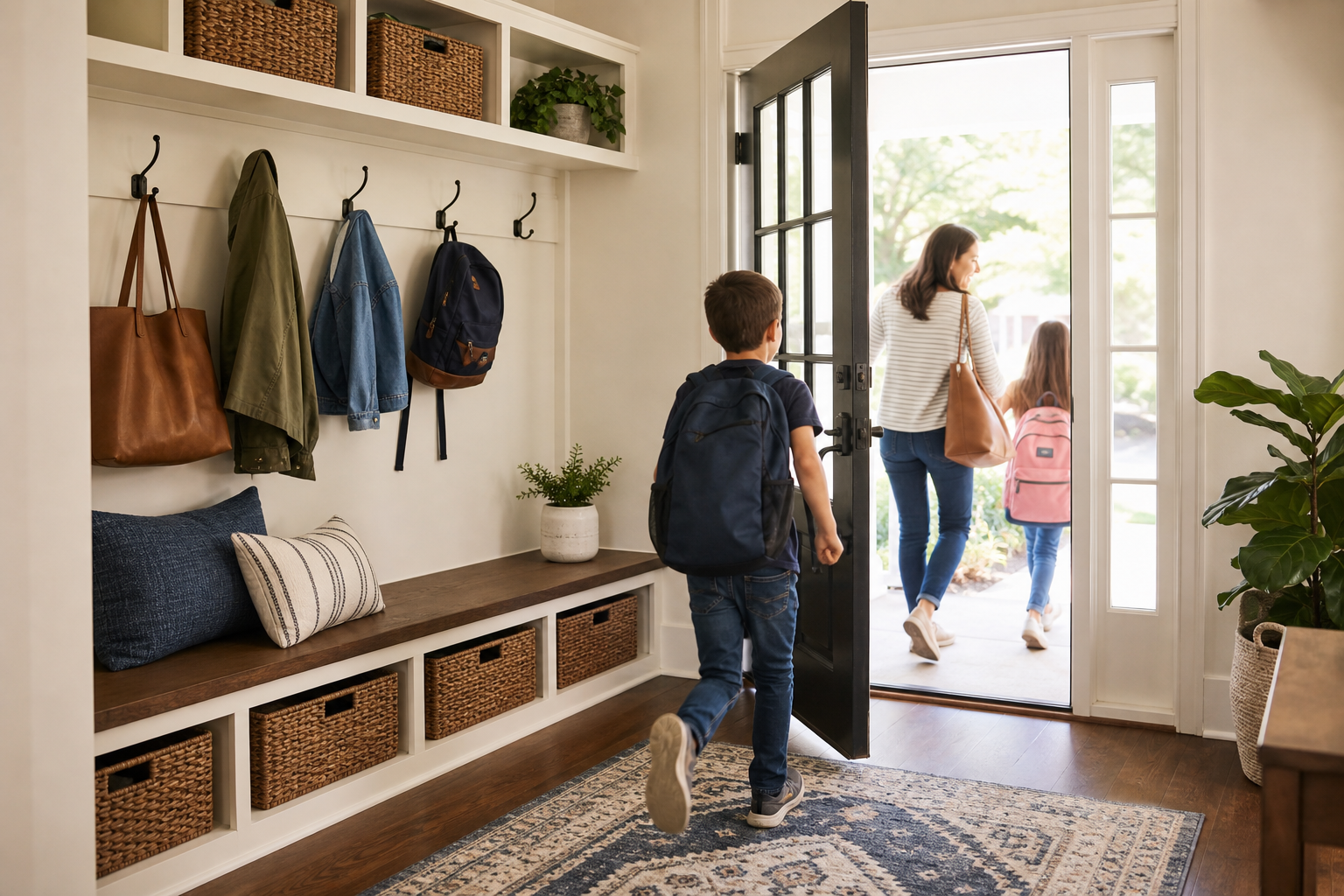
Hooks are often easier than hangers, especially for children. A row of strong wall hooks can hold coats, backpacks, purses, hats, and reusable shopping bags. Place some hooks low enough for younger kids to reach. If children can hang up their own things, the system is more likely to last.
If you have a closet, it may still need better organization. Add extra hooks inside the door or along the side walls. Use bins on the closet floor for hats, gloves, or scarves. Place less-used coats toward the back and everyday jackets near the front.
For backpacks, choose hooks that are strong enough to hold weight. Heavy bags can pull weak hooks out of the wall, especially when children tug on them.
Choose Storage That Makes Sense for Your Space
Not every home has a large mudroom. Many families work with a small hallway, apartment doorway, split-level landing, or garage entrance. The best entryway storage fits the space without blocking movement.
For Small Entryways
Small entryways need vertical storage. Use the wall, door, and corners instead of the floor. A narrow space can still hold a surprising amount when storage is planned well.
Helpful ideas for small entryways include:
- Wall hooks instead of a standing coat rack
- A floating shelf for keys and mail
- A slim bench that opens for hidden storage
- Over-the-door pockets for hats, gloves, or pet items
- Stackable shoe shelves that use height, not width
Keep the floor as open as possible. When the floor is crowded, the whole area feels messy, even if the items are useful.
For Larger Entryways or Mudrooms
A larger entryway can handle more storage, but it can also collect more clutter. Give each family member a personal section if possible. This might be a locker, cubby, basket, or labeled hook.
Built-in storage is nice, but it is not required. Freestanding benches, cube organizers, baskets, and wall hooks can create the same effect. The key is to make each area clear.
If your family has sports, school, and outdoor gear, group items by use. For example, keep soccer cleats, shin guards, and a water bottle together. Keep dog leashes, waste bags, and a towel in one basket near the door.
Make the Entryway Work for Kids
A family entryway only stays organized if children can use it. Adult-height hooks, deep closets, and complicated bins may look tidy, but they are not always kid-friendly.
Set up storage at your child’s level. Low hooks, open baskets, and picture labels can help younger kids understand where things belong. Older kids may prefer a labeled cubby or backpack hook.
Try to keep the system simple. A child is more likely to toss shoes into a basket than place them perfectly on a shelf. That is still organization. The goal is to keep walkways clear and items easy to find.
For school mornings, place the most important items together. Backpacks, lunch boxes, jackets, and shoes should be easy to grab. If school papers need to be signed, keep a small folder or tray in the entryway so they do not vanish into the kitchen or car.
Control Paper, Mail, and Small Clutter
Paper clutter can make an entryway feel messy even when shoes and coats are under control. Mail, flyers, permission slips, receipts, and appointment cards need a quick sorting system.
Use one small mail tray or wall pocket, not a large basket where papers can hide. Sort mail into basic groups: keep, act on, and recycle. School papers can have their own folder or clipboard.
Small items need limits too. Keys, coins, earbuds, lip balm, and sunglasses can quickly cover a surface. A divided tray, small bowl, or drawer organizer can keep them contained.
Avoid keeping too many “just in case” items by the door. If the area holds everything from tape to batteries to sunscreen, it becomes a junk station. Store only what is needed for coming and going.
Plan for Weather and Seasons
In many US homes, entryway needs change with the seasons. Winter brings boots, coats, hats, gloves, and wet floors. Summer may bring flip-flops, pool bags, sunscreen, and sports gear. A good entryway system should change along with the weather.
Use seasonal rotation to keep the space from getting crowded. When winter ends, move heavy coats, snow boots, and thick gloves to another storage spot. When school starts, make room for backpacks, lunch boxes, and activity bags.
A washable rug or boot tray is useful during rainy and snowy months. Choose materials that are easy to clean. Wet shoes need a place to dry without spreading dirt across the floor.
For warm weather, baskets can hold sunscreen, sunglasses, bug spray, or outdoor toys. Keep these items contained so they do not scatter across the entryway.
Keep the System Easy to Maintain
Organization is not a one-time project. A busy family entryway needs quick maintenance. The good news is that a few small habits can prevent big piles.
A simple weekly reset can make a big difference. Remove shoes that do not belong there. Empty mail trays. Return sports gear to its proper place. Wash or shake out rugs when needed.
Try these easy entryway habits:
- Spend five minutes resetting the space once or twice a week
- Ask each family member to clear their own hook, bin, or cubby
- Keep only current-season items near the door
- Empty backpacks and lunch boxes before they pile up
- Return stray toys, tools, and papers to their proper rooms
Labels can also help. They are not just for kids. Labels make the system clear for guests, babysitters, and busy adults who are moving fast. Use simple words like “Shoes,” “Mail,” “Keys,” “Dog,” or each person’s name.
Common Entryway Mistakes to Avoid
One common mistake is buying storage before sorting the clutter. It is better to remove what does not belong first. Then you can see what kind of storage you actually need.
Another mistake is choosing storage that looks pretty but is hard to use. Closed boxes may hide clutter, but they can also make daily items harder to reach. Open storage often works better for busy families because it is fast.
Too many baskets can also cause problems. If every basket becomes a mystery bin, the system breaks down. Each basket should have one job.
Finally, avoid making the entryway responsible for the whole house. It should support daily routines, not store every spare coat, old shoe, toy, and paper. When the entryway has limits, it stays easier to manage.
Frequently Asked Questions
What is the best way to organize shoes in a family entryway?
The best way is to store only everyday shoes near the door. Use baskets, cubbies, shelves, or a boot tray, depending on your space and habits. Give each person a clear spot so shoes do not spread across the floor.
How do I organize an entryway with no closet?
Use wall hooks, a narrow bench, baskets, and a small shelf or tray. Vertical storage is especially helpful when there is no closet. Keep items limited to daily essentials so the area does not feel crowded.
How can I keep kids from dropping everything on the floor?
Make storage easy for them to reach and use. Low hooks, open bins, and simple labels work well. Children are more likely to follow a system when it takes only a few seconds.
What should not be stored in a busy family entryway?
Avoid storing off-season coats, extra shoes, old mail, random tools, and rarely used items. These things take up valuable space and make daily routines harder. Keep the entryway focused on what your family uses often.
How often should I reset my family entryway?
A quick reset once or twice a week is usually enough for many families. During busy school, sports, or winter seasons, you may need to tidy more often. Short, regular resets are easier than major cleanouts.