

Which Dining Room Lighting Works Best for Guests? The best answer is lighting that makes food look appealing, faces look warm, and the room feel comfortable from the first seat to the last bite. Dining room lighting is not only about brightness. It is about mood, scale, glare control, and flexibility. A beautiful fixture can still feel wrong if it shines in people’s eyes or leaves the table too dim. As editors, we look at dining lighting as a mix of design and comfort, because guests notice both.
Why Guest-Friendly Dining Room Lighting Matters
A dining room has a special job. It needs to feel welcoming, but it also needs to be useful. Guests should be able to read a menu, see what they are eating, and enjoy conversation without harsh light on their faces.
Good lighting helps the room feel relaxed. It can make a simple meal feel more thoughtful and a formal dinner feel less stiff. Poor lighting does the opposite. A bulb that is too bright can make people squint. A fixture that hangs too low can block views across the table. A room with only one weak light can feel gloomy.
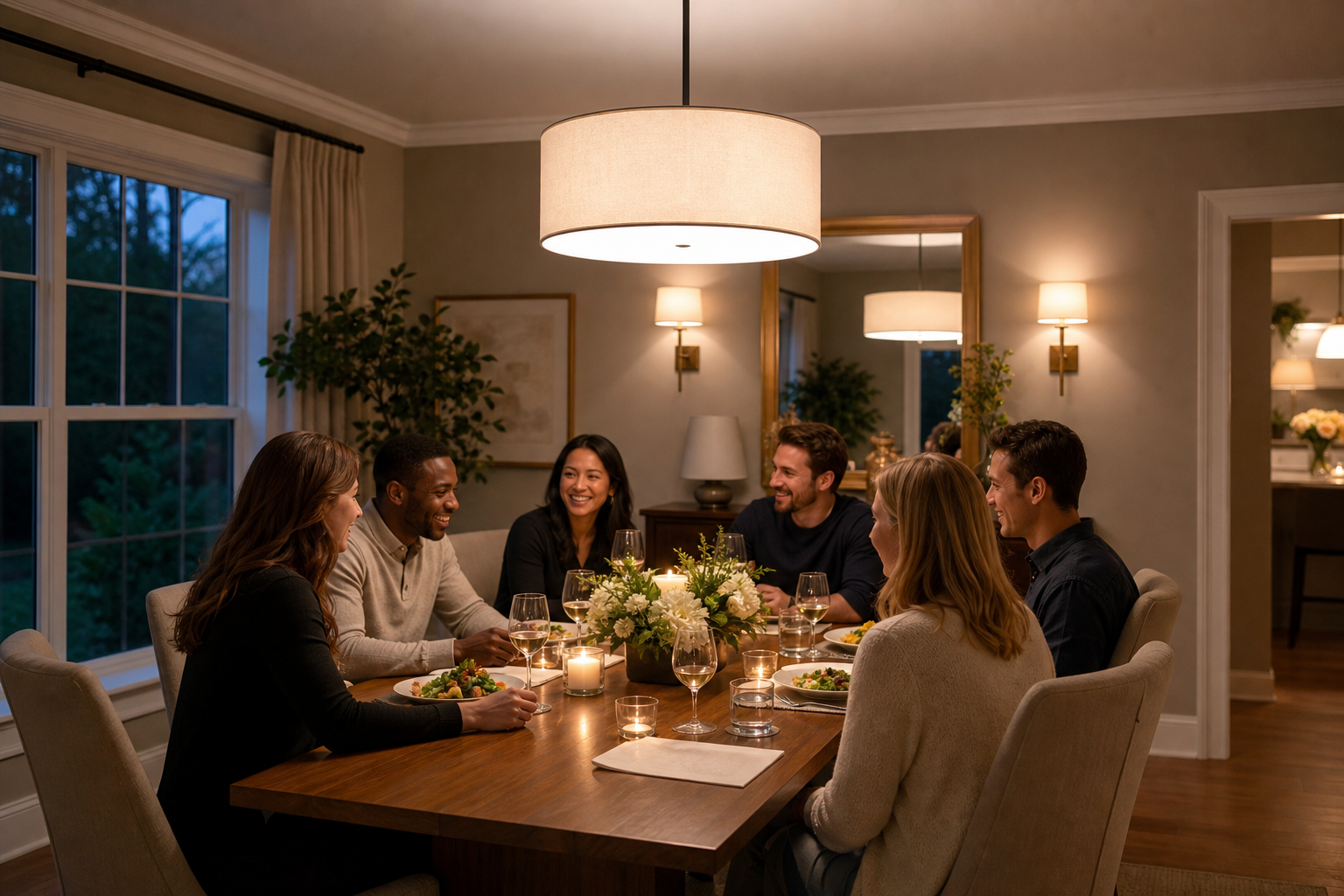
The best dining room lighting for guests usually combines three things: a main fixture over the table, softer light around the room, and easy control over brightness. This layered approach works for weeknight dinners, holidays, birthdays, and longer evenings when people stay at the table after the meal.
Which Dining Room Lighting Works Best for Guests?
The most guest-friendly choice is often a dimmable chandelier, pendant, or linear fixture centered over the dining table, paired with soft supporting lights. The exact style depends on the table shape, ceiling height, and room size.
A single chandelier can look classic over a round or square table. A long linear fixture often works well over a rectangular table because it spreads light more evenly from end to end. A group of pendants can also work, especially in a modern or casual dining space.
The key is not just the fixture shape. It is how the light feels at the table. For guests, the best dining room lighting should:
- Light the whole table evenly, not just the center.
- Avoid direct glare into people’s eyes.
- Make skin tones and food colors look pleasant.
- Fit the room’s size without feeling too small or too heavy.
- Dim low enough for a calm dinner but brighten for cleaning or serving.
A beautiful dining room light should support conversation. Guests should be able to see each other easily without feeling like they are under a spotlight.
Choose the Right Fixture for Your Table
The dining table is the anchor of the room, so the light should relate to it. A fixture that is too narrow can make the table edges feel dark. A fixture that is too large can crowd the space visually.
For a rectangular table, a long chandelier, linear pendant, or two to three smaller pendants often creates good balance. For a round table, a round chandelier, drum shade, globe pendant, or clustered fixture can echo the table shape. For an oval table, either a soft linear fixture or a wider chandelier can work well.
Style also matters, but comfort comes first. Clear glass fixtures can look airy, but they may cause glare if the bulbs are exposed. Fabric shades, frosted glass, opal glass, and diffused covers usually create a softer glow.
Chandeliers
Chandeliers are popular because they add presence. They can make a dining room feel finished even when the furniture is simple. Traditional chandeliers may have arms and small lamps, while modern ones may use rings, globes, or sculptural frames.
For guests, the best chandeliers are those with shaded or diffused bulbs. Bare bulbs can work if they are low wattage and dimmable, but they should not shine directly into seated eyes. A chandelier should feel centered and stable over the table, not like a random ceiling decoration.
Pendants and Linear Lights
Pendants are flexible. One large pendant can suit a small round table, while several pendants can create rhythm over a longer table. Linear lights are especially useful for long dining tables because they spread light across more seats.
A linear fixture should not be so wide that it reaches too close to the table ends. Leave visual breathing room so the fixture frames the table instead of overpowering it. If the fixture has exposed bulbs, consider warmer bulbs and a dimmer to soften the effect.
Get the Height, Size, and Placement Right
Even an excellent fixture can feel uncomfortable if it is hung badly. Dining lighting should feel close enough to define the table, but high enough to keep sightlines open.
A common approach is to hang the bottom of the fixture about 30 to 36 inches above the tabletop. This range often works well for standard ceilings, but the right height can change based on fixture shape and room proportions. Taller ceilings may allow a slightly higher placement, while a very large fixture may need careful adjustment.
Width matters too. In many dining rooms, the fixture looks balanced when it is narrower than the table. This helps prevent people from bumping it and keeps the table as the main visual frame. The light should be centered over the table, not just centered in the room, especially if the table is not exactly in the room’s center.
Think about the guest experience from every seat. Sit down and look across the table. If the fixture blocks faces, feels too bright, or makes the room feel crowded, it may need to move higher, use softer bulbs, or be replaced with a better shape.
Layer Light for a More Comfortable Room
One overhead light alone can make a dining room feel flat. Layered lighting gives the room depth and lets the mood change during the evening.
Ambient light fills the room. Task light helps with serving, reading, or setting the table. Accent light adds warmth to walls, art, shelves, or a buffet. When these layers work together, guests feel more comfortable because the whole room glows softly instead of having one bright spot above the table.
Useful dining room lighting layers include:
- A main chandelier, pendant, or linear fixture over the table.
- Wall sconces that add soft side lighting.
- Buffet lamps on a sideboard or cabinet.
- Recessed lights on a dimmer, used gently.
- Picture lights or accent lights for art and display areas.
Wall lighting is especially helpful because it brightens faces from the side instead of only from above. This can make conversation feel warmer and more natural. Lamps on a buffet can also make the room feel lived-in and relaxed.
Pick Bulbs That Make Food and Faces Look Good
Bulb choice can change the whole room. A fixture may look perfect in photos, but the wrong bulb can make dinner feel cold, harsh, or dull.
For most dining rooms, warm white light feels inviting. Very cool light can feel more like an office or clinic, which is rarely the mood people want at dinner. Warm light helps wood tones, bread, fruit, flowers, and skin look more pleasant.
Dimmable bulbs are a smart choice when the fixture and switch support them. Bright light is useful while setting the table or cleaning up. Lower light feels better during dinner, dessert, or a quiet drink.
Also look at bulb shape. Decorative bulbs can be attractive in open fixtures, but they may create glare. Frosted bulbs, shaded bulbs, or fixtures with diffusers can reduce that problem. If a bulb is visible from a seated position, it should be gentle enough that guests do not stare into a bright point of light.
Use Dimmers for Better Hosting
A dimmer is one of the easiest ways to make dining room lighting work better for guests. It gives control over the room’s mood without changing the fixture.
Before guests arrive, brighter light helps with last-minute details. During the meal, a medium setting usually feels comfortable. Later in the evening, a lower level can make the room feel calm and intimate.
Dimmers also help when the dining room has multiple uses. Many homes use the dining table for homework, crafts, work, games, or folding laundry. The same room may need bright light in the afternoon and soft light at night.
Not every bulb works with every dimmer, so compatibility matters. When bulbs flicker, buzz, or do not dim smoothly, the bulb and dimmer may not be a good match. A smooth dimming range is important because guests are more likely to notice flicker in a quiet dining setting.
Match Lighting to the Type of Gathering
Different meals need different moods. A family brunch may feel better with fresh, brighter light. A holiday dinner may call for a warm glow with soft lights around the room. A birthday dinner may need enough light for photos, gifts, and dessert.
For casual meals, practical lighting is important. Guests should see food clearly and move around safely. For formal dinners, the room can be a little softer, but not so dim that people struggle to see. For long conversations after dinner, lower light helps the room feel settled.
Candles can add charm, but they should not be the only light source. They work best as an accent with a dimmed overhead fixture or nearby lamps. Unscented candles are often better at the table because strong scents can compete with the food.
Common Dining Room Lighting Mistakes to Avoid
Many dining rooms feel uncomfortable because of small lighting mistakes. These issues are easy to miss when shopping for a fixture online or in a store.
Common problems include:
- Choosing a fixture that looks good but shines directly into guests’ eyes.
- Hanging the light too low, blocking views across the table.
- Using bulbs that are too cool or too bright for dining.
- Relying on only one overhead light with no supporting layers.
- Picking a fixture that is too small for the table.
- Forgetting to install a dimmer where flexible lighting is needed.
Another mistake is ignoring shadows. If a light points straight down, it may create deep shadows on faces. Adding side lighting from sconces or lamps can help. The goal is not to remove every shadow, but to keep the room flattering and easy to enjoy.
Frequently Asked Questions
What is the best type of dining room light for guests?
A dimmable chandelier, pendant, or linear fixture over the table is usually best. It should be paired with soft side lighting or lamps when possible. This combination gives enough brightness for eating while keeping the room warm and comfortable.
Should dining room lighting be warm or cool?
Warm white lighting is usually better for dining rooms because it feels relaxed and welcoming. Cool light can look sharp and clean, but it may feel too harsh for meals and conversation. Warm light also tends to make food and faces look more pleasant.
How bright should a dining room be for dinner guests?
A dining room should be bright enough for guests to see food, drinks, and faces clearly. It should not feel like a workspace. A dimmer helps because you can use brighter light before the meal and softer light once everyone is seated.
Is a chandelier better than recessed lighting in a dining room?
A chandelier usually creates a stronger focal point and a more inviting dining mood. Recessed lighting can help, but it may feel plain or cast shadows if used alone. Many dining rooms work best with both, especially when each layer is dimmable.
Can I use lamps instead of an overhead dining light?
Yes, lamps can make a dining room feel cozy, especially on a buffet or sideboard. However, lamps alone may not light the table evenly. For guests, they work best as a supporting layer with a main table light or other soft room lighting.