

If you are asking, “What Are the First Steps to Starting a Podcast?”, you are already in a good place. A podcast can begin with a simple idea, a clear plan, and a quiet space to record. You do not need a perfect studio on day one. You do need to know what your show is about, who it is for, and how you will make each episode useful or enjoyable. This guide explains the early choices that help a new podcast feel organized, confident, and ready for listeners.
What Are the First Steps to Starting a Podcast? A Simple Overview
The first steps are not about buying the most expensive microphone or designing a fancy logo. They are about shaping your idea. A strong podcast starts with a clear purpose. Your purpose tells you what to say, who to invite, and how each episode should feel.
Think about why someone would press play. Maybe they want to learn a skill, feel less alone, laugh during a commute, or hear thoughtful stories. Your show should promise one main kind of value. That promise can be practical, emotional, entertaining, or a mix of all three.
It also helps to keep your first plan small. Many new podcasters try to cover too much. A focused show is easier to name, record, edit, and describe. For example, “home decorating” is broad. “small-space decorating for renters” is clearer. A narrow idea can grow later, but it gives your first episodes a stronger center.
Define Your Podcast Idea and Audience
Before recording, spend time on the basic shape of your show. This step saves energy later because it gives you a guide for every decision.
Choose a Clear Topic
Your topic should be something you can talk about often without running out of energy. It should also be clear enough that listeners understand it quickly. A podcast about “wellness” may feel too wide. A podcast about “simple wellness habits for busy parents” is easier to understand.
Try writing your idea in one sentence. Use plain words. If the sentence feels confusing, the show may need more focus. A simple sentence might be: “This podcast helps first-time dog owners understand daily care, training, and common problems.” That sentence tells you the subject, the audience, and the value.
Your topic can also connect to your daily life or personal interests. A home and lifestyle podcast might cover practical questions such as Can You Create a Cozy Reading Corner in Your Home, how to organize a small kitchen, or how to make a guest room feel welcoming. These examples are specific, useful, and easy for listeners to picture.
Know Your Ideal Listener
Your ideal listener is the person you most want to help or entertain. You do not need to please everyone. In fact, trying to speak to everyone can make your show sound flat.
Picture one listener. Give that person a normal life, not a marketing label. What do they do during the day? When would they listen? What questions are they asking? What tone would they enjoy?
For example, a listener may be a new college graduate who wants simple money tips. Another may be a parent who listens while folding laundry. When you know this person, your language becomes warmer and more direct. It feels like a real conversation.
Pick the Main Benefit
Every episode should give listeners a reason to stay. That reason may be a helpful answer, a fresh point of view, a good story, or a calm moment in a busy day.
Ask yourself:
- What problem will my podcast help solve?
- What feeling should listeners have after each episode?
- What will make my show different from similar shows?
- What kind of episodes can I make again and again?
The answers do not need to be dramatic. Small value still matters. A short weekly show that helps people plan meals, understand movies, or sleep better can be meaningful if it is consistent and clear.
Plan Your Format, Name, and Episode Structure
Once your idea is clear, shape the listening experience. This includes the format, episode length, name, and repeatable structure.
Decide on a Format
Podcast formats can be simple. Choose one that fits your comfort level, schedule, and topic. A solo show gives you full control, but it requires you to carry the conversation. An interview show brings in different voices, but it requires guest planning. A co-hosted show can feel natural, but it needs good teamwork.
Common formats include:
- Solo episodes where one host teaches, reflects, or tells stories
- Interviews with guests who bring experience or opinions
- Co-hosted conversations between two or more regular voices
- Narrative episodes with planned storytelling and more editing
- Short tips or updates focused on one quick idea
There is no perfect format. The best format is one you can repeat without feeling overwhelmed.
Choose a Simple Podcast Name
A good podcast name is easy to say, spell, and remember. It should give a hint about the topic or feeling of the show. Clever names can work, but clarity is more important than a private joke.
Before settling on a name, check whether it is already being used by another podcast. You should also think about how it will look in a podcast app. Very long names can be hard to read on small screens.
You may also want a short subtitle or description. This can explain the show in plain language. For example, a title may be creative, while the subtitle explains that the show is about simple cooking for beginners.
Build a Repeatable Episode Outline
A repeatable outline helps you record with less stress. It also helps listeners know what to expect. Your outline does not have to be stiff. It is more like a map.
A basic episode structure might include:
- A short welcome and episode topic
- A quick reason the topic matters
- Three main points or questions
- A brief recap of the key ideas
- A calm closing line
Keeping this structure steady can make editing easier. It also prevents long, wandering recordings that are hard for listeners to follow.
Gather Basic Equipment and Recording Tools
A podcast can sound good without a professional studio. Clear audio matters, but simple tools are enough at the start.
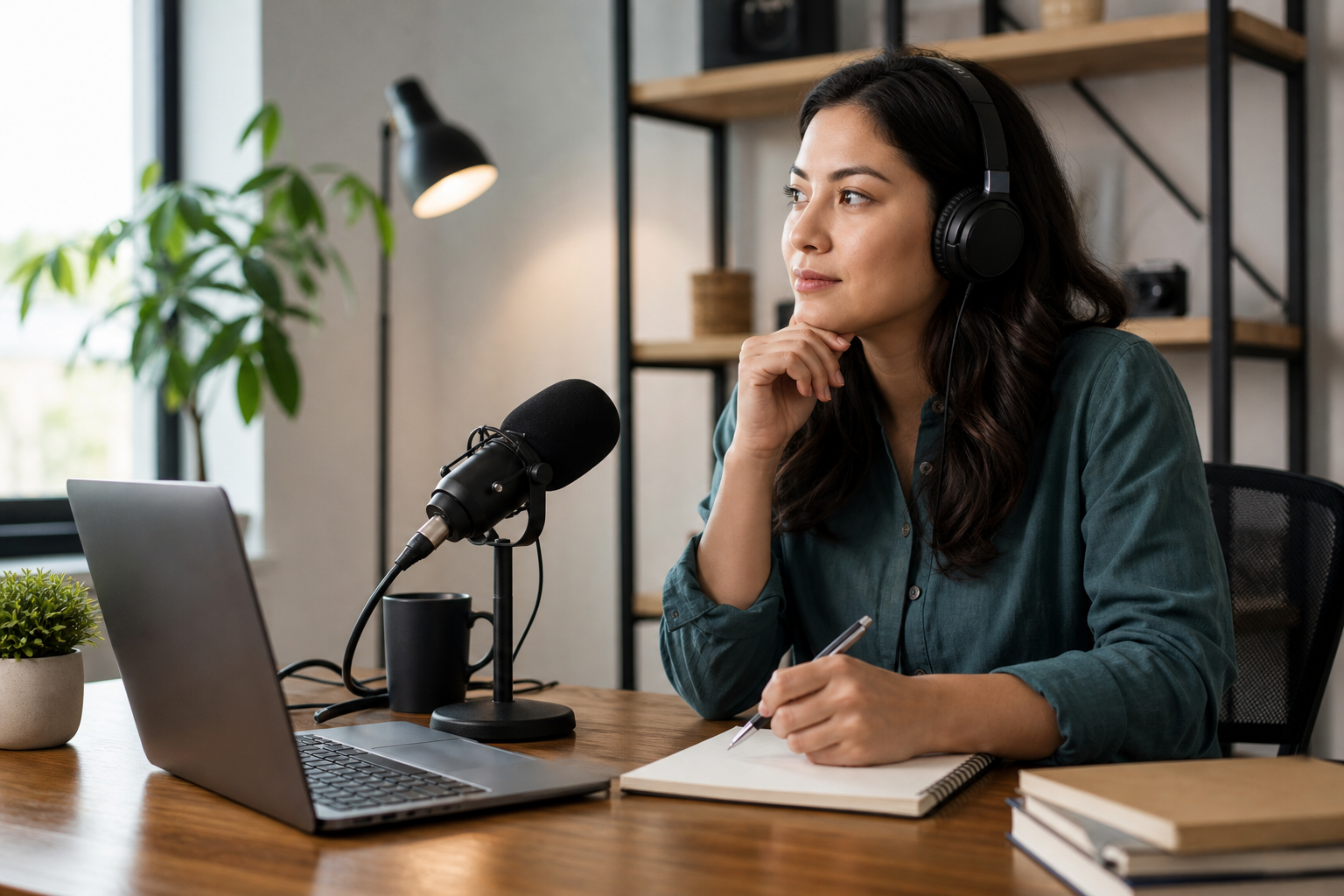
A basic setup may include a USB microphone, headphones, recording software, and a quiet room. Many computers can run free or low-cost recording programs. If you record remote interviews, you may need software that captures each voice clearly.
Your recording space matters more than many beginners expect. Empty rooms often echo. Soft items help reduce harsh sound. Curtains, rugs, couches, and closets with clothes can make a room sound warmer. You do not need to rebuild your home. You just need to reduce background noise as much as possible.
Avoid recording near loud appliances, open windows, or busy streets. Turn off phone alerts. Ask others in the home for quiet time if possible. A clean recording is much easier to edit than a noisy one.
Create Your First Few Episodes
Planning several episodes before launch can help your podcast feel more stable. It also gives you practice.
Start with topics that answer your listener’s first questions. If your podcast teaches a skill, begin with basics. If it tells stories, choose stories that show the tone of the series. If it is interview-based, choose guests who are comfortable speaking and connected to your topic.
Do not worry if your first recordings feel awkward. Most hosts improve by doing. Your voice may sound strange to you at first. That is normal. Focus on speaking clearly, keeping a steady pace, and making one point at a time.
Editing should improve the episode, not remove every natural pause. Listeners do not need perfection. They need to understand you and feel that the episode respects their time.
It is also wise to write a short description for each episode. This description should explain what the episode covers in a clear way. Good episode titles are specific. “Budget Tips” is vague. “Five Budget Tips for Your First Apartment” is more helpful.
Prepare Podcast Artwork, Description, and Hosting
Your podcast needs a few public details before it can appear in podcast apps. These details help listeners understand the show before they press play.
Podcast artwork should be simple and readable. Many people will see it as a small square on a phone. Use clear text, strong contrast, and a style that matches the show. Avoid crowding the image with too many words.
Your show description should explain the topic, audience, and style. Keep it friendly and direct. A strong description tells people what they will hear and why it may interest them. It should not feel like a long sales pitch.
You will also need a podcast hosting service. A host stores your audio files and creates the feed that podcast apps use. Different hosts offer different features, so it helps to compare basic needs such as storage, ease of use, and distribution options. The right choice depends on your budget and plans.
Set a Realistic Publishing Schedule
Consistency helps listeners know when to expect new episodes. Still, your schedule should fit your real life. Weekly episodes are common, but they are not required. A twice-monthly show can work well if the episodes are thoughtful and steady.
Think about how long it takes to plan, record, edit, write notes, and publish. Many beginners only count the recording time. The full process usually takes longer. A realistic schedule protects the quality of the show and lowers stress.
Batching can help. This means planning or recording more than one episode during one work session. For example, you might outline four episodes in one afternoon or record two short episodes in one quiet evening. Batching can make a schedule feel smoother.
Understand Basic Podcast SEO
Podcast SEO helps people find your show through search and podcast apps. It begins with clear language. Use words your audience would actually type or say.
Your podcast title, episode titles, and descriptions should include useful terms when they fit naturally. Do not stuff the same phrase everywhere. Search tools and listeners both prefer clear, helpful writing.
For example, an episode title like “How to Start Meal Planning When You Hate Cooking” is more searchable than “Getting It Together.” The first title tells people exactly what the episode offers.
Podcast SEO also includes show notes. These notes can summarize the episode, list key topics, and mention guest names when relevant. Keep them accurate. Do not promise content that the episode does not include.
Common Early Mistakes to Avoid
New podcasters often make similar mistakes. Most are easy to fix with a little planning.
One common mistake is waiting for everything to be perfect. Perfection can delay a good idea for months. Another mistake is starting with no clear audience. If the show is too general, people may not understand why it is for them.
Some beginners also make episodes too long for the content. A 20-minute episode with clear value is better than a 60-minute episode that repeats itself. Length should match the topic, not an imagined rule.
Poor audio can also push listeners away. You do not need studio sound, but voices should be clear and easy to hear. Test your setup before recording a full episode. Listen back with headphones and notice background noise, volume changes, and echo.
Frequently Asked Questions
How much money do I need to start a podcast?
You can start with a modest budget if you keep your setup simple. A basic microphone, headphones, and recording software are enough for many beginners. Costs can rise with advanced editing, custom music, or paid tools, but those are not required at the start.
Do I need a script for every episode?
You do not need a full script unless it helps you feel comfortable. Many hosts use an outline with key points instead. An outline keeps the episode organized while still leaving room for a natural voice and relaxed conversation.
How long should my first podcast episodes be?
Your first episodes should be as long as needed to cover the topic clearly. For many new shows, shorter episodes are easier to plan and finish. Focus on useful content, steady pacing, and a clear beginning, middle, and end.
Can I start a podcast alone?
Yes, a solo podcast can work very well if the topic fits your voice and style. Solo shows are often easier to schedule because you do not need guests or co-hosts. They do require planning so the episode feels focused and engaging.
How many episodes should I make before publishing?
It helps to prepare a few episodes before publishing, but there is no fixed rule. Having more than one episode ready can reduce pressure and give listeners more to explore. The main goal is to begin with clear, well-prepared content.
Final Thoughts on Starting a Podcast
Starting a podcast is mostly about making clear choices. Choose a focused topic, understand your listener, plan a simple format, and record in the quietest space you can. Then shape your episodes with care.
The first version of a podcast does not need to be perfect. It needs to be understandable, useful, and honest about what it offers. With a steady plan and a friendly voice, a new podcast can grow from a small idea into a show that feels real to both the host and the listener.